Category Archives: General

Each month we bring you a selection of key peacebuilding dates in the month to come. Here are a choice of selected September events and observances. 

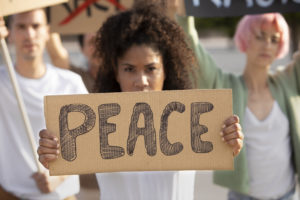
15 September: “No Peace without Women, “What do Women Bring to Peace Processes, Conflict Prevention and Human Security?”

The Women’s Federation for World Peace International will be hosting a webinar, “No Peace without Women, “What do Women Bring to Peace Processes, Conflict Prevention and Human Security?” to commemorate International Peace Day. Afterwards, the event will have three sessions of 75 minutes, each with 3-4 speakers. In the second session, Inclusive Peace’s Executive Director Dr Thania Paffenholz will be making her contributions to the discussion “How do Women Negotiate Differently?”

15 September: International Day for Democracy

This year’s theme of “Strengthening democratic resilience in the face of future crises,” will be an opportunity to take a look at the state of the world’s democracies. It is important to recognise that democracy is not a static goal, but rather a process. The ideal of democracy can only become a reality with the full participation and support of the international community, national governing bodies, civil society, and individuals.

28 September: International Day for Universal Access to Information

In October 2019, the 74th UN General Assembly proclaimed 28 September as the International Day for Universal Access to Information (IDUAI) at the UN level. This year’s theme is, “Artificial Intelligence, e-Governance and Access to Information.” Inclusive Peace offers unrestricted access to our website’s resource page which has papers from policy briefs to reports. Based on our core themes, there are papers from policy briefs to reports focusing on inclusion in peace and political transition processes.


Photos from Freepix Photos

Each month we bring you a selection of key peacebuilding dates in the month to come. Here are a choice of selected November events and observances. 

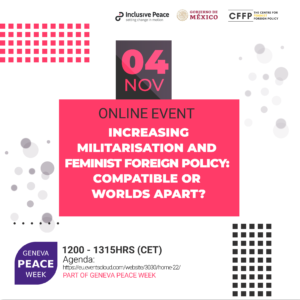
4 November : Online: Increasing militarisation and feminist foreign policy: Compatible or worlds apart?

Time: 12:00-13:15pm (CET)

Co-organised by the Center of Feminist Foreign Policy, The Kingdom of the Netherlands, and Permanent Mission of Mexico to the United Nations in Geneva, this session will explore whether concepts like feminist foreign policy could help to mitigate rising militarisation. It asks whether the two can coexist in the context of international relations and even in the formulation of foreign policy by individual states. This is part of the Geneva Peace Week.


6 November: International Day for Preventing the Exploitation of the Environment in War and Armed Conflict

The United Nations Environment Programme (UNEP) found that at least 40 percent of all internal conflicts were linked to the exploitation of natural resources, whether high-value resources such as timber, diamonds, gold and oil, or scarce resources such as fertile land and water. Conflicts involving natural resources are also twice as likely to relapse. Action on the environment is part of conflict prevention, peacekeeping and peacebuilding strategies, because there can be no durable peace if the natural resources that sustain livelihoods and ecosystems are destroyed.

9-15 November: International Week of Science and Peace

The annual observance of the International Week of Science and Peace is helping to spread knowledge about the role of science in peace-building projects worldwide. The week allows scientists to share their research with a wider audience and promote greater awareness among policy-makers, journalists and the public at large about how science can contribute to peace.


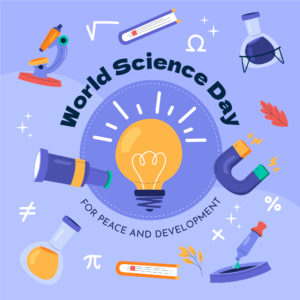
10 November: World Science Day for Peace and Development

A major theme of World Science Day on 10 November 2022 is Basic Sciences for Sustainable Development. This celebration is part of the International Year of Basic Sciences for Sustainable Development, which began on 8 July 2022. By bringing science closer to society, World Science Day for Peace and Development aims to keep the public informed about scientific developments and the role scientists play in understanding our planet’s remarkable and fragile ecosystems.


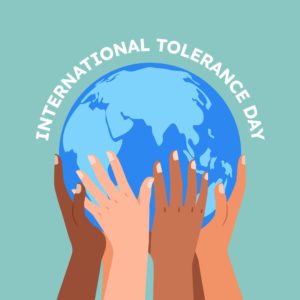
16 November: International Day for Tolerance

The International Day for Tolerance is an annual event that celebrates tolerance and raises awareness of any intolerance that may still be prevalent in the world today. The date was chosen to commemorate the signing of the Declaration of Principles on Tolerance by UNESCO in November 1995, which allows all governing bodies to participate in this event.


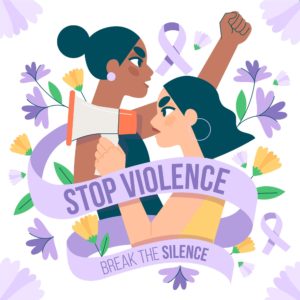
25 November: International Day for the Elimination of Violence against Women

Women peacebuilders have faced increased attacks both online and offline, which hinders the work being done in peace processes. There are ways we can help keep the women from experiencing this violence and harassment. We highlight why this is urgently required and how everyone can pitch in. As in previous years, this year’s International Day for the Elimination of Violence Against Women launches 16 days of activism to be concluded on the 10th of December 2020 — the day that commemorates the International Human Rights Day.


Photos from Freepix Photos

Each month we bring you a selection of key peacebuilding dates in the month to come. Here are a choice of selected October events and observances. 

20 October: Open Debate – Women, Peace & Security

Flag of the United Nations

The UNSC will hold its annual open debate on women, peace and security (WPS), titled “Strengthening women’s resilience and leadership as a path to peace in regions plagued by armed groups.” This debate will come after the eagerly awaited release of the Secretary General of the United Nations’ report on WPS. The briefers for this session will be Deputy Secretary-General Amina Mohammed, UN Women Executive Director Sima Sami Bahous and two women civil society representatives.

23-30 October: Disarmament Week

A major obstacle to peace is the spread of weapons. While the deployment of large conventional weapons in populated areas puts civilians in grave danger, the excessive stockpiling and illicit trade of conventional weapons jeopardise international peace and security as well as sustainable development. The threat posed by novel and developing weapons – including autonomous weapons – has drawn the attention of the world community in recent years.


Photos from Freepix Photos

Each month we bring you a selection of reading material recommendations from our staff. Here are the selected readings for November. 

The epistemological violence of liberal Ethiopian feminism: A response to Sehin Teferra by Mistir Sew

A series of articles shared with me from late 2020, which explore debates around feminism in Ethiopia, including how feminism relates to (or not) broader dynamics related to the country’s political trajectory.

Recommended by Alex Shoebridge

1946: The making of the modern world by Victor Sebestyen

Wars didn’t end in 1945. After Nazi Germany collapsed, it took time for refugees, prisoners of war, soldiers and politicians to return to their homes and rebuild a life. 1946 is a story about the beginning of the new world, with an international system that is till familiar today as it shapes how political actors approach decisions such as war and peace in the 21st century. As we rethink existing models in a post-Covid world, returning to 1946 is a helpful guide that explains the opportunities, shortcomings and challenges that led to the absence of another world war for nearly 100 years.

Recommended by Caroline Varin

Tamakon by Kaitlyn Hashem

A framing blog for a new Arabic-language podcast series called Tamakon, co-curated by Kaitlyn Hashem, a hugely talented young researcher. The podcast series aims to provide an analytical space for women from the Arab world to present their analyses and insights on critical social, political, economic, and cultural issues impacting the Middle East and North Africa. In doing so it tries to address the barriers to women’s exclusion from socio-political spaces, and confront often elite and tokenistic endeavours to advance women’s inclusion. The blog and the series also constructively problematise the (horrible) term “women’s issues”, interestingly concluding that despite their well-meaning efforts to get beyond the term, the first season of the podcast demonstrated that “for as long as systematic gender inequality persists, there will be no abandoning “women’s issues”. Instead it aims to provide a platform for women to define “women’s issues” and also to define what terms like “empowerment” and “liberation” mean.

Recommended by Alex Bramble

Tattoos on the Heart by Greg Boyle

The founder of Homeboy Industries, the largest Gang reinsertion program in the world, Father Greg Boyle tells stories that will make you laugh and cry about the power of compassion and how to stand with those on the margins. A great and powerful model for inclusion.

A grain of Wheat / Ngugi wa Thiong’o

One of Kenya’s greatest writers with a historical novel about Kenya’s path to independence. In A Grain of Wheat , Ngugi Wa Thiong’o writes about the lives of villagers whose lives have been transformed by the 1952–1960 Emergency.

Recommended by Rainer Gude

Against White Feminism by Rafia Zakaria

Important voice to fill gaps in feminist mainstream literature and also to better reflect current development of a feminist movement/foreign policy

Recommended by Pamela Skowron-Mrowka

Peace between Peace(s)? Urban Peace and the Coexistence of Antagonists in City Spaces by Ivan Gusic

Peace is many things to many people, but one thing it isn’t is singular. Transitions from war are contested because there are always competing visions of what a postwar society should look like. But while there may be outliers that deviate from the norm, they do not foreclose the possibility of coexistence between multiple versions of peace. This article suggests that cities can generate spaces where multiple forms of peace can coexist by being creative, accommodating, and fragmenting urban space through their design. The example used is Belfast, Mitrovica, and Mostar. The author calls this conceptualisation urban peace.

Recommended by Wairimu Wanjau


Photo from FreePik

Each month we bring you a selection of reading material recommendations from our staff. Here are the selected readings for October. 

The Face of Peace

An extremely informative and insightful investigation into a crucial – yet underexplored – facet of the viability, legitimacy, and sustainability of peace agreements: public engagement and public buy-in. Despite being a model peace process in many respects, the 2016 Colombian peace agreement with the FARC was narrowly rejected by a popular referendum. The book examines the concept of “peace pedagogy”, exploring the issues with public outreach and how the challenges of government-society relations affected public buy-in to the agreement.

Recommended by Alex Bramble

Prospects and challenges for women’s roles in conflict prevention and reconciliation in Lebanon

This in-depth policy brief takes a look at the challenges and possible opportunities facing women peacebuilders in Lebanon (in Tripoli and Bekaa in particular). One of the main findings of the policy brief is that gender, class, age and nationality continue to be points of division between Lebanese communities (often triggered by memories of the civil war).

Recommended by Farah Abou Harb

“Terribly Lonely”: The Psychological Impact of Mediating Violent Conflict

The article explores some of the challenges associated with contemporary peacemaking, setting out possible options to chart a different course and reflecting on the personal and professional toll and investment it takes from those involved.

Recommended by Alex Shoebridge 

Kings of Shanghai

An epic book following two remarkable families and the impact they had on the world. The Kadooris and the Sassoons, both of jewish origin from Iraq, built fortunes in China, survived the Japanese invasion and the Chinese revolution before fleeing to Hong Kong where they reinvented the city’s fortunes. Their story is one of resilience, survival, courage, generosity, solidarity and ambition. Kings of Shanghai is an unusual and exciting book that follows the two families’ experiences of peace and war in the twentieth century.

Recommended by Caroline Varin

Photo from FreePik

Each month we bring you a selection of reading material recommendations from our staff. Here are the selected readings for September. 

Dissolving conflict. Local peace agreements and armed conflict transitions

In recognising the “stuckness” of formal Track 1 peace negotiation processes, the article explores the various functions of local peace agreements and reflects on the potential for local peace agreements to provide alternate pathways to peacemaking.


Recommended by Alex Shoebridge

There Is Nothing for You Here by Fiona Hill

Fiona Hill’s book was the top recommendation of the FT’s Best Summer Books, and absolutely hit the spot. Hill picks up where JD Vance’s Hillbilly Elegy ended, offering a detailed and personal critique of socio-economic divides in Russia, the US and UK and explaining how these have shaped geopolitics the last 32 years. A chilling warning for politicians to heed and an opportunity to take impactful actions.

Recommended by Caroline Varin

Long Walk to Freedom by Nelson Mandela

This book has been waiting on my desk for some time now and I finally got to read it this summer. A fascinating and moving story about courage, dedication, resilience and willing power to end oppression and achieve political transition.

Recommended by Philip Poppelreuter

Each month we bring you a selection of key peacebuilding dates in the month to come. Here are our choice of selected April events and observances. 

02 April – 02 May: Ramadan 

This April marks the ninth month of the Islamic calendar, called Ramadan and is observed by Muslims worldwide as a month of fasting and prayer. With the aim of growing in spirituality and closeness to Allah and loved ones this celebration centres community and reflection, as well as peace and healing amongst its cultural traditions. Look out for our Ramadan Reflections series which features Islamic scholars and peacebuilders speaking about Islam and peace work.

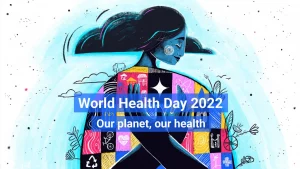
07 April: World Health Day

This year’s World Health Day, WHO will focus on “urgent actions needed to keep humans and the planet healthy and foster a movement to create societies focused on well-being.” Specifically, this will also entail fighting the climate crisis, promoting sustainable development and environmental justice with the aim of preventing fatalities due to avoidable environmental causes.

 Inclusive Peace and global peacemakers join in these efforts for environmental equity and reconciliation and encourage you to do the same. Get involved and join the WHO campaign here!

15 – 18 April: Easter

One of the most important and oldest celebrations in the Christian faith is Easter, which commemorates the resurrection of Jesus Christ. This observance marks new beginnings for the followers of Christ and highlights peace, atonement and reconciliation as core practices within the religion.

22 April: Earth Day

“Act boldly, innovate broadly, and implement equitably!” 

This year we celebrate Earth Day as a call to action for not only the climate crisis, but also the global business and political climate crises. The organisers have planned multiple initiatives, events and programmes to improve our climate literacy and get us involved in one of the five thematic areas from restoration to food security. Learn more here!

While the UN Security Council’s agenda continues to be dominated by emerging and sustained crises, recent efforts by non-permanent Member States show a promising level of imagination and collaboration.

Following recent debates in the UN Security Council, we at Inclusive Peace observe a focus not only on current crises, but also on structural questions. This gives hope to how the UN Security Council can be used to address peace and security in a more holistic, preventive and inclusive way. Here are a couple of examples from recent debates that we think highlight this trend:

Focus on Women, Peace & Security
Recent debates in the UNSC included a strong focus on the Women, Peace, and Security agenda, where the joint efforts of Ireland, Kenya and Mexico in November/December 2021 look set to be carried forward by Norway, the UAE and Albania throughout their respective Presidencies in 2022. In January, Norway furthermore used their Presidency to host a Ministerial-level Open Debate on “Protecting Participation: Addressing Violence Targeting Women in Peace and Security Processes”.

Non-permanent UNSC members have more say
Efforts have also been made to revitalize the “early warning” focus of the UNSC, while also placing a further emphasis on the linkages between climate change and peace and security. These actions demonstrate the potential influence non-permanent UNSC members can have on the substantive focus of the UN Security Council, which can serve to counter the positions of other actors who may have traditionally been less open to bringing such matters to the UN Security Council.

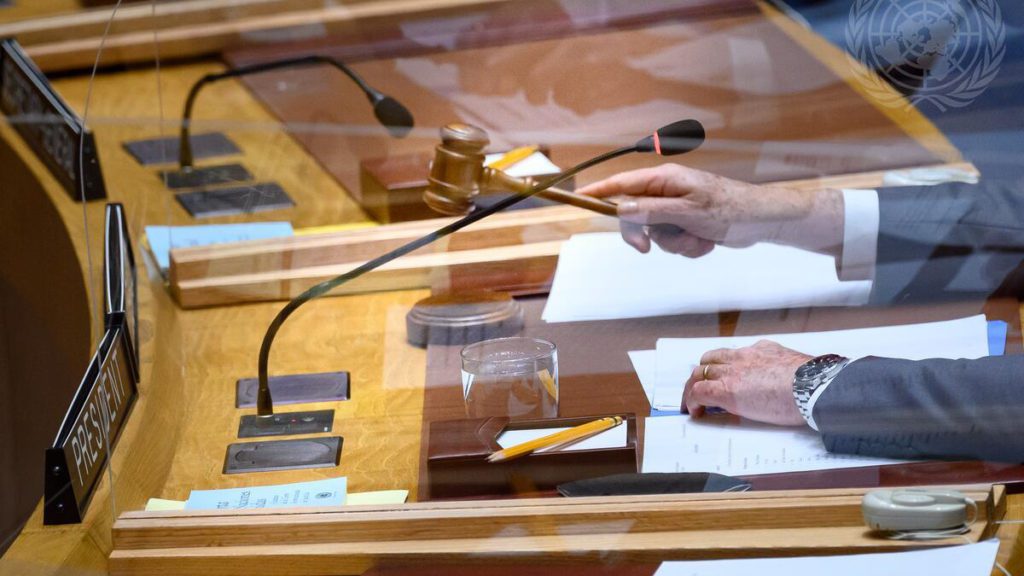
A close up of the gavel in the hand of Juan Ramón de la Fuente Ramirez, Permanent Representative of Mexico to the United Nations and President of the Security Council for the month of November. Photo: UN Photo/Loey Felipe

At Inclusive Peace, we view these efforts as providing a critical forum – including for civil society actors – to advocate and influence implementation by the UN Security Council. However, efforts to advance these progressive agendas are often frustrated by dynamics amongst the permanent members of the council which in turn limits the extent to which progressive agendas can actively shape the work of UN envoys and good offices “on the ground”. At the same time, many UN-supported peace negotiation processes are frustrated or stalled.

We very much welcome the energy, imagination and determination of a significant number of Member States in trying to move the needle forward on key agendas – including on WPS and inclusion more broadly – and see our work at Inclusive Peace as a contribution to these efforts in practical, concrete ways both through our peace process support and our research agenda.

In January, we hosted a discussion on the interplay between National Dialogues and national elections – we here bring you the five key takeaways built on insights from an outstanding set of experts and practitioners.

A National Dialogue does not always play out within a neat and time-bound frame that fits within the term of a government or president ruling a country – sometimes National Dialogue processes happen at the same time as tense political moments such as national elections. Our latest event in the peer exchange series explored exactly this topic and here are the key takeaways of what experts and practitioners from Zimbabwe, Kenya, Lebanon and Myanmar brought to the table.

TAKEAWAY 1: The interaction between elections and ND processes is highly complex

The discussion highlighted how National Dialogues have the potential to diffuse tensions related to elections, but also how they can be derailed or swept away by elections. National Dialogues also have the potential to be co-opted by political elites and used as ‘smokescreens’ to direct voters’ towards achieving their own political objectives.

In Lebanon, recent history clearly shows just how complex the interaction between elections and National Dialogues processes is. Recently, certain actors have called for the need for an urgent National Dialogue to address certain issues ahead of the country’s elections in May 2022. This call, however, is being greeted with scepticism by others. While the country faces mounting challenges, the need for some form of National Dialogue can be seen to be more important than ever, though the current format (and the manner in which it is tied to the political system and the electoral cycle) has proven unable to facilitate the types of conversations required on the need for structural change. This dichotomy only serves to further increase tensions, while further undermining public support in many quarters.

TAKEAWAY 2: Need to recognize both opportunities and challenges

The intersection between National Dialogues and elections presents both opportunities and challenges.

  • Among the opportunities:
    Elections can create entry points for moves towards National Dialogues from political elites. Politicians are trying to attract voters during elections and if actors pushing for National Dialogue processes have public back-up, it will be in the interest of political elites to support visions for National Dialogue processes.

As an example, The Council of Churches in Zimbabwe is hoping to use the run up to elections in 2023 to generate buy-in for a National Dialogues process. National Dialogues can also act as a “pressure valve” to potentially address certain issues in the lead-up to an election, or in the aftermath of an election.

  • Among the challenges:
    Electoral crises can lead to political tension or violence that can close down the space and hope of a meaningful National Dialogues process.

This is currently the situation in Myanmar, where both the military government and the opposition are hoping to defeat one another. In combination with a climate of civil disobedience, tensions in Myanmar are simply too high to envisage a meaningful and inclusive National Dialogue process.

TAKEAWAY 3: National Dialogues are part of long term transitions

Elections are intense periods in any society and they often prove not to be the best time to address fundamental political divisions or question the social contract of a society.
National Dialogues are excellent instruments for this, but for National Dialogues to pave the way for change within a given political system they need to be seen in a longer-term perspective. National Dialogues are part of long term political transition processes with cycles of setbacks and gains. National Dialogues can happen in sequences over many years building on the outcomes of previous dialogue processes.

In Kenya, National Dialogue processes have been part of an on-going political transition process since the mid-1990s. Elections in Kenya have proven to be a major political fault line, which have on occasion led to violent conflict. National Dialogue processes have sought to both assuage the fallout of contested elections and to undertake prevention efforts to avoid tensions around elections leading to violence. By seeing National Dialogues as part of long term transition processes, they can be seen as one mechanism for helping the country manage transition processes, and to inculcate and reinforce a broader culture of dialogue and inclusion.

TAKEAWAY 4: The political system and context influence the space for dialogue

The larger context of a political or electoral system has great influence on how National Dialogue processes play out and what opportunities for change they might bring.
In systems that require a party to win an electoral majority, there is more incentive for political elites to build a culture of dialogue and political consensus, whereas in systems that guarantee certain parties a share of power – such as in Lebanon – political parties fundamentally lack incentive to build consensus.

The political situation in Myanmar, is an example where Aung San Suu Kyi’s National League for Democracy government assessed that they couldn’t influence the National Dialogues process significantly. The National Dialogue was essentially a way for the military to engage with armed groups and not seen as a space for political contestation. This led to their focus on the parliamentary process and followingly the failure to broaden the mandate of the process and transform the military process into a more political process.

TAKEAWAY 5: The type of National Dialogue is key

The discussion also highlighted how the type of National Dialogue process influences what it can achieve. Some types of processes provide a space outside of formal politics to maintain or shape an elite deal, others are more inclusive. In Lebanon, National Dialogues have essentially served as a space to galvanize elite deals and prove, in its current form, to be ill-equipped to address calls for reform and more inclusive politics.

National Dialogues can also be a means of power projection. In a number of contexts, including in those highlighted during the session, National Dialogue processes became a superficial tool for the military to hold onto political power outside the parliament.

Our approach in the event series

By hosting this event series, Inclusive Peace contributes to a better understanding of the dynamics of National Dialogues and explores strategies to improve their effectiveness with our partners in different contexts.

Our approach is unique in the way that we address a topic of interest for National Dialogues practitioners by having peers from different country contexts lead the exchange. Country experts and international experts then have the opportunity to listen and learn from these experiences, but it is the peer exchange that is the main focus of the event.

The first two instalments in the event series, looked at the role National Dialogues can play in helping chart a way towards consensus in tough political environments, and the challenges relating to politicization of national dialogue processes. Read more about our work on National Dialogues here.

Report,

What Makes or Breaks National Dialogues?

This report is based on the National Dialogue research project and its comparative analysis of 17 cases of National Dialogues (1990 – 2014). It aims to contribute to a better understanding of the functions of National Dialogues in peace processes.

October 2017|Anne Zachariassen, Cindy Helfer, Thania Paffenholz,

Briefing Note,

What Makes or Breaks National Dialogues?_BN

This briefing note summarises the findings of a research project on National Dialogues and inclusive peace processes commissioned by UNDPA. It is based on a comparative analysis of 17 cases of National Dialogues (1990-2014).

April 2017|IPTI,

Each month we bring you a selection of key peacebuilding dates in the month to come. Here our choice of selected February events and observances. 

Feb 15.: The Conflict in Yemen: Current Situation and Future Prospects

The Arab Center Washington and partners are organizing a two-day online academic conference on the status quo and future possibilities for the conflict in Yemen on 14th and 15th of February. Our own Thania Paffenholz will attend as speaker on Panel 3 with insights from her signature perpetual peacebuilding approach and the ongoing hybrid consultations with Yemeni women peacebuilders that we are co-facilitating.

Find out more about our take on the conflict in Yemen beforehand by checking out our blog piece on moving from perpetual war to perpetual peacebuilding in Yemen.

Feb: BLACK HISTORY MONTH 

Black History Month is an annual celebration, initially started to recognize the previously overlooked central role of African Americans within U.S. history but now widely celebrated globally. To us at Inclusive Peace, this observance is key as it calls attention to racial issues not only in the US but also on a global scale with regards to the intersection between racial justice, transitional justice and reconciliation, and the never-ending work of peacebuilding. Find out more about the official theme for Black History Month for 2022 here.

Feb 20.: World Day of Social Justice  

On this year’s World Day of Social Justice the UN is focussing on Social Justice in the Digital Economy to foster a dialogue on actions needed to overcome the digital divide, provide decent work opportunities and protect labour rights in the modern era of digital technologies. Register for their virtual event, hosted on 23.02.22 at 10a.m. EST to learn more about what we can do to further this cause!