Category Archives: General

We meet Tecla Namachanja, a renowned peacebuilder, specialised in transitional justice and social trauma healing. Drawing on decades of experience, she provides insights on supporting communities who have suffered violent conflict and human rights violations in Kenya through various mechanisms. 

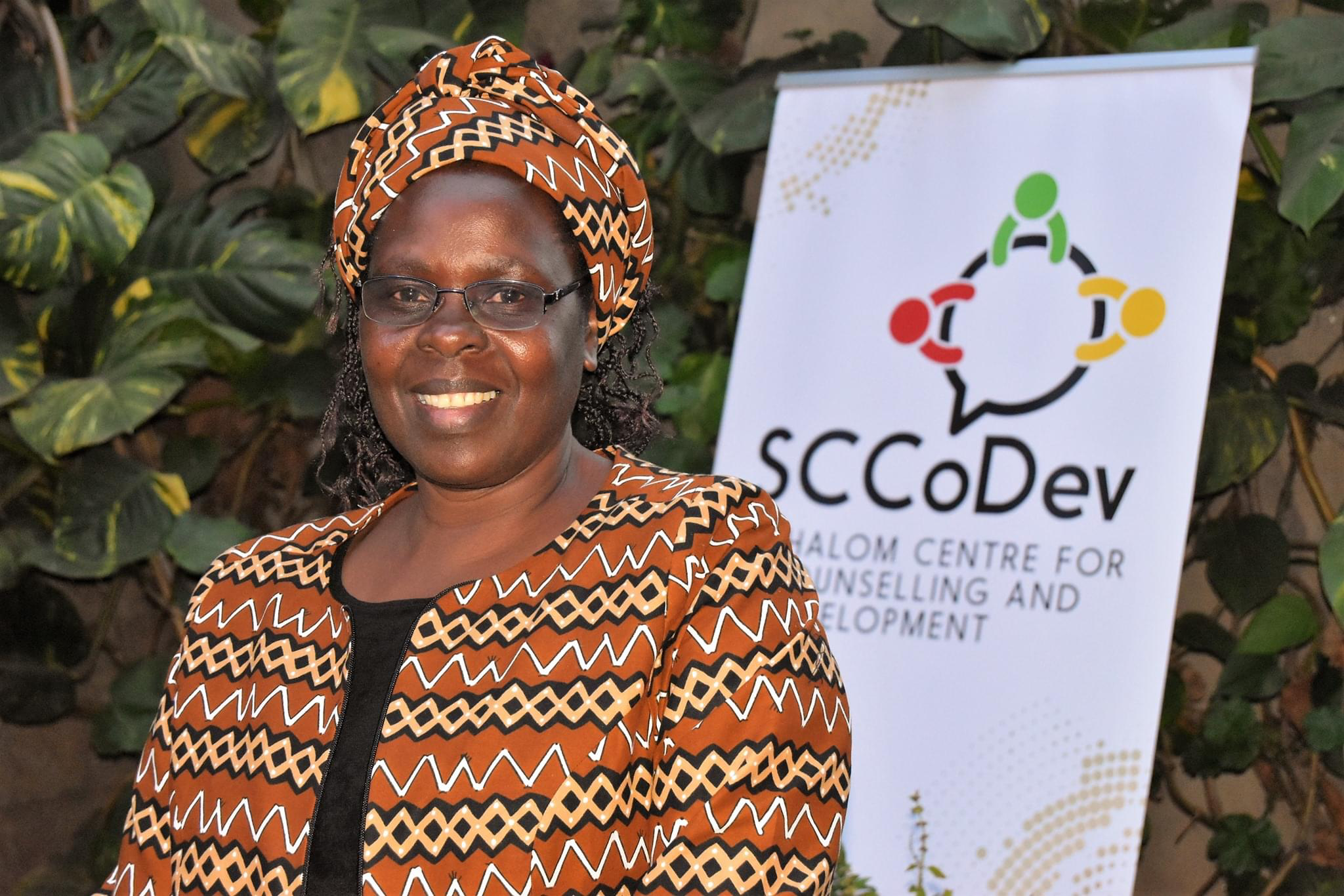
Tecla Namachanja Wanjala, is a globally recognised peace practitioner with over 30 years of experience. She specialises in matters related to Transitional Justice, Social Healing and Reconciliation. She is the former Chairperson of Kenya’s Truth Justice and Reconciliation Commission (TJRC), holds a PhD in Peace and Conflict Studies from Masinde Muliro University of Science and Technology, and is the Founder and Team Lead at Shalom Centre for Counselling and Development. 

What inspired you to work on reconciliation and transitional justice? 

I come from Bungoma, which is considered to be one of the marginalised regions in Kenya. So, when growing up and watching my mother and other women suffering, I wanted to…I joined social work, this developmental profession, because I wanted to support women in areas of livelihood, improving livelihoods. When I graduated from my colleague in 1991 and I searched for employment in my church, the Catholic diocese of Mombasa, where we were living then, instead of being sent to work with the women, I was sent to work with Somali refugees. If you remember in 1991 that is the time that Somalia disintegrated. So, I was sent in a refugee camp to support 30,000 Somali refugees and what the church did was to support supplementary nutrition for children under the age of five years and older people aged 60 and above. I also taught Kiswahili to the young students and pupils. The coastal areas being Swahili-speaking, we wanted the children and young people to communicate with the locals. 

So in 1991 I worked in Utange refugee camp and in 1992 when Kenya experienced ethnic clashes, also known as land clashes, related to the general election, I was sent to work in internally displaced persons camps as a relief and rehabilitation coordinator. I supported 40,000 IDPs with relief food and medical care. I must say that while working with the refugees and IDPs, victims of ethnic clashes, that I experienced the injustices that communities in Africa and in my country experience. To start with the violent conflict was about land. The IDPs were evicted from their land because the people who consider themselves indigenous to where the IDPs were evicted from believed that the communities who settled there were favoured by the government settlement structures. This land was formerly annexed by the colonial regime, the so-called white islands, and so after independence, the communities felt an unfair process was used to resettle communities. 

It was here that I experienced the impact of physical violence but also the impact of structural violence and that is the reason that when the Truth, Justice and Reconciliation Commission  (TJRC) was set up to deal with transitional justice, I embraced it and applied to be a part of it. This is one area that encouraged me and another area that encouraged me was during the South Africa Truth and Reconciliation Commission when I was working under a national umbrella called the Peace and Development Network, I think there was an institution that facilitated peacebuilders from Africa to go and witness the truth-seeking process in South Africa. When I went there, I was encouraged, especially when I visited the  communities, I saw how they were joining with the process, facilitating dialogue in the communities. At that time, I had no idea my own nation would set up a truth-seeking process. 

Another area that encouraged me was when I went to university from 2000 to 2003 and that is where I took a Masters in conflict transformation and peacebuilding. I took a course in restorative justice by Howard Zehr. I really liked the concept of restorative justice, so when I came back to Kenya in 2003, this is the period that Kenya thought we were in a transition after dislodging a long dictatorial ruling party, Kanu, from leadership. Kanu had ruled Kenya from independence to 2003. It was only in 2003 that the coalition allowed for a multiparty form of politics and through competitive ways Kanu was dislodged from leadership. That is the time that we Kenyans thought we had reached a transitional moment and so as one of the strategies to deal with the past, the leadership commissioned a task-force to go around the country to find out if Kenyans preferred a truth and reconciliation commission as a way of dealing with its past. When I came back and I started to catch up and read the newspapers, I realised the discussions, the town hall discussions, were very heated. In fact at one point, they almost got violent. 

So when Kenya set up a Truth and Reconciliation Commission, I thought that having worked with the communities and knowing that while at the community level the line between the victim and the perpetrator is so blurred and it keeps on changing, I wanted to be part of this transitional justice so that I can give my contribution to see how Kenya can impress restorative justice as part of the justice mechanisms when it comes to dealing with the past. 

Why is transitional justice an important topic in Kenya? 

Transitional Justice is a mechanism for a country emerging from a painful past, maybe caused by repressive regimes or a violent conflict. It is put in place to help that country deal with the past. And, in most cases, transitional justice mechanisms are put in place when the country believes that it has emerged from that past and it’s ready to move forward in a more democratic space. The mechanisms are put in place so that the country helps its citizens to put behind the pain of historical injustices and gross violations of human rights that its citizens have faced in a previous regime, so that they are in a more democratic environment that upholds human rights.  

For Kenya, we acknowledge our painful past, right from the colonial regime and onwards in the subsequent regimes that took over power after independence. Kenyans continued to suffer from the regressive regimes, especially the one party regime and under the constitution that only allowed one party to contest for election. Among the injustices Kenyans faced were massacres, assassinations, torture, an unfair judicial and parliamentary system, police brutality and politically instigated violent conflicts. 

When did the moment of reckoning come in Kenya? 

For us, the moment of reckoning came during the 2007-2008 post electoral violence. Thanks to the mediation process, led by the late Kofi Annan and a team of eminent African leaders, who medicated and came up with a peace agreement that was signed. And so as part of the peace agreement they proposed for Kenya to look into its historical injustices and gross violation of human rights because during the 2007-2008 conflict, the way communities fought each other and the reason the conflict flared up was over a contested presidential election. The more we viciously went against each other, we realised the rage and the anger that we faced against each other was beyond surely a stolen election. It was at that moment we realised the historical injustices, the gross violations of human rights, the cycles of violence we have experienced since especially embracing the multiparty politics has left bitterness among Kenyans against each other. 

Can you tell us about your role as Chairperson of the Truth, Justice and Reconciliation Commission?

One of the proposals was for Kenya to set up a Truth, Justice and Reconciliation Commission, where I was part of that process. The mandate of the Commission was to investigate historical injustices and gross violations of human rights that the country faced from independence in 1963 to 2008 in February when this peace agreement was signed by the principals of our coalition government. We invited these affected people who had experienced historical injustices and gross violations of human rights to come forward in a statement-taking process to state the violations they may have suffered. I remember we came up with around 40,000 statements from Kenyans who wanted to be a part of this process. Out of the 40,000 statements, we selected around 1000 of them and conducted hearings. What truth-seeking processes during the transitional justice do is to paint a global picture of the violations under investigation. So through the selected cases, we conducted hearings in almost every county. During these hearings, the survivors came forward and shared their painful stories with the rest of the Kenyans, and we invited the people that were adversely mentioned to also come forward to state their case and share their story. 

I remember asking, because I was in charge of the Reconciliation Committee and at each hearing, whenever I attended, I asked the witness what she or he expected out of this process. Some really acknowledged the fact they were given a chance to share their painful stories. I remember a woman who suffered during one of the massacres that took place in Wajir. She was raped in the process. I think the massacre took place in 1984. We wanted to give her a chance to be a witness anonymously and she said no. She said: “I want the world to know what happened to me because whatever happened to me, happened in public.” And she stood there and shared everything she had suffered. And after she had shared, she said: “Now I can rest because I thought I was going to my grave with this pain.” 
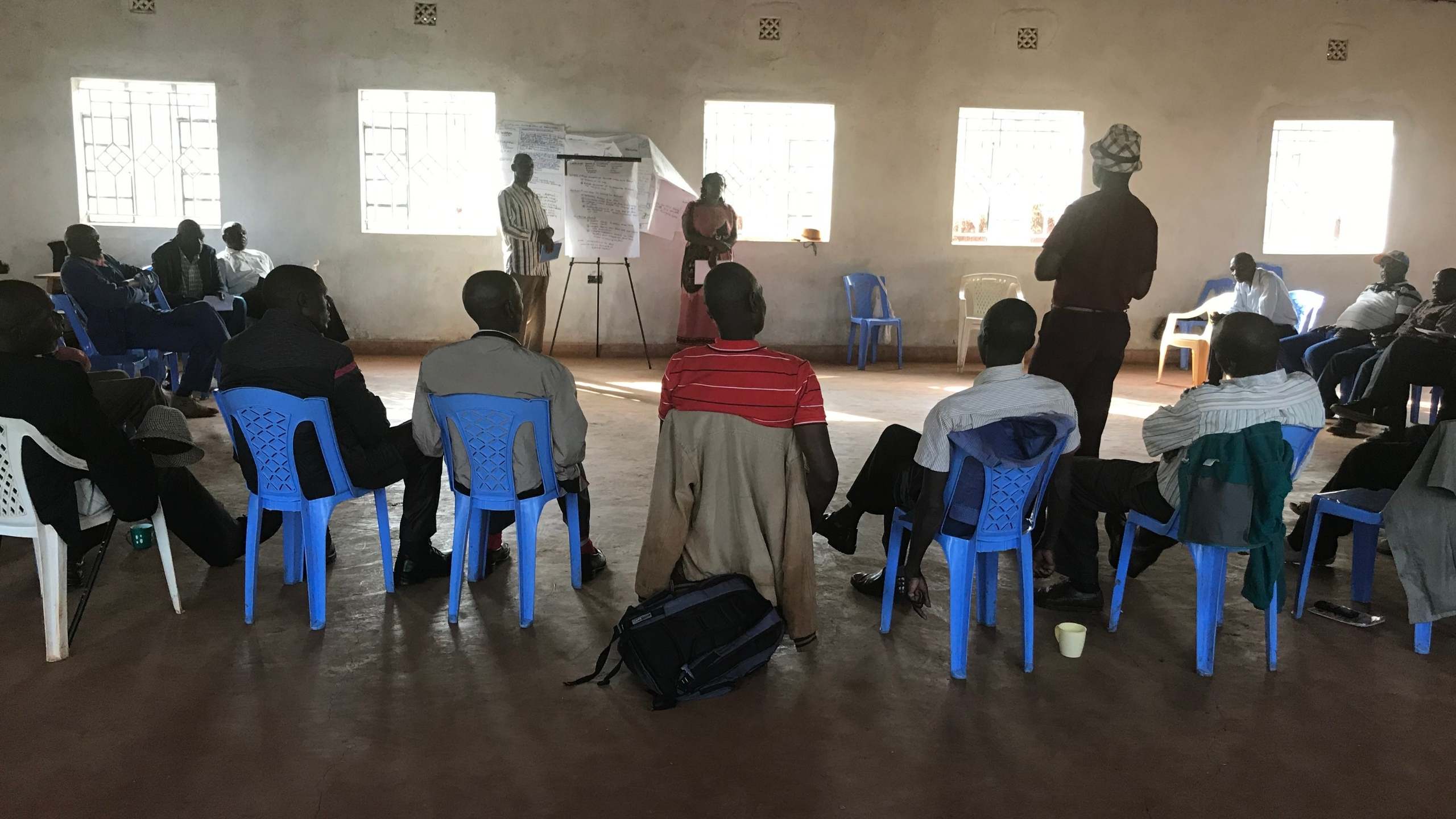
Elders Circle meeting on preempting electoral violence held in Mt. Elgon, Bungoma County, Kenya. February 2022. Photo: Tecla Namachanja 

And after the hearings, we came up with a report and for Kenyans this is a historical report because I know before the Truth Commission was set up, many investigations by human rights groups had taken place but the fact that the government set up this commission under an act of parliament was an acknowledgement that yes, we were coming from a painful past. It was an affirmation that yes, some of the segments of the population had suffered and we needed to confront our painful past in a space where we could talk to each other. We expected after that that reparative measures were going to be put in place. 

Were your expectations met in terms of outcomes from the process? 

Many people acknowledged that the process was very important. Many people acknowledged that for the first time they got to hear in public what the victims had suffered. Some communities acknowledged that they were not alone in their suffering, especially when they heard from other communities. The report we came with, we came up with recommendations and according to the mechanism that set up the truth commission and after completing the work, we were to hand over the report to the president, which we did. The president was expected to hand over the report to parliament, which he did. Parliament was expected to debate the findings and recommendations in the report, which they did not do…The report is stuck in parliament up to now. So this means most of the recommendations in this report have not been implemented. 

I was also wondering why the report was stuck in parliament for a long time and I was bitter because at one point when the commission faced leadership challenges I took over the commission as an acting chair and steered the commission for about 18 years. I became the face of this commission. For a long time, I lived with a guilty conscience from promising so much to the survivors, having elevated their expectations. Before the TJRC, there were many reports that had been written by human rights groups with regards to the violations that Kenyans had suffered, but this was the first official institution sanctioned by the government.

In 2018, I was invited to be a research fellow and during this time I reflected on why nations set up truth seeking processes, yet when it comes to implementing the recommendations from these reports, it becomes a tall order. I did some research on how Germany is dealing with its past. I interviewed the chairman of the former Canadian Truth Commission. I interviewed a colleague from the South Africa Truth Commission and someone from Brazil. What I learned is when nations set up truth commissions, at times they face some challenges and one of the challenges is the moment of transition. I think when a nation is in total transition and leadership is completely changed, it becomes easy. Especially if the new leadership is one that comes with a decision to look into the country’s painful past. 

But with governments of national unity, like the one embraced by Kenya,. I doubt that we were ready to face ourselves in the mirror and look at what happened. At one point, I thought this commission was imposed by the peace accord. I doubt that it evolved from within. Because as I say it was parliament to sanction the implementation of this report. Among the parliamentarians, when you look at the report, they were adversely mentioned by the survivors as among the people who perpetrated the historical injustices…When a country is not in total transition and we have leftovers from previous regimes in government, it becomes very hard for them to sanction the recommendations of the Reconciliation Commission. I think that is what we experienced in Kenya. 

I think Kenya was the first commission that included the justice component. Ours was the Truth, Justice and Reconciliation Commission, and when you look at the objective first to promote peace, justice, national healing and reconciliation among the people of Kenya. 

Because maybe where we are coming from in Africa, when we think about justice, in most cases it’s about retributive justice and that is where most of the leaning was when it comes to the recommendations. So the justice component really interfered with the implementation of this report, especially where we recommended further investigation leading to prosecution. I think South Africa did not have that. When you look at our mandate also, there was hardly any space for amnesty because it prohibited us recommending an amnesty for crimes against humanity, which was the majority of the crimes. 

Why the report is stuck in parliament is that we have perpetrators still in leadership if it is not them themselves, it is their relatives or their networks and so the TJRC report is considered a hot potato. 

What would you have done differently in the Commission? 

There are various transitional justice mechanisms, truth-seeking is just one of them. When you look at the mandates of these truth commissions, there is a tendency to land everything in one basket which does not really help; recommending reparations, recommending further investigations leading to prosecution, recommending an amnesty even when the mandate does not allow. Looking at the structure from the national all the way to the community level, I think that is where the challenge is. I think it is good to separate these mechanisms. 

For example, Kenya had a chance maybe to put up a hybrid court like what Sierra Leone did to deal with issues related to legal justice. Of course we had the ICC process but the ICC process only looked at the people who held the most responsibility for the violence that took place in Kenya. I think apart from the ICC, we should have had a hybrid court to deal with the perpetrators of gross violations of human rights or crimes against humanity. Then we should have left the truth-seeking process for what it is; to focus on the victims, the survivors – truth and reconciliation, truth healing and reconciliation. So that really this commission can facilitate healing and reconciliation among the people of Kenya. Because of our mandate of the legal justice component, the truth commission was sort of a monologue. It was just for victims to come and share their painful experiences. The adversely mentioned people hardly helped the victims because what they should have done was to acknowledge their role so the victims can forgive them and move on. But because of that legal justice component, the retributive justice component, those who come before the commission were there to deny their role in the injustices, pass the buck to the higher level…or justified their role in the perpetration of the injustices that took place. 

What is ongoing in truth-seeking and reconciliation in Kenya? 

Transitional justice is a journey and I think Kenya, with all the challenges…Kenya has been on the journey. It has set up reforms, starting with the constitution. In the new constitution, we no longer have one party, it is multiparty. There are clauses about integrity, even when it comes to holding public office. Nowadays, when you apply for any job in Kenya, the number of papers you have to produce, there are so many, from the anti-corruption body, a certificate of good conduct…You have to show you are a person of integrity before you can be interviewed for any top position in Kenya. Kenya has put in place the judiciary reform measures and this is part of the transitional justice; all judges, I don’t know if magistrates also, they have to go through the vetting process. Kenya has put in place police reforms to prevent police brutality. There is even a body to oversee this. Since the signing of the peace accord, Kenya is on the journey of transitional justice and it’s not a one-off activity but it is a continuation. I know some of the recommendations in the TJRC report are being implemented, For example, we have the Land Commission. I know some of the recommendations by the Truth Commission are being implemented by the Land Commission. Kenya has the National Commission of Human Rights, an independent body that continues protecting and observing human rights. Kenya has a National Cohesion and Integration Commission to foster national healing and reconciliation. So we have government institutions that were formed as part of transitional justice and they are continuing.   

In 2019, when I came back from my year as a fellow in Berlin, I said I can continue mourning why the report is still stuck in parliament and not being implemented. Or I can, as a resource person in peacebuilding, trauma healing, transitional justice, pick up the low hanging fruits and start implementing some of the recommendations of the commission. I selected trauma healing. Truth commissions re-traumatise communities. In this report, to paint a global picture, we selected a community from Mount Elgon as a case to show the ethnic violence. In the recommendations, we came up with recommendations about memorialisation, setting up trauma-healing institutions and helping communities deal with their traumatic experiences from violent conflict. This is what I’m doing. Yes, Kenya is on the journey of transitional justice. I think civil society needs to come on board more to support this journey of dealing with the painful past.
The news agenda plays a major role in ways in which conflict and peace processes are perceived in the world. Our Peace Process Support Coordinator, Alex Shoebridge reflects on media coverage of Ukraine and the consequences for other global conflicts. 

The double standards and underlying racism of some of the coverage from Western media outlets on the war in Ukraine has not gone unnoticed by critics and media on the African continent, in China and the MENA region, as well as by Inclusive Peace partners in those same regions. Countries outside Europe hosting large refugee populations or experiencing internal violent conflicts have seldom received the same sort of sympathetic and compassionate coverage and response. The international solidarity afforded to Ukraine is not afforded to conflicts in places like Ethiopia, South Sudan or in the Sahel region. 

The fact that a war in Europe and images of blond-haired, blue-eyed, and Christian refugees  fleeing to Western Europe, receives maximum attention from Western media outlets is not surprising in itself, but it also has consequences for how EU countries support and perceive other conflicts in the world and forced displacements that follow. The implicit racist elements in the response shapes the public opinion which again directs donors’ and policy makers’ attention and priorities. International aid is now being redirected away from African, MENA or Asian contexts to respond to Ukrainian refugees and welcoming policies are being uniquely tailored for Ukrainian refugees – in sharp contrast to the reception that those fleeing from Afghanistan, Syria, Somalia or other conflict contexts receive. 

While it could be easy to dismiss this coverage as isolated instances divorced from wider political realities and inequalities, it is perceived as just the latest example of global inequalities and underlying racism which governs the relationship between the West and the rest of the world. There are also perceptions of a certain hypocrisy about the West’s insistence on Ukrainian sovereignty after years of violence following stated regime change objectives across the Middle East, where sovereignty was seemingly less valued. This has implications for how the West is perceived and received in terms of engaging in and supporting peace and political transition processes. In countries like Ethiopia, the public opinion now turns its back on Europe and Ukraine and leans towards China and Russia.

Much has been made of the economic impact of the war in Ukraine, but less attention has been paid to the political ramifications facing the West in how they engage in peace and political transition processes in other parts of the world. Explicitly racist coverage and policy responses will only serve to further undermine credibility and entry points to support national actors – whether it be governments, opposition groups or civil society. This holds risks of violent conflict enduring for longer, to the detriment of the civilian populations in these contexts, and further undermining the ability of the West to support conflict resolution, mediation, and peacebuilding efforts in such contexts.

Inclusion has for over a decade been a buzzword in the peacebuilding field. We know when inclusion works, peace agreements are more likely to endure if youth, women and diverse minorities take part.

Inclusion is now central to the implementation of normative policy frameworks such as the Women, Peace and Security (WPS) agenda, the Youth Peace and Security agenda (YPS), and the Sustaining Peace resolutions. 

Even though these frameworks have inspired more inclusive peace and political transition processes, there is an overfocus on inclusive processes and a neglect of what it actually means to reach an inclusive outcome. 

What do we mean by inclusive outcomes? This is a society in which conflicts are resolved without violence or discrimination, where all members are equally able to access their full human rights regardless of their gender, age, ethnicity or religion, disability, gender identity or sexual orientation

There is a general focusing on breaking down the barriers to inclusive processes, instead of looking into opportunities and approaches to enable inclusive outcomes. Inclusive processes are difficult enough to achieve, and if we lose sight of the goal – a peaceful and inclusive society – and focus only on the inclusive aspects of a process, time, energy and money might be wasted. 

Examples of inclusive processes that have resulted in inclusive outcomes are rare – exactly due to the lack of attention to inclusion beyond the process itself. However, there are instances when inclusive processes have led to inclusive outcomes. 

As a result of Nepal’s peace process, quotas have been implemented to increase representation of women and disadvantaged ethnic and caste groups as a part of the country’s legal governance structure.  Record numbers of women and representatives from disadvantaged groups were elected in the 2017 elections

In South Africa, mechanisms of the peace process gave rise to meaningful public participation. Members of civil society organisations, including trade unions and women’s organisations were included in power-sharing executives as representatives of the major political parties and exerted considerable influence. The newly-elected parliament was broadly representative and was committed to civic politics and inclusion as a guiding principle. This enabled the inclusion of political and ethnic minorities in all decision-making organs and substantive civil society input to other facets of the peace process, notably the Constitutional Assembly and the Truth and Reconciliation Commission, which was initiated and headed by prominent civil society and religious leaders. This approach laid the foundations for a more progressive and inclusive governance structure for the country going forward. 

The examples given demonstrate that inclusive outcomes are possible, so what needs to change in peace and political transition processes to make this happen? We know a shift of focus in peacebuilding and peacemaking is needed, but how can this be achieved? 

First and foremost, we see that there is a need to focus not only on women’s participation, but participation by all groups that constitute a society – so not only privileged groups in urban centres, but also groups from different ethnic, religious and geographic backgrounds that make up the full picture of a country’s population, including older people and representatives for the growing youth segments of many conflict affected contexts. 

The cases of South Africa and Nepal provide examples of how an inclusion formula can establish a framework for a maximalist approach to who is participating and how in the future of decision making in all aspects of society and politics. It outlines the standards of participation not only in the peace process but in a country’s governance structures and socio-political sphere in the long term. And truly inclusive participation is not only achieved through implementing quotas for individual specific groups – such as women, youth and ethnic or religious minority groups –  but through broader affirmative action and representative diversity criteria reflecting the makeup of a society which are incorporated into every day formal and informal institutions. 

It is vital to apply a holistic approach to inclusion from the initial design stages to final outcomes. In our recent work to support partners working to influence the National Dialogue process in Ethiopia, we identified some insights to push for inclusion and influence in the early stages of a political transition process. They include the need for early action to boost prospects for sustained engagement and influence; building effective coalitions and making sure external support matches coalitions’ needs. Without these key ingredients, inclusion in both processes and outcomes will be hard to reach.

We share insights from our ongoing process support work in Ethiopia, which includes collaboration with women’s rights organisations and networks to increase women’s representation and influence in the National Dialogue process. 

Over the past few months, Inclusive Peace has worked closely with an emerging coalition of women’s rights organisations and networks in Ethiopia that all seek to push and shape women’s engagement and influence in the forthcoming National Dialogue process.

Recently, we participated in a two-day workshop organised by TIMRAN, which brought together key networks and organisations such NEWA, EWLA, Setaweet and a number of other women’s organisations working across Ethiopia. At the workshop, Inclusive Peace shared a number of key insights from comparative evidence for discussion around what works and what doesn’t when women’s rights groups and their supporters push for women’s engagement and influence. 

Early action boosts sustained engagement and influence 

Since the Ethiopian National Dialogue Commission was recently established, there has been a surge of interest from across Ethiopian civil society to better understand and engage in the process.  In recent months, different groups of women active in civil society have sought to mobilise and influence the design of the dialogue. For example, they have sought to influence the nominating process for appointing members of the Ethiopian National Dialogue Commission. However, they have found the process frustrating because of the limited window of opportunity given to women’s groups to participate. 

Building on their contribution to the process, a broader set of women’s organisations and networks have come together to develop a women’s agenda outlining a set of common positions, proposals, and areas where the coalition intends to contribute and engage in relation to the National Dialogue process. Such early actions are a good start – though good results are not guaranteed and require ongoing efforts. 

When looking at comparative examples, early action boosts the prospects of achieving sustained engagement and influence in National Dialogue processes. In Yemen, for example, advocacy efforts by Yemeni women activists and women-led organisations contributed to the adoption of a progressive “inclusion formula”, which guaranteed significant participation of women, as well as youth and other groups, in the different structures of the National Dialogue. 

Coalitions are key

Experiences from South Sudan to Cameroon show that the ability to collectively organise and engage on the basis of common positions can be the difference between effective women’s engagement and influence in National Dialogues, and frustrated, fragmented efforts. 

During the South Sudan R-ARCSS negotiations, multiple women’s organisations approached the IGAD-led mediation team, only to be turned away and encouraged to organise and present a united front. Fissures within women’s civil society movements can often undermine these efforts, although in many instances, despite these inherent differences, it is possible to work towards a “women’s agenda” or set of common positions and demands. Beyond having a potentially greater influence in the process itself, coalitions are also able to connect to wider segments of society, which can be key in ensuring public awareness and support. 

Many emerging coalitions form too early and are too concerned with governance structures and ways of working, which can slow momentum and divert attention away from key questions: What can we do together? How do we organise? While the latter is a critical issue to address, it often becomes clearer once the coalition has more experience of working together and as details about the National Dialogue process emerge. In short, form should follow function when it comes to building an effective coalition. 

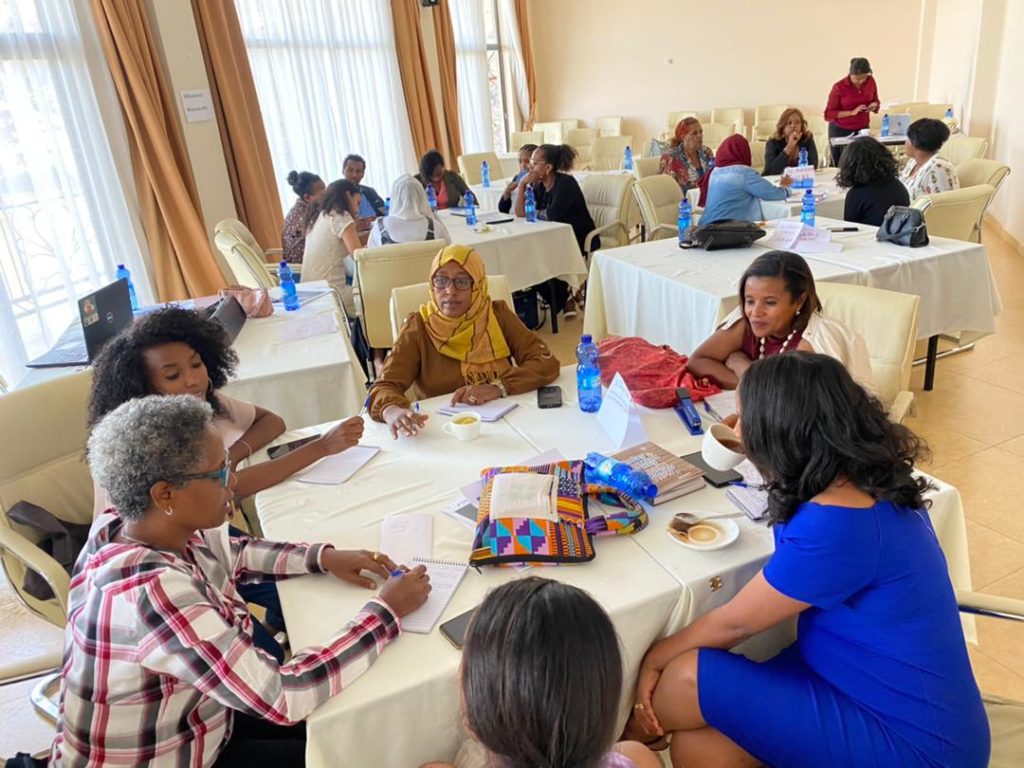
A workshop led by Timran, a civil society organisation in Ethiopia dedicated to women’s participation in politics and public decision-making. Photo: Alexander Shoebridge (2022)

External support should match the coalition’s needs 

There is significant willingness and interest from donors, INGOs, and UN agencies to support women’s engagement in and around National Dialogue processes, such as the one in Ethiopia. However, it is critical that such support is demand-driven. External support and skill-building can be valuable for advancing civil society’s engagement and participation inside and outside of the National Dialogue, but the support is unfortunately often pre-designed by INGOs, UN agencies, and donors rather than responsive to needs within. 

Stakeholders in a National Dialogue do not automatically know what kind of support and capacity building they need, as this is often their first experience. While many INGOs or UN agencies have standard training modules – negotiation skill training, issue-based training such as constitution development, conflict analysis, etc. Support often results in a focus on ready-made outputs like training workshops and consultations that might not be needed at this stage of the process and can hinder the effectiveness of actors engaged inside and outside the National Dialogue, as these actors have less time and focus on the most relevant strategies and needs. 

Ethiopian civil society, particularly civil society engagement on peacebuilding issues such as national dialogue, remains nascent and emergent. A needs-based and humble approach in which donors and external actors (such as INGOs and UN agencies) should engage with civil society in the coming period will be critical in shaping the future trajectory of Ethiopia’s civil society. 

There have been a series of global commitments in recent years where donors have agreed to pursue more flexible and adaptive funding and direct a greater proportion of funding to local actors. And it is much needed. Globally, 0.2 percent of bilateral funding to conflict-affected contexts is received by women’s rights organisations and almost half of youth-led organisations operate with an annual budget of less than USD 5,000, most of which is mobilised through local donations (GPPAC, 2020). Most bilateral and multilateral donors commit to the Grand Bargain on Humanitarian Aid, which set a target of 25 percent of funding allocated to national actors. 

In Ethiopia, there is now an opportunity for donors to use their support to the National Dialogue to translate these commitments into practice. There is also an opportunity for local actors to remind donors about these commitments and communicate to INGOs and their donors how the support should be shaped to respond to women’s coalition needs. 

Moving forward

For Inclusive Peace, it is a real privilege to continue to accompany and support the work of Ethiopian women’s rights organisations and activists as they look to engage in and influence the National Dialogue process. The coalition is now moving ahead with advocating for the common Women’s Agenda, which sets out proposals for how the National Dialogue can take shape, while also presenting a set of areas where the coalition themselves see their added value and contribution. 

It remains to be seen to what extent these ideas will be taken on board, but the energy and determination women activists have shown coming together augurs well for the future, their leadership and influence both in and around the National Dialogue and beyond.

In this piece our Peace Process Support Coordinator, Alexander Shoebridge reflects on how the events in Ukraine may create unforeseen entry points in Belarus, and can prompt civil society to rethink how they seek to counter the regime.

Few could have predicted what is now unfolding in Ukraine. More than one million people have become refugees in the course of a week and as Ukrainian cities become increasingly under siege Ukrainian civilians – IT specialists, engineers, nurses, and teachers – take up arms to resist invasion. While tension between Russia and Ukraine may have been steadily building for a number of years, the speed in which the situation has evolved is astounding. The range of scenarios and flow-on effects of the war which could emerge in the coming weeks and months is even more mind-boggling, ranging from the opening of democratic space in Russia and Belarus, through to a nuclear winter.

At Inclusive Peace, we think of moments like these as “critical junctures” – moments in time where the status quo is fundamentally challenged and where the range of potential futures is far wider than what could have otherwise been foreseen. In this piece, we reflect on what this moment in time means for civil society actors in Belarus.

While much of the media attention is rightly on Ukraine, the situation in neighbouring Belarus has received less attention. Since August 2020, the Belarusian regime has effectively exercised repression to either arrest political opponents, or force them to flee overseas. At the same time, the regime has moved to consolidate the position of President Lukashenko via a recent constitutional change process which has been seen by many as an attempt to prolong his stay in power, while simultaneously reducing the influence of the country’s Parliament.

In recent weeks, as the country approached the referendum, the Belarusian opposition faced fundamental questions regarding their medium-term strategy and points of leverage going forward.

On Sunday 27th February, as Russian troops continued their invasion of Ukraine, Belarusians went to the polls to partake in that country’s Constitutional Referendum. While the exiled-opposition had previously resisted the urge to call for protests inside Belarus – knowing the likely harsh response from the State’s security apparatus – the events in neighbouring Ukraine (and the role of the Belarusian regime in enabling them) prompted a shift. In a statement prior to the referendum, Svetlana Tikhanovskaya called for protesters to make their rejection – both of the referendum and the war – known. Though it is hard to verify the precise numbers, these calls were heeded by hundreds of Belarusians, marking the biggest public demonstration in more than a year. In Russia, more than 7,000 protestors have been detained across 100 cities, according to OVD (an independent human rights media project). In recent days, there have also been reports of Belarusians sabotaging Russian military equipment through cyber attacks and calls from President Lukashenko to punish any “backstabbing” of Russian allies.

A second shift has also occurred in relation to how parts of the democratic movement have sought to position themselves internationally, from exiled political opposition to an exiled government. While Belarus is currently the host of nascent talks between Russia and Ukraine, the exiled Tikhanovskaya had initially offered to play a mediation role, beating Lukashenko to the punch. Days earlier, Tikhanovskaya and other opposition figures announced the formation of a transitional cabinet as the national authority of Belarus. Other parts of the opposition movement have taken up arms in support of Ukrainian military and “territorial defence” units. These moves reinforced notions of illegitimacy of the current regime, and underlined the interdependent relationship between the current regimes in Minsk and Moscow. The raft of additional sanctions placed on Russia and Belarus may ultimately weaken this symbiotic relationship and simultaneously undermine the current political economy status quo within both countries. Such a set of circumstances would have been unthinkable just a few weeks ago.

One must not (and can not) lose sight of the tremendous human tragedies which have been experienced over the past week (and, sadly, will most likely continue for sometime, and long after the guns have fallen silent). At the same time, the possible futures that lie ahead present entry points to change the status quo in Belarus in ways which would have been impossible to imagine.

This newest piece in our trend content series deals with some of the underlying factors for why women’s inclusion in peace and political transition processes is still lacking and what there is to do about it. Our Associate Director, Sarah Taylor and our Executive Director, Thania Paffenholz take a thorough look at the status of the WPS agenda and what it takes to move it forward.

Thania Paffenholz: Hello Sarah and welcome! It is a pleasure to have you here Sarah, our Director of Women, Peace and Security, currently on leave of absence as Policy Analyst at the the Compact for WPS and Humanitarian Action at UN Women. Today we are talking about women’s inclusion in peace processes and why women’s participation on the one hand seems to be advancing and on the other hand in a certain sense seem stuck. But before we start Sarah, what is in fact the Women, Peace and Security agenda?

Sarah Taylor: Sure, thank you Thania, it is so lovely to have this conversation with you, I can’t wait to see where it goes. Your question is an extremely broad question because the agenda encompasses a great many things – and it has truly evolved over the 21 years since the Security Council first adopted Resolution 1325. When it was adopted, the agenda pulled together efforts around mobilization particularly of women in communities affected by conflict demanding a set of things. Among other things, women should be recognized and supported in their roles and efforts in conflict prevention. The thread through the agenda is of course respect for women’s rights and to bolster the demands, there is this normative policy framework including multiple Security Council resolutions, national action plans etc.

Thania Paffenholz: OK, so to sum up, we are talking about a normative framework that puts the attention to women and girls in various circumstances of conflict; from protection to inclusion in peace processes coming from a rights-based normative approach. As a consequence, we now have people that call themselves WPS practitioners like yourself, so, what is a WPS practitioner? And what are you?

Sarah Taylor: I don’t know what I am!

Thania Paffenholz: Haha, OK, but how do you become a WPS practitioner? What has been your way?

Sarah Taylor: You know, there are multiple ways to be a WPS practitioner. You can think of a WPS practitioner as anybody who is engaged in a subsequent way around issues of conflict and crisis with a gender lens. You can be a women’s protection advisor for the UN working in South Sudan; you can be somebody who is working to facilitate the voices of women and girls in under-the-radar talks in for example Myanmar or you can be a uniformed woman – police or military – in Ukraine for example. You can also work at the policy level – in the UN, in civil society etc. – trying to get policy to be responsive to the particular considerations and concerns in the field. I fall into the latter category with an academic and policy background.

Thania Paffenholz: Thanks! OK, let’s move to the global challenges around women’s participation in peace processes. In short, we have this normative framework in place – but with current global developments, there is a need to protect the gains of the WPS agenda and to avoid that things are moving backwards. Could you explain what you see as the current limiting factors for the advancement of the WPS agenda?

Sarah Taylor: Yeah, it has been a couple of distressing years on multiple fronts. We have the continuation of a global pandemic which has wildly exacerbated not only global inequalities but also access to health care and vaccines. The pandemic has also catalyzed an absolute disaster in terms of violence against women – the incredible rise in the rates of domestic violence is just one example.

And at the same time, we have seen other distressing developments for women’s rights and participation; the coup in Myanmar, the ongoing violence in Ethiopia, the absolute disaster that is Afghanistan, the ongoing unrest and political violence in Sudan, the earthquake and intense political violence in Haiti and then ultimately the situation in Ukraine. And those are just the crises that are hitting the headlines, right? But all of those crises have a gender component to them – in Sudan women continue to be protesting in the streets against the coup, in Ethiopia the UN has repeatedly talked about sexual violence as part of that conflict, in Myanmar, women have fought for years to have their voices heard in efforts around the peace process and in Afghanistan.

All those developments are not heartening. And the major struggle for the international community is the question of what to do in a situation like Afghanistan. I mean, you saw what happened. All of this energy has been put into highlighting women’s rights and then when the Taliban took over, the international community was stuck in terms of what to do other than say to the Taliban: as the Taliban, you need to respect women’s rights. But the response was muddled – you had international delegations of ALL MEN going to talk to the Taliban. You had international organizations telling their women service providers and humanitarian workers: Stay home. Which is NOT the message we want to be sending to the Taliban. So, when it comes to these rapid inflection points, the international community is still really confused about what to do. And unfortunately, it is the women in these communities that pay the price.

Thania Paffenholz: So, globally we have a situation that is not looking great – we have authoritarian backlashes, we have extremists coming into power and setting an example for other extremists and we have an international community that is not doing enough to support women in these crises. Essentially there is, as in Afghanistan, an enormous focus on women’s rights and then in one day – DAFF! – all of the effort is gone. In our work in contexts like Syria and Yemen for example, we see that despite of the fact that the peace processes have been stuck since years and that peace talks are non-existing, the activities for women on the ground are still operating under the illusion that women will be included in the next round of peace talks – talks that are nowhere in sight.

Sarah Taylor: Yes, there is a divorce from the reality of the situation, right?

Thania Paffenholz: Yes, I think that is a good point – and the question is if the international community understands the realities of contemporary conflict? It seems to me that what you are saying is that the WPS agenda and gender issues can’t be separated from the international way of dealing with crises. Is that right?

Sarah Taylor: Yes, definitely. There is a need to recognise what conflict and crisis looks like in other settings and to learn from that. We need to ask ourselves, what can we learn from the way women have engaged as activists, as practitioners in political crises in Latin America? What can we learn from women that are dealing with an existential humanitarian crisis which is climate change and big power confrontation in the Pacific? They are mobilized and they are working! How are both activists, WPS practitioners, states and UN actors grappling with the crises that are not the classic state vs. state conflicts? What can we learn from those situations where we are addressing really complex crises that are long-term and ongoing? Can we take some of those tools and apply them?

Thania Paffenholz: Yes, since World War II, the international community has come up with these frameworks, institutions and mechanisms in order to deal with world peace. In relation to Ukraine for example, you have the OSCE that was basically founded in order to keep Russia in dialogue with the West. The OSCE is still there, but is it functioning? We have a Security Council where Russia is in, but if Russia and the US are in confrontation, we will most likely witness a repeat of the scenery of the eighties where the Security Council was paralyzed. So, there are these tools, institutions and mechanisms, but somehow they are not fit for purpose. That’s on the level of states, but then as you rightly say: There are so many experiences from women groups all over the world that have done so much – and we need to listen to those.

However, the problem is that the world is still operating in a certain way where the states in their manifestations are trying to fix the world and are incapable of it. Then we have the multilateral institutions, such as the UN, which are run by states, and we can’t expect these to fix the situation, because they are an accumulation of states. And then there is civil society trying their best, but the efforts are disconnected.

Sarah Taylor: Yes, one of the things that I always find fascinating is for example the perception of what the Security Council can and cannot do. I mean, pick your multilateral or any regional institution – if the members are states, you are going to have an inevitable diminution in terms of what that multilateral institution will be able to “do”, because it is states with all their political baggage and perspectives coming to the table. And to a certain degree the whole is greater than the sum of its parts, but the degree to which it is greater really varies.

So one of the lessons learned on WPS, for me at least, is: When it comes to a woman who is Head of State or otherwise sits in the halls of power, as much as we would like that to be an immediate lever of change, it is not. We have to accept the realities of what it means to be somebody who progresses into leadership of a specific institution. Male, female, non-binary or other; a leader has a constituency and that constituency is their institution and the values of that institution is what that person is representing. If that institution has gender equality and rights as a priority, then the person that is leading the institution will hold those values and put them forward. But the idea that an individual can be responsible for overturning all of these institutionalized inequalities is just not going to hold.

We need to simultaneously push for female leadership and for institutional change. And then we need to apply this more nuanced perspective to what change looks like. When you for example take a look at advocacy around the mandates for the UN in Afghanistan, the Informal Expert Group or the discussions UAE will be having on WPS the coming month, it becomes clear that there are very concrete ways to shift and move and change the way that the UN body is doing its work. And it has changed, so I think if we are more nuanced in the way that we think about how these institutions can and cannot affect change, we can find avenues for it.

Thania Paffenholz: Yes, fully agree – one should be careful not to overload the idea of women leadership. You can’t just say: You are a woman, fix the situation. Because we know that the systems are so hard to change. But it is also good that you point out that there are spaces within the systems that can be influenced. What we need is responsible leadership be it female or male or whatsoever, and I think that is what we are often still lacking.

But Sarah, if we are to sum this conversation up, it very much shows us that the WPS agenda is NOT a separate agenda. It is part of the context we live in and the context we live in is apparently not the same as the international community seems to handle in the current way of dealing with conflict and crisis. We need more reality based treatment of conflict and crisis situations globally. And then as you rightly say, we need to highlight and get inspired by women and men who have influenced change be it of systems or in daily lives. Thank you very much, Sarah! Do you have any last ideas or words for us?

Sarah Taylor: Well, I think that in many ways the WPS agenda is flawed and we haven’t seen the results that we want, need and deserve. But the WPS agenda remains a useful tool and if we look at the agenda in the same nuanced way that we have just discussed in relation to how the entire international system acts and what realities are, I think we can see a lot of successes from the WPS agenda. We can also see that there is a lot of work still to be done. And I think that the agenda can provide a useful lever if we are conscious about how to use it. One of the things that I think we can definitely do better is to help provide connected tissue between the normative frameworks and how actors and activists in particular situations can use it.

Thania Paffenholz: Yes, that is also what I see. There are successes and then there are backlashes and a lot of things left to do. I think that if we get to what we in this conversation called a reality-based perspective to the crises and conflicts of today – which I call perpetual peacebuilding – then the implication is that the WPS agenda will never be achieved, it is this constant process. There might be achievements, but the agenda will remain something that always will have to be recontextualised and renegotiated depending on the context.

Sarah Taylor: Definitely, it is a continuum, yes, and we have the ability as the international community to help impact that ongoing movement towards change – we have a role and an obligation to affect that.

Thania Paffenholz: Indeed, Sarah, I think we could go on for a while but let’s end it here – thanks a lot for having this conversation with me!

Sarah Taylor: Thank you too!

Created through a partnership between Inclusive Peace, PeaceRep: The Peace and Conflict Resolution Evidence Platform, and Monash University, the PeaceFem App brings together available data on women and gender provisions in peace negotiations and implementation in one easy-to-use app.

The platform was designed specifically with the advancement of the WPS agenda in mind and is intended for use by women’s rights advocates, mediation and negotiation teams, and other actors working in peace and mediation processes. As such, and as any other resource that we provide, we are constantly trying to improve the aptness of tools we can offer fellow peacebuilders and customise them to their needs.

PeaceFem v2 walkthrough video

Here are 4 reasons why you should give the app a try:

COMPARATIVE STRATEGIES: PeaceFem provides information about strategies women’s rights advocates have used to influence peace agreements, information about the enabling and constraining factors that shaped the space for influence, and the gender provisions in the peace agreements that resulted and information as to how well they were implemented.

EVIDENCE-BASED RESEARCH: The app draws on PA-X peace agreement data from the University of Edinburgh, and 30 case studies developed by Inclusive Peace and Monash University’s Gender, Peace and Security Centre. Additional countries in this 2023 version features case studies from Afghanistan, Myanmar, Indonesia, and Tunisia.

CUSTOMISATION: The platform is easy to use and intuitive – you can filter your search by region, country/entity, peace process, provision category, and strategy category

ACCESSIBILITY: All content is accessible in both English, Arabic, French, and Indonesian and can, moreover, be downloaded and is then easily available offline, so the app can even be used in areas with little or no internet connectivity.

Not convinced yet? Here is a bonus reason: the platform is a free resource that is meant to inspire and help focus your work while only taking up 50MB on your phone.

Download the app here for Android or iOS and try it for yourself! Also, feel free to let us know what you think under our designated feedback channel: peacefem@ed.ac.uk

Each month we bring you a selection of key peacebuilding dates in the month to come. Here our choice of selected March events and observances. 

March 8: International Women’s Day 2022

“Celebrate women’s achievements. Raise awareness against bias. Take action for equality.” This year’s international Women’s Day celebration, observed on the 8th of March, sets a clear agenda. With a focus on #BreakTheBias organisers of this year’s observance have partnered with major companies to fight gender inequality by fostering connections and offering entry points for collective action towards empowering women’s work in different industries and creating more visibility. Check out the initiatives here.
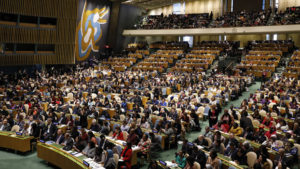
March 14-25: Commission on the Status of Women

Every year during March, the UN hosts the Commission on the Status of Women – the world’s biggest gathering on women’s rights where high-level leaders, policy-makers and WPS practitioners meet to discuss the progress of global gender equality and next steps to advance women’s rights on a global scale. This year, the CSW takes place in a hybrid format where formal negotiations will take place in person, while side events will all be virtual. This year CSW will focus on achieving gender equality and empowerment of women and girls in relation to climate change, environmental and disaster risk reduction policies and programmes.

Each month we bring you a selection of key peacebuilding dates in the month to come. Here are a choice of selected May events and observances. 

03 May: World Press Freedom Day

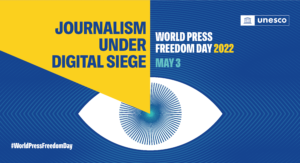
World Press Freedom day is celebrated through a 4-day conference, hosted by @UNESCO and the Republic of Uruguay from the 2 to 5 May under the theme “Journalism under Digital Siege”. The workshops will reunite relevant global stakeholders to explore the digital era’s impact on freedom of expression, the safety of journalists, access to information and privacy. Inclusive Peace supports this international call to governments to respect their commitment to press freedom and joins efforts to develop concrete solutions to address the threats posed by increased surveillance to press freedom and privacy.  https://en.unesco.org/commemorations/worldpressfreedomday

03-05 May: Bologna Peacebuilding Forum

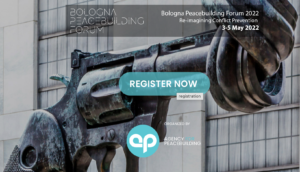
The Agency for Peacebuilding (AP) holds the 4th edition of the Bologna Peacebuilding Forum, a major event in Italy and Europe for the sector. Under the theme, ‘Reimagining Conflict Prevention’, the conference seeks to strengthen the network of peacebuilding scholars and practitioners to improve policy-oriented research and fieldwork, and reach new audiences. 

21 May: World Day for Cultural Diversity for Dialogue and Development

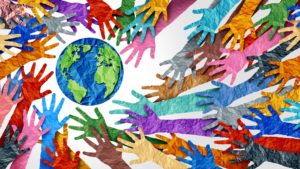
In 2002, the UN General Assembly declared May 21 to be the World Day for Cultural Diversity for Dialogue and Development in resolution 57/249, “affirming culture’s contribution to the three dimensions of sustainable development, acknowledging further the natural and cultural diversity of the world, and recognising that cultures and civilizations can contribute to, and are crucial enablers of, sustainable development.” 

The 4 goals of the UNESCO Convention on the Protection and Promotion of the Diversity of Cultural Expressions guide the celebrations and actions taken around this observance.

23-25 May: Stockholm Forum

The hybrid 2022 Stockholm Forum on Peace and Development is co-hosted by SIPRI and the Swedish Ministry for Foreign Affairs under the theme ‘From a Human Security Crisis Towards an Environment of Peace’. Inclusive Peace will host a session with Humanity United on Monday 23 May at 17:30 CEST to explore what peacebuilders can learn from climate activists and how these movements can collaborate more: Fridays for peace? What youth peacebuilders can learn from global youth climate advocacy. Check out this page for more information and the official registration dates here.

Each month we bring you a selection of key peacebuilding dates in the month to come. Here are a choice of selected June events and observances. 

01 – 30 June: Pride Month 

For the month of June every year, LGBTIQ+ communities around the world celebrate their   influence and contribution to diversity, inclusion, justice and human rights globally. During the month celebrations and events take place around the world. June was chosen as Pride Month because the Stonewall Riots took place in June in 1969 in the US.

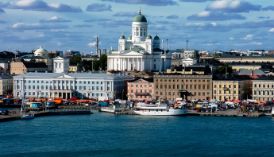
15-16 June 2022: National Dialogues Conference 2022 

The National Dialogue Conference is an inclusive space for joint reflection and in-depth discussion between the invited practitioners, stakeholders, and experts working with peace mediation and dialogue processes in different contexts. It is hosted by the Ministry of Foreign Affairs Finland, The Network for Religious and Traditional Peacemakers, Finn Church Aid, Finnish Evangelical Lutheran Mission, and Martti Ahtisaari Peace Foundation. The conference will take place Helsinki, Finland. 

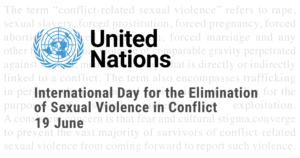
19 June: International Day for the Prevention of Sexual Violence in Conflict

The General Assembly’s 2015 resolution proclaimed 19 June as a day to condemn and call for the end of conflict-related sexual violence, including rape, sexual slavery, enforced prostitution, forced pregnancy and enforced sterilization and to honour victims, survivors and those fighting to end these most horrific of crimes.

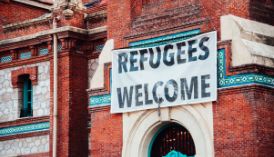
20 June: World Refugee Day

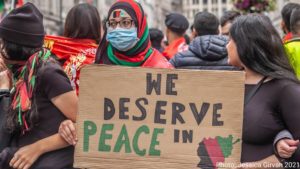
World Refugee Day is celebrated every year on 20 June to honour refugees around the world and to bring attention to people’s diverse perspectives, experiences, achievements and challenges. This year the focus will be on the right to safety. 

“Every person on this planet has a right to seek safety – whoever they are, wherever they come from and whenever they are forced to flee.” UNHCR