
Category Archives: General

The latest instalment in October 2022 of our National Dialogue peer-exchange series looked at the interplay of National Dialogues and peace negotiations. Here are five key takeaways from the discussion led by expert National Dialogue practitioners.

National Dialogues (NDs) often take place during times of turbulence, contestation, and change, including in contexts having recently experienced (or still experiencing) large-scale armed conflict. In such circumstances, the design, conduct, or implementation of NDs can coincide with other political processes, including peace talks. Chad is the latest example where an ND is set to take place in close proximity to peace talks; Ethiopia may soon follow.

Experiences from Cameroon, the Democratic Republic of the Congo (DRC), South Sudan, Yemen, Myanmar, and elsewhere suggest that there are several possible scenarios of how NDs and peace negotiations interact. These scenarios and their practical implications – particularly the trajectories, prospects, and pitfalls of the intersection between NDs and peace negotiations – were used to frame the discussion during the peer exchange.

Five key takeaways

Takeaway 1: the essence of NDs does not always translate into reality
An ND is generally conceived as a formally mandated multi-stakeholder negotiation in which large segments of society and politics are represented, intended to address a broad range of societal, political, and economic issues concerning the entire country.

Beyond this, a range of factors determine the exact nature of an ND; foremost among them are who initiates an ND and with what objective, and who is included. Formal ND mandates can vary considerably, although they often fall into one of three overarching categories: political reform, constitution-making, and peacemaking. But along with the formal mandate, NDs are shaped by their different stakeholders’ differing interests and distinct views of potential gains, and they ways in which they look to use NDs to advance them. This can dilute – and in some cases undermine – the fundamental conception of what an ND is for and how it works. For instance, in the case of heavily co-opted NDs – initiated or controlled by incumbent political elites to preserve or strengthen the political status quo – an ND is unlikely to be intended to be meaningfully inclusive and a catalyst for social and political change. In this way, NDs taking place in proximity to (or serving as) peace talks can serve as a “smokescreen”, a distraction or entirely co-opted process which portrays itself as a sincere attempt at conflict resolution or peacemaking while the primary focus and arena of political (and sometimes violent) contestation lies elsewhere. NDs can also be an instrument of power in other ways: in certain contexts, the participation of civil society actors in an ND paved the way for their subsequent assumption of a formal political role.

As such, while the essence of an ND might be clear in principle, in practice there is no overarching blueprint for an ND, given the many different understandings, mandates, and interests involved.

Takeaway 2: Inclusion is not binary, and is often highly contested
NDs are thus inclusive in essence but not always inclusive in reality. Comparative experience suggests that this is particularly the case in instances where NDs and peace talks take place in proximity to each other, though the question of inclusion can also change over time throughout the lifespan of an ND. Inclusion is also not binary. This is because it is a highly political issue; who is included, how, where and when, are all decisions that can have an impact on the power dynamics that will determine the shape of a country’s economic, social, and political landscape. As such many ND processes give rise to different shades of inclusivity. This is often a mixture of inclusion on the one hand (facilitated by elements such as inclusive selection and decision-making criteria) but also patterns of exclusion (commonly due to elite resistance) – a kind of exclusionary inclusion.

Takeaway 3: The interaction between NDs and peace talks is complex and fluid
The relationship between an ND and peace negotiations – like NDs and peace negotiations themselves – is not fixed, and can evolve over time, or change more suddenly with a shift in the context. Developments in one forum can also affect another forum: National Dialogues and peace talks can positively reinforce each other but also undermine each other, and sometimes both phenomena can occur at different moments within a given peace or political transition process.

There is a wealth of evidence to suggest that once an ND process is hijacked or resisted by key elites, the chances of reaching meaningful and sustainable outcomes are significantly reduced. It then becomes a question of how elite interests manifest themselves or how they can be managed. But elite interests can also change over time.

South Sudan provides an interesting example of this: one of the aims of the ND launched in December 2016 was to complement/help to salvage the 2015 ARCSS by broadening a previously elite process to include public participation. But the genesis and initial realisation of the ND process was heavily co-opted, with low levels of inclusion and little space for meaningful dialogue. Peace talks that were ongoing in parallel to the ND produced an agreement in 2018, after which opposition parties who had been previously reticent, joined the ND. This increased level of political and civil society participation helped to sustain the ND despite the collapse of the parallel peace talks. The ND ultimately produced a series of political reform recommendations, including on limiting federal authority within a federal system, presidential term limits, and ensuring independence among the different branches of government. These specific outcomes led to ruling elites blocking the package of suggested measures. As such, initial co-optation gave way to a more genuine process, whose outcomes were then blocked by elite resistance.
Takeaway 4: It’s potentially the nature of the forum more than the name that matters
There was a suggestion during the exchange that whatever the space for discussion is called – peace talks, a National Dialogue – is less important than the forum ultimately being meaningfully inclusive and addressing the causes of armed conflict. A further suggestion was that creating a dichotomy between peace negotiations and NDs creates both a danger of forum shopping, and also may make NDs more susceptible to elite capture.

Overall, the distinction between NDs and peace negotiations can be important but also sometimes challenging. Both NDs and peace negotiations are spaces where the negotiation and renegotiation of the social and political contract – the crux of peace and political transition processes – can occur. The earlier that unarmed actors beyond the main conflict parties can bring their experiences, aspirations, and influence to bear in these spaces, the greater the likelihood that these spaces and the overall processes will give rise to more inclusive outcomes that can sustainably resolve armed conflict and pave the way for more peaceful, just, and inclusive societies. But different fora can also play complementary roles, and as the example of South Sudan illustrates, be mutually reinforcing and sustaining. This is particularly the case given that gains achieved in one forum will often not prove sustainable unless they are taken up in another forum.

Takeaway 5: NDs and peace processes are specific moments and instruments in broader political transitions
The discussions in the peer exchange echoed a clear message from previous peer exchanges: that NDs are by no means – as they are sometimes portrayed – a definitive solution to all of a country’s problems. In reality, they are often inconclusive and unfinished, and could even be characterised as being inherently open-ended.

This is because NDs and peace talks are just two of the distinct moments and spaces within the ecosystem of fora – both formal and informal – in which peace processes and political transitions are borne out. These processes are not smooth and linear but can rather be characterised as a constant negotiation and renegotiation of the social and political contract, marked by a series of back and forth between progress and setbacks. NDs and peace negotiations are some of the many milestones along this journey.

Our approach to the event series
In hosting this event series, Inclusive Peace and our ND practitioner partners aim to contribute to a better understanding of the dynamics of National Dialogues and explore strategies to improve their effectiveness.

Our approach puts the experience and lessons of ND practitioners at the heart of the discussion, by having peers from different country contexts lead the exchange. Country experts and international experts then have the opportunity to listen and learn from these experiences, but it is the peer exchange that is the main focus of the event.

The previous instalments in the event series, looked at the role National Dialogues can play in helping chart a way towards consensus in tough political environments, the challenges relating to politicisation of National Dialogue processes, and the interaction of National Dialogues and elections. Read more about our work on National Dialogues here.
Kenya held its general election in August 2022. Every time there are elections, the region holds its breath in the hope that no major violence will break out that could paralyse the nation and the region. It did not happen this time round: in comparison with previous elections, the recently concluded general election – particularly the presidential contest in Kenya – managed to avert large-scale election-related violence.

The fifth president of Kenya was sworn in on 13 September 2022 following a Supreme Court ruling to uphold his victory after a legal challenge by his opponent and other entities. As the country waits for the lower courts to share their rulings on other election contest petitions at the end of October, some cases might result in fresh new elections, which could raise tensions in those areas. Good practice in violence prevention and sustainability are key tenets of peacebuilding. This article looks at the recent Kenyan election from this perspective, examining the reasons why violence prevention was successful but did not contribute to building sustainable peace.

Key factors that prevented large-scale election violence

Campaigns based on issues: As a first in Kenyan electoral history, campaigning in this electioneering period centred around factors such as the economy, unemployment, gender disparity, education, the cost of living, and not mainly along ethnic lines as has been the case in the past. Candidates’ pledges during rallies were also forward looking rather than dwelling on historical issues. This shift in focus from past campaigning around ethnic identities to salient current issues cuts across different demographics and ethnicities – as the attention moved from the community level to the individual level.

Transparency of all election results: A key factor in preventing violence was the full transparency of the election results – another first in Kenyan election history – which were fully transparent as they came in. The public had access to all the forms from all polling stations, a total of 46,232 from the public portal on the election commission’s website. This level of open access allowed people to undertake their own tallying and get the results ahead of the announcement. Previously, Kenyans had to rely on the announcement of combined results with no way to track or independently verify them.

Respect for laws and institutions: After the announcement of the national and local election winners, including the presidential election results by the Independent Electoral and Boundaries Commission (IEBC), the losing candidates pledged to contest the results in court and at the same time called for peace. Additionally, supporters and the general public urged all aggrieved parties to take their cases to court and wait patiently for the rulings instead of taking to the streets as observed in the past.

In October, there are 123 petitions from gubernatorial to parliamentary contests being handled in the lower courts around the country with rulings expected later in the year. As for the presidential election result dispute settlement, the courts upheld the new president’s win and shared their summary judgement under heavy security. In the aftermath of the ruling, the petitioners’ messages of acceptance of the verdict despite a refusal to agree with the ruling calmed the supporters of the losing candidate.

Violence fatigue: After the announcement of the election results, voters from the runner up’s regional stronghold communicated that they would not be engaging in violence. The messages shared on social media, and interviews in the media expressed a call to peace and an inclination to respect the court’s settlement. This suggests that mentally the public was exhausted from the electioneering period and wanted to move forward with normal life, and is also evidence of voter maturity and fatigue with the use of violence as a political instrument.

Conflict-sensitive media coverage: Contrary to past elections , the media – both local-language and national – took on the role of calming tensions. The Media Council of Kenya (MCK) trained 2,500 journalists on the coverage of elections as part of their mandate after the 2013 Media Council Act came into effect. In the lead-up to the elections, the council shared an elections coverage guideline, which was signed by the stakeholders. The coverage focused mainly on the issues being discussed, proposals, and the strategy of the campaign, rather than on grouping voter preferences – and by extension voters – into ethnic and regional categories.

Insufficient sustainable prevention and peacebuilding

Though large-scale violence was prevented, this was not a violence-free election, with incidences of politically motivated threats and killings that included the death of an IEBC staff member. Moreso, despite more balanced election reporting, media independence remains a constant challenge in Kenya. The MCK released a report on the media performance where they observed press freedom violations such as “denial to access voting areas, critical information from relevant public bodies, profiling of journalists and media outlets, online trolling of journalists and media outlets and in some cases physical attacks on journalists.” Another area of concern is the role of social media and the misinformation observed by influencers.

Yet, the biggest obstacles for getting the country on a pathway to sustainable peace is the mixture of different structural political and social challenges, starting with the winner-takes-all British type of election law that is not conducive to sustainable peace in a multi-ethnic society, in addition to a culture of corruption, the lack of public confidence in the political class, and the lack of access to justice for political and other crimes.

These current and long-term issues are analysed below.

Election law not fit for purpose: In a multi-party, multi-ethnic society, a winner-takes-all British-style election law seems like a colonial relic blocking the pathway to sustainable peace in Kenya. The current election laws and the constitution are contradictory and difficult to implement in practice. Despite the introduction of the new political parties law, which allows for coalitions of parties, the law still hinders a broader split of power sharing in order to ensure a smooth transition and governance.

Low voter turnout: This year’s voter turnout numbers were a point of dispute brought to the attention of the court as the number kept fluctuating. In 2017, a 79.51% turnout was recorded, while in 2022 the number recorded was 65.4% with a majority of the youth not voting. A breakdown of the statistics is still to come, but it is already clear that the turnout dropped significantly. The Kenya National Commission of Human Rights (KNCHR) launched a monitoring report of the 2022 Kenyan elections, ‘Demystifying our democracy: Towards a Human Rights Compliance’, in which they signal their concerns, including regarding the voter turnout.

Lack of confidence in the political establishment: Overall, the lower voter turnout in this year’s elections is testimony to the disconnect between people and the political class. People have lost confidence in the willingness and ability of politicians to change ordinary people’s lives. Kenyans are under extreme pressure: rising costs of living, a high rate of unemployment, the consequences of climate change on people’s livelihoods, and the endemic corruption combined with an understanding that politicians get extremely rich from the job (Kenyan elected officials like MPs are among the highest paid in the world!) has disillusioned people.

Unfinished National Dialogues: The Kenyan political and social contract is broken. There has not been a proactive and genuine broad-based approach to engage the public on political and social issues – especially recurring and unresolved obstacles such as political structures, proportional representation, tackling corruption and accountability, and full autonomy of independent commissions, which came up during the presidential election petition but have not been comprehensively explained or discussed. Kenya has seen a few such initiatives in the past, including from government and civil society and also from religious leaders; some of them furthering a path to peace and change, while others were just lip service. A renewed honest national conversation is needed to renegotiate the political and social contract in the country to pave the way to sustainable peace.

“Working at Inclusive Peace has given me the opportunity to be part of a team determined to undertake peacemaking and peacebuilding differently” – Alex Shoebridge.

As the Head of Peace Process Support within Inclusive Peace, Alex Shoebridge is an old hand at this. Inclusive Peace’s “think and do” tank, which adapts the comparative research to provide tailored advice and accompaniment to partners in a way which supports and reinforces their own initiatives, strategies, and ideas, was what appealed most to Alex. He saw the work as a refreshing change from what he had done previously, and is enthusiastic to lead the Peace Process Support Team team and organisation.

Over the past year, Alex has been building the Peace Process Support team and helping to shape the broader organisation. “We are a small but rapidly developing and growing space within the peacebuilding and peacemaking arena, which has yet to reach its full potential in doing things differently”. According to him, building the team is a continuous process and a very exciting prospect. “One of my key roles is figuring out how to optimally organise the team from language to expertise needs, it’s bringing that together in a group of people that share the same spirit regarding our approach and the value of our work.”

For Alex, the light bulb moments that take place when engaging with partners bring energy: “where there is a resonance between the ideas and options we put on the table and how they see it taking shape to advance their own thinking and engagements. Over time, this approach makes engagement more robust, sustained and meaningful”.

A self-proclaimed sports fan, Alex sees his role as looking and guiding a diverse talent where the skills complement each other’s work and the projects. “You can’t have all goalkeepers in a team, you need to have midfielders and other positions,” he adds jokingly.

His team learns from each other and where appropriate applies the lessons shared to their own engagements. Cross-learning and sharing is critical for our approach, and even more important to be very deliberate about in a remote workplace. He sees a lot of potential in the connections of projects by growing and shaping the work as a team rather than working in isolation on individual projects.

Alex Shoebridge’s bio.

On 19-20 July, 2022, our Head of Peace Process Support, Alex Shoebridge and Programme Analyst, Farah Abou Harb joined Yemen Policy Center to talk to Yemen experts, peace practitioners and researchers to rethink peacemaking in Istanbul. our Peace Process Support team’s shared the four key outcomes from the two-day event.

  1. There is no one-size-fits-all approach to peacemaking and peacebuilding across the country, given the fragmented and contested nature of the state. The situation has exacerbated suffering and created very different conditions and realities for the population.
  2. More can be done to connect different actors from diverse communities – local authorities, civil society, businesses – so they can learn from each other and find ways to coordinate and scale up their collective peacemaking efforts.
  3. Civil society engagement has been a challenge, but the role of civic actors in the city of Taiz shows there is real value in drawing on the expertise and influence of civic actors to shape peacemaking efforts in the country.
  4. More can be done by the international community to better understand and adapt to people’s different realities in Yemen in rural and urban areas. This requires longer-term engagements that get behind locally-led efforts.


Photo source: Hito Ortake (Flickr)

Our Head of Peace Process Support, Alex Shoebridge shares the likely different scenarios to play out that have important implications, opportunities, and challenges in terms of inclusion following the announcement of Chad signing a deal with over 40 opposition parties to launch peace talks.

Chad is the latest example where a National Dialogue is set to take place in close proximity to peace talks; Ethiopia may soon follow. This thread sets out the key features and examples of these scenarios.

Other experiences from South Sudan, Myanmar, Yemen, and elsewhere point to a number of scenarios which can take place. Each of these scenarios also has important implications, opportunities, and challenges in terms of inclusion.

Scenario 1

Peace talks feed into National Dialogue, and reach concluding stages in the lead up to the ND, shaping the agenda, roadmap, and inclusion of certain groups. In Afghanistan, DRC, and Nepal, peace talks mandated inclusive #negotiations to shape political transition.

Scenario 2

Peace talks overlap with National Dialogue, and face delays or extensions for various reasons, prompting NDs to either take a parallel or sequenced approach. Here, those actors already “on board” move ahead on certain issues, while others are deferred. This is usually to allow for the inclusion of other actors, issues, or geographic areas to be engaged in the ND process. The ND in CAR evolved in this way, though due to a breakdown in peace talks the ND did not include all actors.

Scenario 3

Peace talks collapse, National Dialogue proceeds. This can result in the #agenda/issues of the talks being “transferred” onto the ND, or for others to be left out. NDs can then be instrumentalised to advance specific priorities at the expense of an inclusive process. The ND initiated by the EZLN in Mexico is one example of this dynamic, and the 2016 ND in South Sudan began on similar footing. In these cases, inclusion of diverse stakeholders was initially limited or compromised, but in some contexts, this did “open up” over time.

Scenario 4

National Dialogue collapses, peace talks continue. These typically include a small set of stakeholders addressing certain issues, not necessarily as broad as a ND. NDs can collapse for various reasons, including political recalculations amongst political/civic elite.

Often, they prefer to pursue their objectives in a smaller negotiation format. In South Africa, bilateral talks between the ANC and National Party helped enable broader talks. This is the opposite of Scenario 3, whereby a broad format is abandoned for a narrower process.

Scenario 5

National Dialogue collapses, peace talks collapse, conflict relapses. For various reasons, parties no longer see negotiation platforms as a way of achieving their objectives, shifting to military or security responses. This can lead to an increase in violence in the short-term, such as in South Africa following the collapse of CODESA II and prior to the MPNP process, or an extended period of violent conflict like in Yemen.

These scenarios are not mutually exclusive, and both National Dialogues and peace talks (and the contexts in which they are grounded) evolve over time. But as a number of countries move on the pathway towards peace and pursue both NDs and peace talks.

It’s worth keeping in mind the potential complementarities, contradictions, and permutations which may evolve over time, and what this means for the potential (or not) for inclusive processes and inclusive outcomes.


Photo: Oporty (FreePik Photos)

This third installment in our content series Five trends that shaped peace and political processes  explores the interrelation between climate change, peace and conflict and suggested ways forward to address these challenges holistically. 

There is a long-standing and well-established connection between natural resource exploitation and governance and armed conflict. There is a clear correlation between countries’ climate vulnerability and political and economic fragility, and a strong overlap between countries affected by conflict and those most exposed to the risks associated with the effects of climate change; almost half of current UN peace operations, including a majority of the largest operations and an overwhelming majority of the total personnel deployed to UN peace operations are located in countries that are most exposed to climate change

Conflict economies are also fuelled by livelihood destruction, resource exploitation and mismanagement, and hampered socio-economic development. Both the causes and effects of inequality are exacerbated by conflict and climate change, whose severest impacts fall on the most vulnerable. 

As the UN Secretary General underlined in his state of the planet address: “The fallout of the assault on our planet is impeding our efforts to eliminate poverty and imperilling food security. And it is making our work for peace even more difficult, as the disruptions drive instability, displacement and conflict.”

Peace processes and the environment 

Formal peace agreements in the 20th century dealt only sporadically with environmental issues, but in the past two decades all major peace agreements have included provisions on natural resources and environmental protection and management. Recent formal peace processes have also highlighted their direct and critical interdependence with environmental issues. 

In Colombia, protection of the environment is viewed by youth activists as inseparable from the effective implementation of the 2016 peace agreement, particularly in terms of mechanisms to stop deforestation. Issues relating to the governance of natural resources are a prominent feature of the peace process in Mindanao in the Philippines.  

Environmental peacebuilding is a relatively recent but rapidly evolving field which aims to integrate natural resource management into conflict prevention, mitigation, resolution, and recovery, or vice versa, to build resilience in communities affected by conflict. Such advances can help to build positive peace through emphasising shared environmental interests and taking more inclusive approaches to environmental management, including promoting the role of groups such as women and Indigenous People in environmental protection, equitable resource distribution, and sustainable development, which in turn can enhance their political and economic influence and strengthen their contributions to peace. This in turn can help to ensure that historically marginalised groups are meaningfully included in peace and political transition processes and that inclusive processes lead to inclusive outcomes. 

Policymaking momentum and concerted engagement

There has been a recent groundswell of attention and momentum in policymaking circles on the interdependence of climate justice and environmental protection and peace and security, particularly focused around events such as the UNFCCC CoP 26, the 2022 Stockholm Forum on Peace and Development, and the Stockholm +50 international meeting. 

Yet there is still too much of a disconnect between climate-related policies and global peacebuilding and peacemaking efforts. Climate security was not on the official CoP 26 agenda ostensibly to make already fraught negotiations less difficult. The vetoing of the first-of-its-kind UN Security Council resolution casting the climate crisis as a threat to international peace and security only serves to underline the need for actors in these two fields to join forces to ensure that climate-related security risks are at the heart of global conflict prevention efforts.

The global climate justice movement talks a lot about the need for systemic change, which in addition to fighting climate change would also tackle key structural issues such as exclusion and inequality. Peacebuilders, and particularly young peacebuilders, are increasingly adopting climate justice language. But there is scope for greater coordination between the two fields, including systematically adopting each other’s language and engaging in concert to champion a joint cause, sharing lessons on how to effectively organise and mobilise their constituencies, and jointly strategising on how to collectively influence policymakers. 

Concerted action could also channel the significant current momentum of the climate justice movement to help to reinvigorate a global peace movement that is not as strong today as it historically has been. Collective research, practice, and advocacy work can also draw on the manifold and hugely significant structural similarities and overlaps between advancing climate justice, environmental protection, and peacebuilding. 

Perpetual Peacebuilding and reimagining our relationship to the environment

Rethinking peace processes and peacebuilding goes hand in hand with reimagining our relationship to our environment. Both require shedding outdated models that no longer reflect reality nor can galvanise change: the liberal linear model of peacebuilding and neoliberalism.

Both involve redress for historical injustices: the climate debt of the nations that were first to industrialise and overcoming the legacy of colonialism. 

Both are inextricably linked to combatting inequalities and exclusion and ensuring social justice.

Both need to be grounded in the same principles: sustainability; humility; and homegrown, locally-owned, locally-led solutions.      

Both undertakings must get beyond binary notions of success and failure, and short-termism, apathy, and political expediency. 

This means, for instance, creating a policymaking environment where the invasion of one sovereign state by another is not a necessary catalyst to enact policymaking options such as (partial) fossil fuel divestment that an overwhelming body of research and a growing advocacy movement have been urging policymakers to undertake for years. 

It also means that making progress to a more inclusive, sustainable world needs different frames of reference than unbridled capitalism premised on assumptions of eternal linear growth in a world with finite resources, and which cherishes profit extraction above all else. 

Not only is a safe, clean, and healthy environment a human right, but even more than that, as the Rights of Nature posit, we need to fundamentally rethink humanity’s relationship with nature, abandoning the conception of nature as a resource to be exploited and degraded, and appreciate the fundamental interconnection between humanity and the natural world. 

To paraphrase Antonio Guterres, making inclusive peace – among humanity and with nature – is the defining task of the 21st century. It must be the top priority for everyone, everywhere.

What can peacebuilders learn from youth climate activists? This was the main question driving the lively debate at our session with Humanity United at this year’s Stockholm Forum for Peace and Development.  

The annual conference took place from 23 to 25 May under the theme: ‘From a Human Security Crisis Towards an Environment of Peace’. It is co-hosted by the Stockholm International Peace Research Institute (SIPRI) and the Swedish Ministry for Foreign Affairs.

Our session focused on the impact of youth climate advocacy movements, like the ‘Friday’s for Future’ movement founded by Greta Thunberg and what, specifically, we can learn from their success to galvanise peace work. The speakers also discussed opportunities and challenges to strengthen collaboration between climate and peace movements.  

The panel, comprising seven speakers from activist, policy and academic backgrounds, explored ways to increase support for youth movements at the intersection of climate change, conflict, peace and security. They agreed more needs to be done to create space for young people to take part in decision-making and facilitate opportunities for youth movements to exert more influence. 

Cindy Kobei, from the Ogiek indigenous community of the Mau Forest in Kenya, said it is vital to mobilise young people and inform them about challenges relating to peace, security and the planet, and link these issues to their lived realities. She spoke about the extensive knowledge and experience of indigenous communities and the importance of involving these communities in programmes and decision-making processes. 

“Indigenous communities are at the intersection of conflict and climate change and have tremendous knowledge on how to embrace these challenges, so they need to be involved in every step of the way,”  she said. 

According to Shady Khalil, Founder of Greenish, young people are mobilised and will act with urgency if they get the support they need. Greenish, an Egyptian social enterprise, focuses on informing communities to help them develop their own solutions to climate-related challenges.

“We raise awareness among people that there is a problem. We do not solve the problem but we create attention for the issue,” Shady said, referring to the work of his organisation. “We let people come up with solutions themselves.”

 “A culture of peace unites as we are all collectively preventing violence, violence against others and violence against the planet,” observed Iguehi Omole-Irabor, a peace researcher and practitioner focused on communities in the Lake Chad Basin Region and Nigeria. 

Iguehi referred to growing conflict among pastoralists in rural and remote communities as drought and desertification worsen and natural resources decline. She stressed the importance of involving local communities at the early stages of the design and implementation of programmes to address conflict and environmental degradation. 

From a donor and policymaker perspective, Mariko Peters highlighted the failure of   Institutions to tackle the climate and peace challenge even though both threats have been around for a long time. Revising dysfunctional institutions that are not responding to contemporary challenges will be crucial moving forward, she said. 

Opening up lobbying opportunities, going beyond tokenistic engagement and allowing youth activists to have more agency in decision-making spaces were points raised by Catarina Fabiansson; Senior Advisor in Human Security at the Swedish International Development Cooperation Agency (Sida). 

Speaking on behalf of USAID as Director of the Democracy, Rights and Governance (DRG) Center, Rosarie Tucci discussed the risks and opportunities related to the role of technology in youth activism and movements. 

Rosarie highlighted USAID’s new, “ innovative” climate strategy, which, she said, empowers youth to lead climate action. A lot of opportunities will come out of this strategy, she pointed out, noting that climate change cuts through political apathy and brings people together in a way other issues do not. 

She also emphasised the importance of building “coalitions across divides” and that donors and policymakers need to play a facilitation role to “create space for youth activists rather than dictate the space”. 

Bringing climate issues and regional perspectives into global debates and supporting  young people to influence international processes were the focus of questions from the audience. Education, capacity building at the grassroots level and bringing local communities up to speed about what is going on at the global level were among the priorities suggested by the speakers.  

In terms of influencing international processes, the speakers talked about holding national representatives to account who attend critical meetings and setting demands for larger youth representation at global forums like the Conference of Parties to the UN Framework Convention on Climate Change (UNFCCC COP), and the Stockholm +50 international meeting. 

Concluding the session, Bryan Sims, Senior Manager of Peacebuilding at Humanity United, said it is well known that inclusive peacebuilding leads to more positive outcomes. Movements are rooted in communities, he noted, and can shift power and popularise new views. Climate change movements leverage innovative solutions to local and global climate and peace challenges, he said. 

You can read our Stockholm Forum blog here.

We extend our thanks to the speakers: 

Catarina Fabiansson; Senior Advisor in Human Security, CAAC and YPS; Sida. Catarina focuses mainly on Youth, Peace and Security and Children and Armed Conflict. 

Shady Khalil, co-founder of Greenish, a social enterprise focused on educating communities about the environment and empowering them to develop solutions. 

Cindy Kobei, Indigenous Peoples Rights Activist and Chair of Tirap Youth Trust. Tirap, which  means “safe haven”, is an indigenous youth-led organisation, focused on developing the capacities of the Ogiek community members through capacity building programs and advocacy in Kenya. 

Iguehi Omole-Irabor, Independent Consultant, focused on the intersection of conflict, food security and climate change in Nigeria and the Lake Chad Basin region

Mariko Peters, European External Action Service. Senior Peace and Conflict Advisor, Conflict Prevention and Mediation Support. Mariko is a Dutch diplomat by background and former green politician and human rights lawyer.

Bryan Sims, Senior Manager, Peacebuilding, Humanity United. Bryan leads Humanity United’s Nonviolent Action and Inclusive Peace Process strategy. 

Rosarie Tucci, Director of the Democracy, Rights and Governance (DRG) Center at USAID. Rosarie has worked in a variety of key positions supporting human rights and issues disproportionately affecting excluded populations.

Caroline Varin joins Inclusive Peace this month as the new Head of Research. She shares her perspectives and priorities in the role: 

“The next generation of peace researchers has a markedly different approach than academics of the post-WW2 era, and I expect they will introduce more in-depth and inclusive analysis into peace and conflict studies. 

We are seeing a rise of new voices, especially from the non-Western community, whose experiences, history, and culture have often been ignored in analysis. This has been a major limit to our ability to understand peace and conflict globally and locally.

A top priority is to make a concerted effort to consult with and include the other voices and perspectives in peace research.”

Biography

Prior to joining Inclusive Peace, Caroline spent ten years as a Senior Lecturer at Regent’s University London, where her research focused on Security and Conflict. She has published 6 books, including Boko Haram and the War on Terror (ABC-Clio 2016), Violent Non-State Actors in Africa (Palgrave 2018), Security in Nigeria (Bloomsbury 2020) and Global Security in Times of Covid-19 (Palgrave 2022). 

Caroline is also co-founder and CEO of educational charity Professors Without Borders, and has published a book on teaching games for adult learners (Routledge 2022). She is a member of the Geneva Consultation for Security Policy and has previous experience working in Intelligence Analysis, the Swiss armed forces and the UNHCR.

Caroline holds a PhD in International Relations and an MSc in Comparative Politics from the London School of Economics, an LLM in International and European Law from Università di Bologna and a BA in Political Science from the University of Pennsylvania. She is currently completing an MBA in Educational Leadership from Tampere University.

To mark Eid, Ahmed Ahmed reflects on concepts of peace and inclusion in Islam and the period Ramadan as a time of spiritual and religious reflection that throughout history has galvanised people to end conflict and lay down arms.  

Ahmed Ahmed is a traditionally trained Islamic scholar from the UK. He completed his studies of the Islamic sciences at the Dar al Mustafa Seminary in Tarim, Yemen in 2019 with a specialisation in Islamic Jurisprudence. His research interests include Islamic Theology and the history of Islam on the Swahili Coast. He is currently a research assistant at the faculty of Islamic Theology at the University of Osnabrück where he is pursuing further studies in Islamic Theology.

What is the connection between Ramadan and peace? 

From a theological perspective, the month of Ramadan has a specific connection to the revelation itself, the Quran, that Muslims believe is the revelation from God. There are several passages in the Quran that speak about Ramadan and its connection to the Quran itself. For example, the month of Ramadan is the month in which the Quran was revealed, and this is commented on by scholars that point out that of course the Quran was revealed to the Prophet Muhammed, Peace Be Upon Him, in several stages. We can say the revelation is entering the world or the spiritual atmosphere of the world in this month of Ramadan as the month of Quran.  The month Ramadan as the month of the Quran contains within it the Night of Power. In one of the passages of the Quran, it describes this Night of Power as being one where the angels greet the believers with the word “peace”. 

There is directly a connection between Ramadan, the Quran and the concept of peace. These people that are being greeted are the ones that have a specific quality which in Arabic is called Taqwa, which is God consciousness. This Taqwa is also referred to in connection to the month of Ramadan, in one of the verses of the Quran. The Quran says that the fast in Ramadan has been prescribed on believers and on nations before Islam, Jews and Christians and others. So fasting is a ritual that God has prescribed on the believers so they may increase their God consciousness. 

This concept of Taqwa is one that is central to Ramadan as well. These people that have this quality of God consciousness, whom the angels greet with the word peace, also God himself Allah, subhanahu wa ta’ala, greets these people with the word peace. For example, in the chapter named ‘Surah Ya Sin’, there is a verse “Salamun qawlan min Rabin Rahim”, “peace is the word from the most merciful Lord”. There are many other indicators which connect Ramadan to peace and that connect the people of Ramadan who have attained the quality of God consciousness through the fast to the concept of peace and the guardians of peace of paradise who come in the afterlife. 

What differentiates Islamic peacebuilding from other frameworks? 

I think it’s twofold, at least from a theologian’s perspective. Firstly, in the sense that any Islamic framework is a God-centred framework, so any intention behind it, any way it is framed, any goals that will be set are ones that will have God in the centre frame. This is not just an individual concept or goal, it is a social one. So, in Islamic society, the main goal we can say is to provide a social sphere where every individual has the same opportunity to access God and his revelation and benefit from it. So that’s on a purely theological basis. 

Secondly, Islam as a religion has very complex, powerful ethical and legal frameworks within it. So, these ethical and legal frameworks based on the life example of the Prophet Muhammad, Peace be Upon Him, which are quite unique to Islam, provide us with a framework for our goals and the ways we shape our institutions for the way we organise society; for the way individuals interact with other members of the society and so on. These  would be the general points about what differentiates an Islamic peacebuilding framework or an Islamic framework for anything. This doesn’t mean there won’t be overlaps with other peacebuilding frameworks. Generally, for some of the definitions of peace and justice and others there can be many overlaps even though we find cultural relativism in everything, but the main thing is, firstly, God-centred for individuals to access God and these frameworks of how we handle things, how we define things and how we interact with others. 

In Islam, all individuals should have equal access to God, so what bearing does this have on inclusion?  

From the core, Islam is a communal religion so many of the rights and rituals and practices that are unique to Islam require a communal effort. For example, from the prayer that is done in the communal setting to burials which have communal rights, to the fast when people are fasting for Ramadan and the alms tax, providing for the poor. These are all necessary communal things. The religion does not function without a community. 

The legal and ethical frameworks that have been taken from the Quran and life example of the Prophet, Peace be Upon Him, all have developed organically from bottom up, so it is not like someone brought a unique philosophical idea which was then implemented by government and that was pushed on the people. Rather, what happened was that traditional scholars in traditional Islamic fields were part and parcel of the societies and the communities in which they were living. The problems and solutions were coming from these communities themselves and were then expounded upwards. This gives us the framework for better input into governmental structures. Everything comes from the bottom up. 

This is where it is important to examine civil actors in society rather than governmental and institutional actors. This is why inclusion is not just from a theological perspective. Of course, if we talk about the theological perspective, the Quran talks about different peoples, different religious groups coming together for common ground to work together. The Quran mentions gender disparities in society and how these should be addressed. These are all things the Quran mentions to allow for a more level playing field, and because it is God-centred the main goal is everyone has better access to the Divine within the social context. 

I think it needs to be reiterated that civil actors are the most important ones as they are the actors on the ground connecting or dealing with Islam and Islamic law, and they are the people coming up with real answers, real solutions, moral, ethical conclusions for real issues that overarching frameworks cannot perceive or take care of. 

What are your priorities during Ramadan? 

I think personally that Ramadan is a space and a school for the religious and spiritual development of people. So that is the main goal. If there are people that wish to have an impact on a peace process or anything to do with alleviating some of the pain in the world, then this is the perfect time to do so because it targets, through the fasting and an increase in ritual prayer and worship, it targets the soul of the individual and it targets the sicknesses that prevail in our hearts. 

I personally like to research the impact of traditional Islamic leaders and scholarship in how civil society has functioned throughout Islamic history. And, I see that Ramadan as a time period has been a massive catalyst for this work to be pushed. I can give examples such as Southern Yemen or Indonesia of Ramadan being used to end conflict and put weapons down.

In this blog, Dr Thania Paffenholz critiques the West’s polarising response to Russia’s invasion of Ukraine and advocates for reform to ensure the participation of different actors in the pursuit of peace.

As Russia’s brutal attack on Ukraine and the targeting of civilians continues and reports of war crimes mount, the international community is struggling to find effective solutions to broker a ceasefire and move towards a peace agreement.

This evolving crisis is exposing flaws in international diplomacy and peace and security architecture, shaped in the image of the West following World War II. It is revealing and catalysing a new world order, which demands the West rethink approaches to global peace. 

At the outset of this war, a familiar rhetoric took hold, the West drawing sides between “tyranny” and “freedom”: it is not only war in Ukraine, but also a fight between democracies and autocracies, as US President Joe Biden said in an impassioned speech delivered in Poland in March.

West’s polarising response

The West’s response to Ukraine has revealed entrenched bias, hypocrisy and racism within outdated systems. Support for Ukraine poured in when humanitarian crises raging in Tigray and Yemen have not received a fraction of the funding or attention.  This has caused further divisions and tensions between the West and the rest of the world and jeopardises future opportunities for peace.  

So how can Europe and the US move on a path from confrontation and polarisation to dialogue and ultimately cooperation with Russia without stopping to support the people and the government of Ukraine? To reach a ceasefire and move to a peace agreement will require meeting Ukraine’s needs and pushing for a broader deal allowing for Western and Russian security interests. 

Outdated systems 

The Organization for Security and Co-operation in Europe (OSCE) was set up after World War II to stay in dialogue with Russia. The UN Security Council was founded to secure world peace. Indeed, Russia was serving as the President of the UN Security Council, and their ambassador delivered a speech to that same audience on the exact day of the invasion. This is a tragic symbol of the futility and limitations of the current international peace and security architecture. 

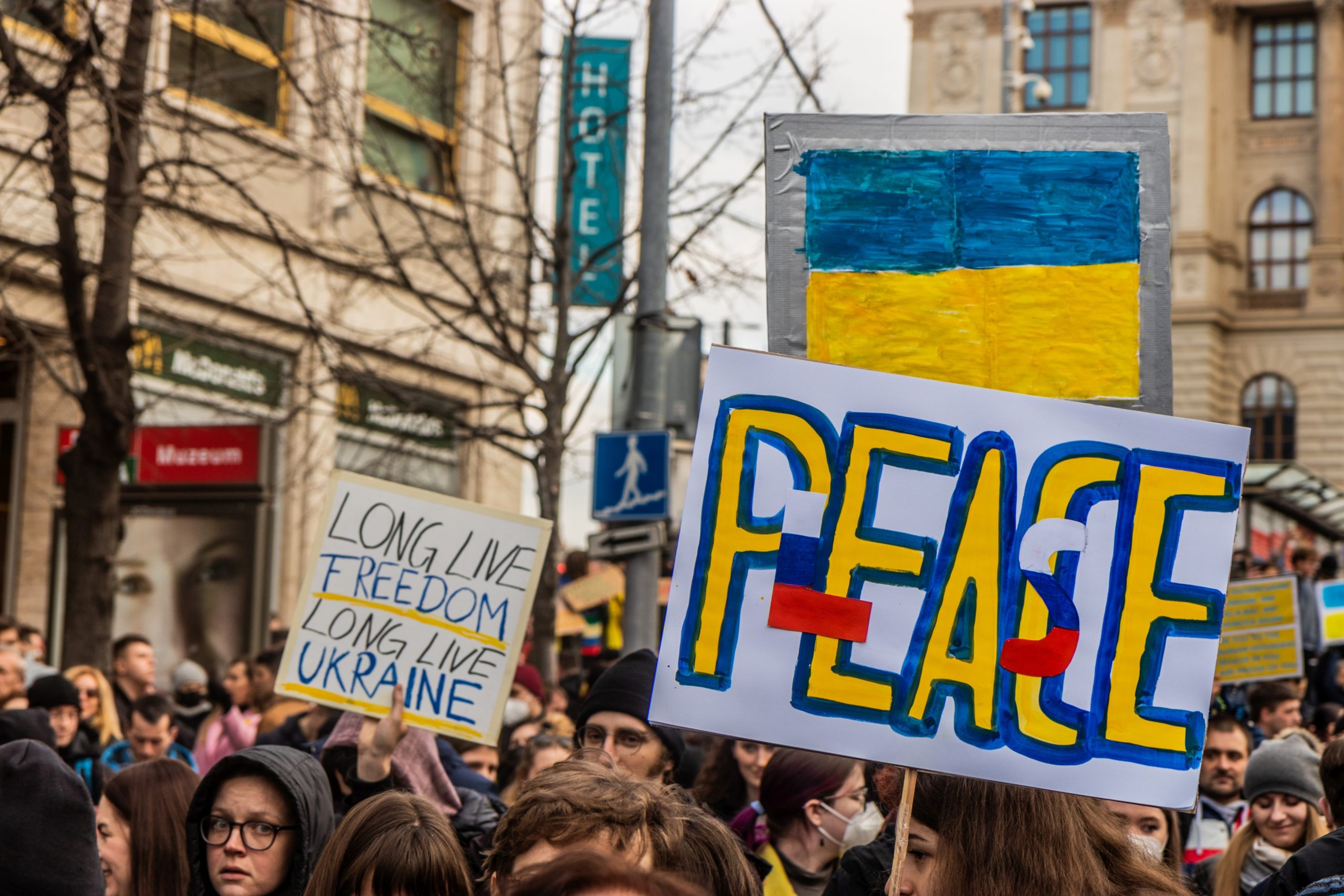
Protest against Russian invasion of Ukraine on the Wenceslas Square in Prague, Czech Republic. Photo: Matyas Rehak 2022

In 2012, the EU received the Nobel peace prize for the project of a peaceful Europe. However, we see that the instruments of peace and security in the world, the UN and in Europe the OSCE are not fulfilling their potential. If these bodies are not functioning to the level needed, we need to re-negotiate the peace and security architecture in Europe and the world. 

New space for dialogue

It does not mean we need to abolish all existing systems, but we might need to renegotiate the terms and conditions of the existing ones and start new ones. It is vital to give space for an emerging world order in which countries in the Global South take a lead role.  This would mean setting up new constellations and spaces for security and peace dialogues. 

Part of this will also involve a deeper reflection on the role of organisations such as the OSCE, and whether the current escalatory rhetoric and mobilisation will deliver a more stable, peaceful future in both the short term and longer term. 

Perpetual peacebuilding

Overall, this should be informed by what I call Perpetual peacebuilding, a never-ending, constant process of renegotiating the social and political contract within and between states. It also requires a more dynamic multilateral approach to peace and security, not one that becomes fossilised or dysfunctional due to geopolitical shifts and growing multipolarity, but one which embraces this messy reality and seeks cooperation and compromise, rather than consensus. 

Unfortunately, a peaceful settlement in Ukraine is not going to happen easily, nor quickly, nor in a manner that will appease all sides. Compromises, including elements of Ukrainian sovereignty, will be required. 

The history of peacemaking in Europe and beyond shows us that there are broadly two roads which can be pursued. In seeking to put an end to the violence, all sides reach an agreement which barely holds and creates grievances on one or both sides that sow the seeds for future conflict.

The second option is to seek an agreement that catalyses immediate security needs with a comprehensive ceasefire agreement and a broader set of changes around how the West and Russia address peace and security through dialogue spaces. This would involve creating platforms for collaboration, compromise and non-violent resolution of disputes that are open to realpolitik and lessons from existing spaces that did not work. 

This is a moment in history to acknowledge and attempt to fix the flaws in an outdated global peace architecture. This a moment to start new dialogues between the West and the rest of the world.