Category Archives: General

Our team is sharing various books and a podcast, which kept them turning the pages and listening to most episodes.

Read

Cho Nam-Joo, Kim Ji-young, Born 1982

Kim Ji-young, whose name is the Korean equivalent of “Jane Doe”, experiences a life that is both crushingly banal and nightmarish. An initial dissociative episode is the start of a descent into multi-personality madness, clinically chronicled by her psychiatrist, through which Ji-young comes to represent the unheard everywoman in South Korea.

The novel shines a glaring light on endemic sexism, misogyny, and institutional discrimination in the country, and shows how they are tied into many other socio-economic issues. The book is up there with Bong Joon-ho’s film Parasite in the vanguard of South Korean cultural social criticism.

Recommended by Alex Bramble

The Peacebuilding Puzzle

A book I think about often and have occasionally returned to (though not as much as I would like), it provides a compelling analysis of why international investments in peacebuilding have not led to sustainable outcomes, chiefly because they have been co-opted by or have failed to transform dominant modes of power and influence associated with the political economy of conflict, and associated modes of governance. While approaching in on 10 years old, the analysis in the book remains highly relevant.

Recommended by Alex Shoebridge

Risk Savvy, Gerd Gigerenzer

This book is about how in an age of data and information overload we can manage risks and uncertainty (which the author shows are not the same) and become more risk savvy. Often it is simple rules of thumb, knowing how to read and communicate the risks well, and trusting our intuition, that can guide us much better than so called “experts” can. An easy, straight-forward and often funny read.

Recommended by Rainer Gude

Listen

The Mediator’s Studio

This podcast is from the Oslo Forum. It gives the space to practitioners in diplomacy and peacebuilding to share their experiences of mediation/negotiation behind closed doors.

Recommended by Tamar Tkemaladze

Our team has selected books and webinars that they found interesting, engaging and informative to enjoy this month.

Read

The Earth Transformed, Peter Frankopan

The book explores the interactions between human societies and the environment, with a particular focus on how closely the environment has shaped human civilisation. Impressive in its sweeping scope. I haven’t yet finished; I have a sneaking suspicion the news at the end isn’t going to be great…

Recommended by Alex Bramble

Monocle’s The Foreign Desk, “The Good Friday Agreement 25 years on”

A critical look back at how the Good Friday Agreement was achieved, the intended and unintended consequences of the Agreement on political and social dynamics since, and some remaining questions regarding pathways to reconciliation and collaborative governance.

Recommended by Alex Shoebridge

The Swarm by Frank Schätzing

Having already reached the status of a classic in Germany, this novel makes you think about what the consequences of the destruction of the earth’s ecological balance could look like further down the road. Thrilling and disturbing.

Recommended by Philip Poppelreuter

Transformative Scenario Planning, Adam Kahane

Sometimes instead of just adapting to the future, we need to take a step back, create a diverse group of people from across the whole spectrum, and start imagining different scenarios of what could (not should) happen. In that slow process, new ideas can be planted and eventually grown that can help transform systems. Some interesting anecdotes and good examples as well.

Recommended by Rainer Gude

Listen

Queen’s University Belfast’s Agreement 25 conference

To mark the 25th anniversary of the Belfast/Good Friday Agreement (B/GFA), Queen’s University Belfast hosted a three-day conference under four themes:
celebrating the achievements of those who signed the 1998 Belfast/Good Friday Agreement (GFA), recognising the role of women in peace building, amplifying the voice of the next generation of young leaders, and creating a dialogue that proposes and considers social and economic solutions to the major issues that will impact the region over the next 25 years. On Day 2, the one event “Media in Conflict and Peace” looked at the role journalism played from the Troubles to the present day.

Recommended by Wairimu Wanjau

The latest instalment in March 2023 of our National Dialogue peer-exchange series explored the somewhat overlooked potential of faith-based actors to influence National Dialogues. Here are five key takeaways from the discussion led by expert National Dialogue practitioners.

Faith-based actors can significantly influence formal peace and political transition processes, including initiatives such as National Dialogues, playing a range of roles across modalities and phases. In many countries, faith-based actors have considerable influence not only among their own constituents but over the public in general, meaning they are well-placed to support – or indeed undermine – processes like National Dialogues. While supporting key faith-based actors who are or could be engaged in peace efforts can increase the chances of sustainable peace, their potential often remains largely untapped.

This discussion touched on a broad variety of country contexts, with a particular focus on Ukraine, South Sudan, and Colombia, and was grounded in a series of framing questions:

  • In what ways can faith-based actors be involved in National Dialogues? What factors enhance or hinder their participation and influence?
  • Why do faith-based actors choose to engage in National Dialogues, and why do other actors seek to engage faith-based actors in National Dialogues?
  • When and why do faith-based actors support or obstruct a National Dialogue?
  • What opportunities and challenges emerge from the inclusion of faith-based actors?
  • What differentiates faith-based actors from secular actors? What can faith-based actors uniquely contribute to National Dialogues?

The event sought to provide options and ideas to inform faith-based actors’ involvement in upcoming and ongoing National Dialogues and other actors’ engagement of faith-based actors in and around National Dialogue processes.

Five key takeaways

Takeaway 1: Faith-based actors do not exist in a vacuum but are grounded in context and can influence that context

While certain characteristics of faith-based actors – notably their communion with the spiritual and the sacred – set them apart from other societal actors, they do not exist in a vacuum. On the contrary, they are very much anchored in the national, regional, and local political and social context. The politicisation of religion and faith is a key factor shaping the space in which faith-based actors operate, but it is important to remember that politics is also inherently intertwined with religion; some (or even plenty of) faith-based actors are deliberately engaged in politics. Many faith-based actors – beyond those with overtly political ambitions – facilitate contact between their constituents and political leaders. But in many contexts, they could be more proactive in shaping democracy and society rather than reacting to pressure from the state.

Nevertheless, as for all societal stakeholders, the level of civic space – especially in terms of divergence of opinion – is predominately determined by the state. For initiatives such as National Dialogues, this means that – as for other societal stakeholders – faith-based actors’ ability to meaningfully influence a National Dialogue is largely dependent on the political will of the regime in power: do ruling elites want a true “dialogue” or just a “national monologue”?

Takeaway 2: A high level of popular trust in FBAs means they can lend legitimacy to initiatives like National Dialogues, but this trust cannot be taken for granted

While many faith-based actors have built up high levels of trust among both their constituents and the broader population, simply because an actor is faith-based doesn’t automatically make them the most trustworthy member of the community. A high level of trust in faith-based actors is thus not a universal phenomenon that can be taken as read. Where faith-based actors do enjoy a high-level of trust from both the broader population and elites, this trust allows them to exert influence over and confer legitimacy on initiatives like National Dialogues.

Takeaway 3: inclusivity and representativeness are two of the determinants of the level of popular trust in and therefore legitimacy of faith-based actors

While faith-based actors can in many cases be ‘close to the people’, that is not always necessarily the case and a number of critical questions regarding inclusivity and representation can be asked of faith-based actors: do they fully represent their whole faith community? Do they only represent their own faith community? How are they collaborating with other faith-based actors? Are they also meaningfully engaging with women and youth? What is their relationship to ruling elites?

A particularly pertinent issue relates to contexts of majority/minority faith-based actors, which account for by far the most common instances of faith distribution around the world. In such contexts, faith-based leaders from the majority often consider they should have the principal say in which faith-based actors are involved and how. But the majority status of such faith-based actors only serves to enhance their responsibility for inclusivity.

Takeaway 4: The power of unity in diversity

Faith-based actors’ credibility and authority is dependent on a number of factors, chief among which is unity. This unity can be multifaceted. Firstly, it concerns unity within faiths, as divided communities find it harder to engage in and influence processes such as National Dialogues. But it also concerns unity across faiths – given the power of communities from different faiths working together in a spirit of inclusivity for the greater societal good – unity among faith-based and secular actors, and even among civilian and military actors (a divide bridged by faith-based actors like military or medical chaplains).

The kind of holistic unity that can elevate faith-based actors’ ability to work for the greater societal good can thus best be described as a unity of purpose that respects, embraces, and leverages diversity. This power of unity in diversity rests on faith-based actors’ capacity for pluralistic dialogue – within their own faith community, with actors from other faiths, with civil society, the military, and the government – which many faith-based actors see as grounded in scripture.

Takeaway 5: The vital importance of inter- and multi-faith cooperation

As with politicians who are willing and able to ‘cross the aisle’, working across the inter-religious community, rather than only within their own religious community, is a very different mode of operation for faith-based actors, which requires particular characteristics that set such actors apart from the majority. These kinds of faith-based actors who see each other as equals in the civic space and are willing to work together inter- or multi-religiously to serve society at large are imbued with social cohesion. Such faith-based actors are best placed to positively influence initiatives like National Dialogues and help to shape societies’ pathways to lasting peace.

Our approach to the peer exchange series

In hosting this event series, Inclusive Peace and our ND practitioner partners aim to contribute to a better understanding of the dynamics of National Dialogues and explore strategies to improve their effectiveness.

Our approach puts the experience and lessons of ND practitioners at the heart of the discussion, by having peers from different country contexts lead the exchange. Country experts and international experts then have the opportunity to listen and learn from these experiences, but it is the peer exchange that is the main focus of the event.

The previous instalments in the event series, looked at the role National Dialogues can play in helping chart a way towards consensus in tough political environments, the challenges relating to politicisation of National Dialogue processes, the interaction of National Dialogues and elections, and the interplay of National Dialogues and peace talks. Read more about our work on National Dialogues here.

Kinshasa,DR Congo:As part of activities marking the International Peace day in Kinshasa, MONUSCO organized a forum for religious leaders to meet the Public and discuss Peace in the DR Congo” by MONUSCO is licensed under CC BY-SA 2.0.

Report,

What Makes or Breaks National Dialogues?

This report is based on the National Dialogue research project and its comparative analysis of 17 cases of National Dialogues (1990 – 2014). It aims to contribute to a better understanding of the functions of National Dialogues in peace processes.

October 2017|Anne Zachariassen, Cindy Helfer, Thania Paffenholz,

This week marks the 25th anniversary of the Belfast (Good Friday) Agreement (GFA) in Northern Ireland, which was signed on 10 April. The specific peace process that gave rise to the GFA, as well as events during the 30 years before the GFA and in the 25 years since are an excellent illustration of how building peace is a perpetual, non-linear process, involving constant negotiation and re-negotiation of the social and political contract, marked by a mixture of progress, resistance, and setbacks.

Paving the way for the GFA: Northern Ireland’s protracted official peace process(es)

During the 30 or so years of conflict known as “the Troubles”, there was a series of formal attempts at reaching a constitutional settlement to reconcile loyalist (unionist) and republican (nationalist) divides. While they did not resolve any major substantive issues, they did lay the groundwork for the GFA process by improving and institutionalising Anglo–Irish cooperation at the inter-governmental level, and reaching a consensus on the main topics and discussion strands future negotiations would address, including devolved democratic institutions in Northern Ireland, formal bodies dedicated to North–South relations (Northern Ireland and Ireland), and structures dedicated to institutional East–West cooperation (the United Kingdom and Ireland). The two Governments outlined these themes in a comprehensive set of proposals, the “Frameworks Document,” which served as a blueprint for the Belfast (Good Friday) Agreement.

The GFA process itself was also far from plain sailing. The IRA’s attack in London in February 1996, ending its ceasefire, meant that while Sinn Féin still contested the election to the Northern Ireland Forum for Political Dialogue it was initially barred from attending the multi-party talks. Elections in the UK in May 1997 and in Ireland in June 1997 catalysed the peace process: the new Labour Government in the UK was better placed to temper the suspicions of nationalists in Northern Ireland about the UK Government’s commitment to the process, and it had a more solid parliamentary base for engagement in the process; the new Irish Fianna Fáil government was in a better position to deal decisively with the republican movement due to its traditional association with the ideals of republicanism. In July 1997, the IRA announced the renewal of its ceasefire, prompting an invitation to Sinn Féin to join the multi-party talks. Despite a brief withdrawal of the Democratic Unionist Party (DUP), substantive negotiations began in October 1997. After all-night discussions and a 17- hour extension of the deadline, the talks resulted in the signing of the GFA on 10 April 1998.

The political Rubik’s Cube: navigating the post-GFA political landscape

The GFA is a multifaceted agreement dealing with issues relating to sovereignty, governance, decommissioning and security, policing and the judiciary, and discrimination. In addition to establishing formal institutions across these thematic areas, it also established a devolved system of government in Northern Ireland comprising a legislature – the Northern Ireland Assembly (“Stormont”), and a power-sharing executive – the Executive Committee – run by a duumvirate appointed by the two largest parties in the Assembly.

Yet, the political settlement ushered in by the GFA has proved highly contested; Northern Irish politics has remained extremely polarised, and there have been multiple collapses of the executive (which has now not functioned for over a third of its lifespan) and suspensions of the Assembly since 1998. Renewed talks in 2006 attempted to provide a road map (the 2007 St Andrews Agreement) towards addressing the major bones of contention, chiefly the acceptance of devolved policing and the rule of law for Sinn Féin, and the acceptance of power sharing for the DUP. The power-sharing arrangement subsequently was slightly more stable, until circumstances – notably the result of the referendum in June 2016, on the United Kingdom leaving the European Union – once again muddied the constitutional waters. The power-sharing arrangement was suspended for three years in 2017 following a crisis over a renewable energy payments scandal, before being uneasily restored. Brexit provoked another collapse in early 2022 that is yet to be resolved; whether the February 2023 Windsor Framework for post-Brexit trading arrangements can do so remains to be seen.

Healing a divided and changing society

The inherent weaknesses in the power-sharing arrangement are both rooted in and reflect the fact that societal tensions are yet to be fully reconciled. While efforts at peace-making and peacebuilding in Northern Ireland have significantly attenuated generations of violent inter-communal division in Northern Ireland, ongoing sectarian tension – including a lack of integration and cohabitation amongst communities and, in recent years, disputes over the use of flags and symbols, parades and marches that showcase sectarian identities, welfare and police reforms, the arrest of Sinn Féin leader Gerry Adams in 2014, and the Irish National Language Act – is both a symptom and a cause of ongoing distrust between loyalists and republican communities.

Caption: The persistence of about 60 peace walls, which physically separate loyalist and republican neighbourhoods in various cities, bear witness to the ongoing divisions in Northern Irish society.Yet, there has also been a marked recent shift in political and societal attitudes and priorities beyond sectarianism. The electoral success of both Sinn Féin and the non-sectarian Alliance Party in the 2022 Stormont elections are the manifestation of the Northern Irish population attaching greater importance to (universal) issues like education, healthcare, the welfare system, and economic considerations – chiefly inflation and the cost-of-living crisis – than to sectarian issues and Northern Ireland’s constitutional status. Polls in 2022 found that 21% Northern Ireland’s citizens consider themselves as “Northern Irish” rather than “British” or “Irish”.
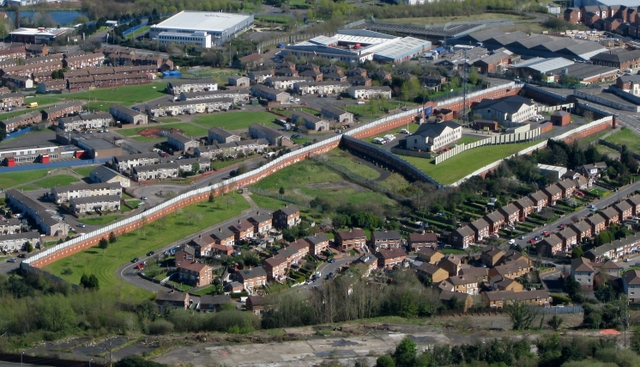
This can partly be explained by a (natural) generational shift; younger people in the country who didn’t grow up during the Troubles seemingly view their aspirations and the challenges they face through other lenses than a purely or even principally sectarian one. All of this shows that what peace means and looks like in a specific context is a constantly moving target.

Building lasting peace is a society-wide endeavour

Northern Irish society during the Troubles has been widely referred to as a state of “armed patriarchy” underpinned by conservative, masculinised values and discourse of nationalism and religion.

In spite of that, women were heavily involved in civil rights and particularly local community work during the Troubles, advocating for peace and social change. Women’s groups succeeded in securing the participation of a dedicated women’s caucus – the Northern Ireland Women’s Coalition – in the track one negotiations. Women successfully advocated for the inclusion of language and provisions in the GFA on equal opportunity, women’s rights to equal political participation, social inclusion, reconciliation and the needs of victims of violence, integrated education and mixed housing, and for a Civic Forum to engage with a broad range of stakeholders on the implementation of the GFA. Women were also included in official consultations, played a key role in the “yes” campaign that succeeded in ratifying the GFA by referendum, and were involved in GFA-mandated commissions.

Faith-based actors have also made a major contribution to building peace in Northern Ireland. During the Troubles, in spite of the sectarian divide, which was partly both crystalised around and perpetuated by socio-cultural religious organisations like the Orange Order, a number of Protestant and Catholic actors mobilised for peace. This included organising large scale Peace Marches, acting as mediators between militants, and advocating for and facilitating ceasefires. They also worked to build trust and understanding within and between different sectarian groups through hosting meetings between paramilitary leaders on both sides of the conflict. Faith-based actors have been involved in the implementation of the GFA and have continued efforts to foster social reconciliation and healing, including through creating and facilitating spaces where people who identify as loyalist or republican can come together and have uncomfortable, but necessary conversations to humanise one another.
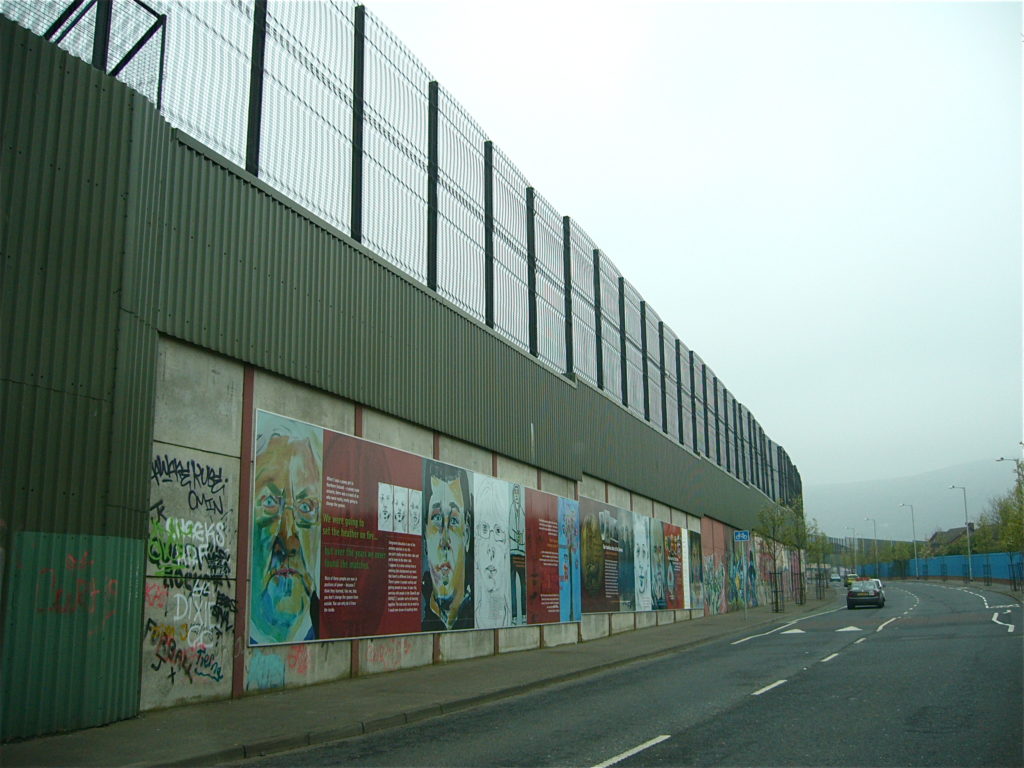

Caption: Peace walls decorated with hopeful murals are just one example of the myriad ways in which communities in Northern Ireland are trying to reconcile their differences and build a shared peaceful future

We know from evidence and experience that society-wide involvement in building peace is crucial to making peace inclusive and sustainable. Bottom-up initiatives and spaces for societal involvement take on even greater importance in contexts like Northern Ireland, where the formal political arena is deadlocked. Recent and current examples, ranging from consultative bodies the Civic Forum and the British-Irish Parliamentary Assembly, to existing inter-sectarian civic spaces such as the Suffolk and Lenadoon Interface Group or the 174 Trust provide a blueprint to consolidate and expand. Doing so is a crucial aspect of reimagining and diversifying the ways we understand and undertake peacemaking and peacebuilding, which is essential to making sure these processes are an integral part of – rather than separated from – the arc of a society’s changing development, and to ensuring that that arc bends towards a peaceful, just, and inclusive future.

————————————————————-
This blog post was written by Alexander Bramble and Philip Poppelreuter

Check out our case study and our infographic on women in the 1996-1998 Northern Ireland peace process, our digital story on faith-based actors’ peacebuilding work in Northern Ireland, and our blog post on Perpetual Peacebuilding.


Photos: “File:Nothing with us.jpg” by Michael Lovito is licensed under CC BY-SA 4.0, “Peace in Northern Ireland – geograph.org.uk – 3551004” by Oliver Dixon is licensed under CC BY-SA 2.0. “Belfast Murals – Sandy Row (5702530038)” by William Murphy from Dublin, Ireland is licensed under CC BY-SA 2.0. “File:Peace Line, Belfast – geograph – 1254138.jpg” by Ross is licensed under CC BY-SA 2.0.

Case Study,

Women in Peace and Transition Processes: Northern Ireland (1996–1998)

This case study analyses women’s influence in Northern Ireland’s Belfast (Good Friday) Agreement (1996-1998).

December 2018|Alexander Bramble,

Infographic,

Infographic: Women’s role in Northern Ireland’s Belfast (Good Friday) Agreement (1996-1998)

This infographic analyses women’s influence in Northern Ireland’s Belfast (Good Friday) Agreement (1996-1998).

December 2018|IPTI,

Our March readings and podcasts selection includes books, articles, and podcasts we think you’ll enjoy.

READING

Social Movements and NGOs: Can They Get Along?

Outlines some of the pitfalls and pathways towards more impactful partnership between NGOs and Movements. At Inclusive Peace, our partnership approach is informed by many of the challenges, perverse incentives, and contradictions which the article outlines. While there’s more work to do to be able to more nimbly and equitably support movements, this article was an encouraging read which showed that we are pursuing the right track.

Recommended by Alex Shoebridge

Chums: How a Tiny Caste of Oxford Tories Took Over the U.K. by Simon Kuper

Chronicles how a tribe of young men coalesced at Oxford in the mid and late 1980s and would go on to run the U.K. (and resoundingly successfully I might add!), providing an interesting taxonomy of Oxford in the process.

Recommended by Alex Bramble

PODCASTS

Adam Grant, Work Life

Great reflections on work, life and how to make both better (and not just more balanced). Adam Grant is a best-selling author, award winning professor and researcher in organisational psychology.

Recommended by Rainer Gude

Rethinking Humanitarianism | More trade; less aid? By the New Humanitarian

In this episode, guest speakers look at the role of the World Trade Organisation in shaping how interaction between countries can improve relations to avoid unfair competitive markets, which has in the past led to conflicts and wars. This podcast discusses the terms of trade that haven’t changed much since the early 1990s. The use of aid for the short term and how this would affect the long term economic development when trade isn’t picking up due to low value trading.

Recommended by Wairimu Wanjau 

We’ve put together a selection of readings and podcasts that we think you might enjoy in December.

READING

Yemen’s Incomplete National Dialogue: Insights on the Design and Negotiations Dynamics by Ibrahim Jalal

An analysis of Yemen’s National Dialogue, identifying a number of lessons learned and the legacy and implications of the National Dialogue for peacemaking efforts in the country going forward.

Recommended by Alex Shoebridge

All Quiet on the Western Front by Erich Maria Remarque

It is a classic on describing the horrors of war and the dangers of hyper-nationalism and propaganda. It is beautifully written and also manages to find a deep humanity in the chaos that humans can bring upon one another. It follows a young German who enthusiastically enlists in WWI and then is soon mired in the atrocity of the trenches. A story of great humanity and still extremely timely. There is also a film out on Netflix now.

Recommendation by Rainer Gude

Ideology and Mass Killing: The Radicalized Security Politics of Genocides and Deadly Atrocities by Jonathan Leader Maynard

Maynard’s book, Ideology and Mass Killing: The Neo-Ideological Motivation behind Genocide and State Terror, advances an alternative ‘neo-ideological’ perspective which systematically retheorises the key ideological foundations of large-scale violence against civilians. By combining cutting-edge research from multiple disciplines — ranging from political science and political psychology to history and sociology — to demonstrate how ideological justifications for violence shape such violence in ways that go beyond deep ideological commitment. Most disturbingly of all, the key ideological foundations of mass killings are found to lie, not in extraordinary political goals or hatreds, but in radicalized versions of those conventional, widely accepted ideas that underpin the politics of security in ordinary societies across the world.

Recommended by Nick Ross

PODCAST

Crisis Group “Hold Your Fire” Season 3, episode 12: Football and Politics in the Gulf

In honour of the self-styled Greatest Show on Earth™, Crisis Group’s “Hold Your Fire” series has an episode on Football and Politics in the Gulf. One of the respondents is Dina Esfandiary, an extremely astute observer of all-things MENA and particularly Iran (with whom I had the pleasure to work in a previous professional life).

Recommended by Alex Bramble

Into Africa (produced by the Center for Strategic and International Studies (CSIS) in Washington D.C.

This bi-weekly podcast discusses security, political, economic, and cultural themes that occupy the continent. An exciting and enjoyable opportunity to stay updated on and better understand the multi-faceted change that African countries are currently undergoing individually and/or collectively, including the opportunities and challenges that they are encountering.

Recommended by Philip Poppelreuter

Seeking Peace podcast

The Seeking Peace podcast, produced by the Georgetown Institute for Women, Peace and Security in partnership with UN Peacekeeping and Our Secure Future, explores women’s roles in bringing lasting peace to communities—whether it be through grassroots activism, peace negotiations, journalism, politics, or as uniformed peacekeepers. The podcast has covered themes such as the role of women in negotiations , building peace , defying gender norms , leadership and allies , and more. Interviewees range from grassroots activists and peacebuilders to scholars and academics to UN officials.

Recommended by Wairimu Wanjau

We’ve put together a selection of readings, podcasts and video recommendation that we think you might enjoy this new year.

READING

Tattoos on the Heart by Greg Boyle

The founder of Homeboy Industries, the largest Gang reinsertion program in the world, Father Greg Boyle tells stories that will make you laugh and cry about the power of compassion and how to stand with those on the margins. A great and powerful model for inclusion.

Recommendation by Rainer Gude

Other news

Other News is a nonprofit organisation that publishes expert analyses of and opinions on a variety of global issues and trends. The organisation prides itself as a platform for voices against the tide. This aptly summarises the content of the stimulating and thought provoking daily contributions one can find on the organisation´s website, which approach and discuss global challenges from a different angle than the mainstream media.

Recommended by Philip Poppelreuter

PODCAST

Top Global Crises to Expect in 2023 by Global Dispatches 

The attention will continue to be directed towards Horn of Africa. Somalia, Ethiopia, Afghanistan, Yemen, and DRC will be the top countries to watch in terms of humanitarian assistance. Based on the mixed methodology to assess the risks, they discuss how countries like Somalia will be further exposed to the climate emergency. Another significant effect is to be derived from the economic problems and food crisis that piles up for 2023, accelerated by the war in Ukraine.

Recommended by Tamar Tkemaladze

“Hold your fire!” / Dec 2022 / “No end in sight in Ukraine?” by International Crisis Group 

While the conflict continues to evolve and shift on an almost daily basis, ICG’s podcast from December reflects on some of the broader lines regarding the trajectory of the conflict, including in terms of possible scenarios towards negotiation.

Recommended by Alex Shoebridge

A crisis in Peru Signals Trouble for South America & Why Haiti Asked for an Intervention by The New York Times 

From the New York Times, two episodes of the Daily podcast hosted by Sabrina Tavernise examining the recent political showdown in Peru and the request for international aid launched by Haiti.

Recommended by Giulia Ferraro

Conversing on Africa Peace by Africa Amani & Australian Embassy in Ethiopia 

A Podcast series is hosted by the Africa Amani and Australian Embassy in Ethiopia, which is focussed on highlighting how peace processes and peacebuilding in Africa is shaping up and what lessons can be drawn from the various processes highlighted.

Recommended by Wairimu Wanjau

Video

Under the Sun, Vitaliy Mansky by Icarus Films

After years of negotiation the Russian director Vitaly Mansky was invited by the North Korean government to make a film about one girl and her family in the year she prepares to join the Children’s Union, on the ‘Day of the Shining Star’ (Kim Jong-Il’s birthday). The North Korean government cast the film, wrote the script, and provided guides to feed the actors their lines while managing every detail of the project. But the government handlers supervising the production did not realise that Mansky kept filming even after they had shouted “Cut.” The result is an extraordinarily revealing mixture of official propaganda and unauthorised behind-the-scenes footage

Recommended by Alex Bramble


Our session at GPW 2022 “Increasing militarisation and feminist foreign policy: compatible or worlds apart?” – co-organised with the Centre for Feminist Foreign Policy, the Government of Mexico, the Kingdom of the Netherlands, and the German Mission to UNOG – shared some of the growing wealth of lessons from the experiences of governmental and non-governmental actors on the opportunities and challenges of applying a feminist foreign policy lens to policymaking efforts. It included insights on how to effectively implement and amplify feminist foreign policy, and how it can serve as a tool to counter increasing militarisation and catalyse more just and inclusive policymaking.

Over the past few decades, intersectional feminist perspectives have been increasingly incorporated in academia and activism, and significant multilateral gender-sensitive normative advances have been made, notably centred around the Women, Peace and Security Agenda and UN Security Council Resolution 1325.

Yet, until more recently, policy practice was behind this curve. In 2014, Sweden became the first country to launch a feminist foreign policy (FFP), with Luxembourg following suit in 2018, and Mexico in 2020. In May 2022, the Netherlands committed to pursuing an FFP, and the new coalition government in Germany has signalled its intention to adopt an FFP and is currently defining the shape it will take. In 2017, Canada created a feminist international assistance policy, with France adopting a similar feminist foreign aid policy in 2019. An FFP moves away from the traditional foreign policy lens of hierarchical global systems, reframing security in the perspectives and well-being of marginalised and vulnerable groups.

In parallel, the world is witnessing an ever-increasing degree of militarisation. All forms of organised violence and armed conflict have risen over the past decade. In 2021, global military expenditure surpassed the two trillion US dollar mark for the first time, and despite the economic effects of the Covid-19 pandemic, military spending in 2021 was 0.7% higher than in 2020 and 12% higher than in 2012. The trend of heightened militarisation can be observed across multiple other domains, from policing to outer space. It has been sharply exacerbated by Russia’s invasion of Ukraine, – which prompted both Sweden and Finland to relinquish decades of military non-alignment and simultaneously apply to join NATO. Germany has also significantly increased military funding and agreed to arms transfers to Ukraine.

The workshop addressed whether doctrines such as FFP can help to assuage increasing militarisation, and explored whether increasing militarisation and feminist foreign policy can co-exist, both in the realm of international relations and even within individual governments’ foreign policymaking; and if so, how?

The discussion underlined how FFP can help to apply a gender lens – rooted in UNSCR 1325 and the WPS agenda – to conflict resolution and security challenges, such as disarmament and arms control, to minimise the harm caused by weapons, hold perpetrators accountable, help victims, and ensure that approaches to tackling security challenges address the needs of all people to build resilient and inclusive societies. It also showed that doctrines like feminist foreign policy can provide and help to promote alternative frames of reference as a counterpoint to traditional Realist IR paradigms, which are dominated by and perpetuate militarisatised narratives and frames of reference, from both a theoretical and practice-oriented perspective. This can help peacebuilders develop conceptual clarity and support their critical thinking and reflection on their work and the opportunities and challenges they face in order to contribute to sustainable peace in creative and innovative ways with a maximum level of effectiveness and impact.

Five key takeaways from the event were:

1. Feminist policymaking needs to be enacted both within and beyond borders, meaning FFP has to go hand in hand with feminist domestic policy. Coherence between domestic and foreign policy ensures not only more joined-up policymaking, but applying a feminist policymaking lens to all sectors can help societies become more inclusive and just. This does not mean that there is no room for a degree of pragmatism alongside an idealist goal; as is the case with some governments that have adopted FFP, feminist foreign policy can act as a catalyst for more gender-responsive domestic policy. The discussion also underlined the importance of countries “exporting” FFP committing to and achieving a degree of self-examination at home before carrying the torch elsewhere.

Caption: H.E. Francisca Elizabeth Méndez Escobar, Permanent Representative of Mexico to UNOG

2. At both national and international level, it is not enough for FFP to be a top-down project; it needs to be anchored in the wider societal context, with broad-based public consultations to ensure public buy-in and to collectively shape the agenda. The Swedish tradition of feminism from above and below that has defined a lot of public policy is a good example in this regard. As ever, grassroots movements are key; in the same way that women and young people drive many aspects of peacebuilding, women and youth at the grassroots level can help to apply intersectional approaches to defining domestic and foreign feminist policymaking that responds to the needs and demands of all members of society.

Caption: Annika Bergman Rosamond, Associate Professor (Docent) in Political Science and International Relations, Lund University

3. Gender equality is a fundamental part of FFP, but the doctrine goes further than that: at its heart is an intersectional approach that also addresses race, ethnicity, religion, disability, and sexual orientation. Above all FFP is about addressing unequal manifestations of power. To be a vehicle for intersectional policymaking and outcomes, FFP needs to continue to champion rights, representation, and resources. But it also needs to be more transformative and radical, going further than the “three r’s” to dovetail with other fundamental systemic transformation like adopting less extractive and exploitative economic growth models to reduce structural inequality and exclusion, and tackling climate change and reimagining our relationship with nature. In short, the three r’s should be joined by the three p’s: peace, people, and planet.

Caption: Kristina Lunz, Co-Executive Director, Centre for Feminist Foreign Policy

Africa more than anywhere has seen the use of foreign policy to advance power and acquire resources to benefit certain countries at the expense of others. Despite a first wave of decolonisation in the second half of the 20th century, the legacy of colonial foreign policy still presents a major challenge. Africa today is also still heavily influenced by external powers: it is one of the loci of the rivalry (and to some extent cooperation) between China and the US, one of the upshots of which is greater militarisation and securitisation of Africa, impelled by the war on terrorism and the need to protect vested political and economic interests. There is potentially a role for FFP to play in both counteracting militarisation in Africa and also breaking down the legacies of colonialism. But a fundamental barrier is the double standards of governments – both “exporters” and “importers” of FFP – addressing armed conflict with violence, while at the same time calling for peace. To reduce militarisation in Africa, African governments (like all governments) must first address gender inequalities inside their borders through African governments’ enactment of national plans to advance gender equality, such as 1325 National Action Plans.

Caption: Helen Kezie-Nwoha, Executive Director, Women’s International Peace Centre (WIPC, Kampala)

It is important to recognise that security without arms is not a reality that will materialise any time soon, if ever, and that – as with all political endeavours – unless the notion is backed up by tangible manifestations of political will, FFP is in danger of being just more empty rhetoric. However, FFP can help to assuage the rising trend of militarisation. It can do this in a number of ways, including by helping to diffuse tensions by furthering trust-building between more immediate neighbours, and also more broadly between the global north and global south. This needs to be based on exchanges in good faith to clarify any misconceptions around FFP and its relationship with the existing international peace and security agenda. This also means open and constructive exchanges about existing inherent contradictions, such as governments – including proponents of FFP – prioritising militarised or securitised remedies to instability and armed conflict while calling for peace. Above all, backed up by the necessary political will, FFP can be a catalyst for domestic and international policymaking with peace, people, and planet at its heart.

Last but by no means least, a big thank you to the speakers, co-organisers, our GPW virtual assistant, participants, and everyone else who contributed to the event.

The 5th Paris Peace Forum, which took place from November 11-12, hosted several sessions on topics related to the overarching theme of the forum, “Riding out the Multicrisis.” At a time when the international community is experiencing rising conflicts around the world triggered by multiple issues with various degrees of complexity (and with each resulting in or exacerbating various knock-on effects), the forum provided a platform to discuss the issues and (possible) responses.

A key thematic thread at the forum was “Fostering more inclusive and just societies,” which had several dedicated sessions on several sub-topics spread over the two-day event. The sessions all highlighted that the current intersecting crises have a disproportionately high impact on women, especially indigenous women, women of colour, young women, and women with disabilities.

Here are three takeaways from the discussions around this particular theme:

Local solutions and intelligence to conflict resolution

One of the key focus points of the 2022 Paris Peace Forum was that conflicts need to be solved with local solutions and local intelligence – and not dictated or directed by external forces. In the session on “Learning from Indigigneous Human Rights”, Silvana Baldovino – Biodiversity and Indigenous Peoples Program Director from the Sociedad Peruana de Derecho Ambiental – emphasised that understanding the needs of people affected by (indigenous) human rights violations and discrimination is key to being able to respond to them in a targeted and adequate way. Only by giving space and listening to each other can sustainable solutions be supported.

Therefore, true partnerships need to move beyond the national and international levels and focus on people on the ground who are affected the most and best placed to shape the solutions.

Low importance of feminist foreign policy

One small room, women squeezed around a table, just one man – this was the setting when discussing concrete actions on feminist foreign policy from different regions of the world at one of the biggest peace forums. What does this say for how feminist foreign policy is perceived and prioritised? The working session “Beyond the Concept: Feminist Foreign Policy in Action” at the Paris Peace Forum 2022 was one of two sessions focusing on feminist diplomacy. But lessons learnt from different countries and proposals for concrete action were sadly in short supply. Exchanging knowledge and experiences of highly qualified women (and men) that are working on women, peace and security every day can contribute to a better understanding of what is needed to foster, promote, and implement feminist foreign policy. Inclusive Peace sees feminist foreign policy and feminist diplomacy as an issue of gender equality, but also as an intersectional approach that addresses race, ethnicity, religion, disability, and sexual orientation. Above all it’s about addressing historical unequal manifestations of power. To achieve all of this, both more space and universal buy-in (including, for example, the input of men on gender equality) is required. It would be great to see these discussions on bigger stages at next year’s Paris Peace Forum, which are accessible to more people and which are afforded the focus and resources to match the rhetoric.

Rising threat towards women’s rights

In political decision-making processes (mostly led by men behind closed doors), women cannot be talked about without them being present. In view of the increasing violence in all forms against women (especially people like women peacebuilders and women human rights defenders who work for women’s rights on a daily basis) and the growing risk of women’s rights being curtailed, it is all the more important to involve (those) women in solution-finding processes, as only they can bring their experiences, knowledge, and demands to bear. The high-level panel on “Accelerating feminist diplomacy in numbers” confirmed that women’s inclusion in diplomacy, high-level negotiations, and decision-making processes is still lacking, questioning international responsibility in this regard, and that threats to women’s rights are simultaneously rising. Gabriela Ramos (UNESCO) and José Manuel Albares (Minister of Foreign Affairs, Spain) both emphasised that legal frameworks need to incorporate women’s right to participation to foster their inclusion, e.g. through quotas, as this is the responsibility of every country. But while quotas can be an effective means of ensuring women’s participation, they are not sufficient in and of themselves to ensure women’s influence and thus ensure their participation is meaningful. In addition to the inclusion of women, their protection is also crucial, as women who speak out for women’s rights and work to build peace are particularly vulnerable. Therefore, Inclusive Peace sees the responsibility of all states not only to strengthen the inclusion of women in all kinds of political decision-making processes and on different levels of diplomacy, but also to ensure their protection. Affording space for these kinds of discussions in international fora like the Paris Peace Forum is an important first step,but there’s still a long way to go!

On 4 November, 2022 as part of the Geneva Peace Week, we will be co-hosting and co-organising an event on, “Increasing militarisation and feminist foreign policy: compatible or worlds apart?” with the Center for Feminist Foreign Policy, The Kingdom of the Netherlands, Permanent Mission of the Federal Republic of Germany, and Permanent Mission of Mexico to the United Nations in Geneva.  Find the link to the event here

Panel speaker: Kristina Lunz Co-Founder and Co-Executive Director, The Centre for Feminist Foreign Policy

Kristina is the Co-Founder and Germany Co-Executive Director of the Centre for Feminist Foreign Policy, an award-winning human rights activist, and former advisor to the German Federal Foreign Office. She’s been known for her feminist work for several years and been interviewed by and portrayed in numerous (inter)national media outlets. She was named as Forbes 30 under 30 (in both Europe and DACH), is a Handelsblatt/BCG “Vordenkerin 2020”, a Focus magazine “100 Women of the Year 2020″, an Atlantik Brücke Young Leader, Ashoka Fellow as well as BMW Foundation Responsible Leader. She is a first generation university student with a graduate degree from Oxford University.

Panel Speaker: Helen Kezie-Nwoha, Executive Director, Women’s International Peace Centre (WIPC, Kampala)

Helen Kezie-Nwoha is a feminist peace activist and a women’s human rights defender from Nigeria. Since 2016, she has been working as the Executive Director at The Women’s International Peace Centre (The Peace Centre), formerly known as Isis Women’s International Cross Cultural Exchange (Isis-WICCE). The Peace Centre is a feminist organization that focuses on promoting women’s rights in conflict and post-conflict settings and the implementation of the women, peace and security agenda.

Read her full bio here: Helen Kezie-Nwoha-Bio-IncluisvePeace-Event.docx

Panel speaker: Annika Bergman Rosamond, Associate Professor (Docent) in Political Science and International Relations, Lund University

Annika Bergman Rosamond is Associate Professor in International Relations at Lund University, Sweden. She has published widely on feminist foreign policy as well as gender cosmopolitanism, gendered nationalism, indigenous justice, feminist security studies and gender and celebrity humanitarianism. She obtained her D.Phil. at the University of Sussex. She has held positions at the universities of Leicester and Edinburgh and at the Danish Institute for International Studies. Annika was recently Chair of the Feminist Theory and Gender Studies section of the International Studies Association, USA, and is currently co-convenor of the British International Studies (BISA) Gendering International Relations Working Group.

Read her full bio here: Annika Bergman Rosamond-Bio-InclusivePeace-Event

Opening Remarks: H.E. Francisca Elizabeth Méndez Escobar, Permanent Representative of Mexico to UNOG

Ambassador Méndez graduated as a BSc in Political Sciences and Public Administration and a MSc in Latin American Studies from the Mexican National Autonomous University (UNAM). She obtained her second MSc in Law and Economics from the Milan State University in Italy. She has diplomas in international politics, public diplomacy and Arab studies, the latter with professors from the University of Oxford.

Ambassador Méndez entered the Diplomatic Service of the Mexican Ministry of Foreign Affairs in 1991. Prior to her appointment to Geneva, H.E. Mrs. Méndez served as Ambassador of Mexico to the United Arab Emirates, from January 2017 to January 2022, also covering Iraq.

Read her full bio here: CV Emb. FEME inglés – final – feb.22.