
Author Archives: EDITOR - Majken

Quotas as a standalone measure have struggled to guarantee women’s influence over peace processes. This blog presents tangible complementary measures, which when combined with quotas can help to catalyse women’s meaningful participation.

Quotas have featured prominently in research and practice-oriented debates on how to realise the WPS agenda’s participation pillar for years. Over the past quarter-century, several states and inter-governmental bodies have embraced gender quotas. Two particularly recent examples stand out.

The National Dialogue Commission (NDC) in Ethiopia has adopted a 30 percent gender quota for the country’s ongoing national dialogue. A new policy framework from the Peace and Security Council of the African Union (AU PSC) also includes a commitment to a 30 percent minimum gender quota for AU-led formal peace processes as well as conflict prevention, management, and election observation missions.

Quotas can enhance their influence over a peace process but do not automatically do that in and of themselves. Men political and security decision-makers have found various ways to sideline women who are directly represented in formal peace talks. They have excluded women negotiation delegates from informal decision-making spaces; stigmatised women who they depicted as dishonourable and incompetent; and threatened, harassed, and intimidated women delegates in offline and online spaces.

Political, ethnic, religious, and other divisions have also prevented women from speaking with one voice and thereby capitalising on their quota-induced presence in formal peacemaking spaces. Weak monitoring and enforcement mechanisms have further undermined gender quotas’ impact.

These multi-faceted constraints indicate the need to both properly design and implement gender quotas and also think about them not in isolation but as one tool among a variety of mechanisms and measures that, when combined, can holistically advance meaningful women’s participation. Twelve tangible entry points stand out in this regard. They draw on comparative evidence as well as potential ideas for how to make quotas work.

Quota Design

The early adoption of gender quotas can strengthen women’s presence in a formal peace process from the outset, which puts them in a better position to counter early forms of patriarchal backlash. Women’s guaranteed representation throughout the post-agreement phase can amplify their influence as implementation-related activities unfold. Yemeni women, for example, drew on a 30 percent gender quota that applied throughout the entire National Dialogue Conference (2013-2014) to ensure that the emerging outcome document was gender sensitive.

More ambitious quotasthat set women’s minimum representation at 50 percent and grant women access to decision-making power are also conducive to their meaningful participation. In Colombia, for example, women’s rights organisations’ and activists’ advocacy for a 100 percent gender quota regarding the Gender Sub-Commission contributed to women’s majority in this innovative body.

Gender quotas that account for women’s intersectional identities will ensure that the voices of women from various backgrounds can be heard in a peace process. Political, ethnic, religious, geographic, and socio-economic affiliation as well as age are some of the identities that gender quotas would ideally account for. The Local Level Election Act (LLEA) in Nepal from 2017, for example, stipulates that at least one woman and one Dalit woman must be represented in each municipality ward.

Complementary Measures

Combining gender quotas with other inclusion modalities can strengthen women’s influence over a peace process. Extra (standalone) women-only delegations comprised of gender experts and representatives from women-led organisations can amplify women’s voices in peace and political transition processes in various ways, including:

➜  Mitigating the negative effect of women’s potential co-optation by men in negotiation delegations or women voting in accordance with their political, ethnic, or regional interests.

➜ Moving beyond women’s tokenistic inclusion in negotiation delegations.

➜ Promoting women’s collective voice and facilitating consensus-building among them.

Women-only delegations included in formal peace and political transition processes in Yemen (2013-2014), Northern Ireland (1996-1998), and Ethiopia (ongoing national dialogue), as well as Colombia’s Gender Sub-Commission (2014-2016) are pertinent examples. In Nepal (2008-2012) and Yemen (2013-2014), women capitalised on their direct representation in technical and thematic working groups to shape the negotiations under the respective constitution-making process.

Tangible and legally binding monitoring and accountability mechanismsare also important complements to effective gender quotas. This includes sanctions for negotiating parties who refuse to comply with a gender quota.

Frequent reports that assess the progress made regarding the implementation of a gender quota as well as quotas’ quantitative and qualitative impact on women’s influence over peace processes could inform any accountability measures. An effective monitoring system that traces physical or online attacks against women negotiation delegates will also enhance their protection.

Access to context-specific, targeted, and needs-based capacity strengtheninginitiatives can help women negotiation delegates to acquire or deepen the required technical skills and knowledge to shape a peace process as well as strengthen coordination amongst themselves.

Consultations, Coalition Building, Advocacy —What Women Can Do.

Women negotiation delegates’ willingness and capacity to overcome internal divides, represent the voices of all women, and engage in constant advocacy around a minimum shared agenda determine gender quotas’ impact.

Intra-women coalition building efforts have taken various forms. Women from the Somali region in Ethiopia have joined tribe-based dialogue spaces as members of a women’s tribe rather than individual women over the past couple of years. An internal problem-solving workshop in 2002 helped women negotiators from the DRC to agree on a common agenda ahead of the inter-Congolese Dialogue in Sun City (South Africa) in 2003. Over 400 women organised a national summit in Colombia in 2013 to coordinate their outreach and advocacy activities regarding the peace process between the government and the FARC.

Consultations with women at the grassroots level can help women negotiation delegates to affect gender-transformative change that benefits all women. Inter-women consultations can be formal or informal. They would benefit from logistical, technical, and financial support from domestic actors and inter-governmental organisations like the AU.

Constant lobbying, advocacy, and mobilisation for women’s meaningful participationcan create the necessary level of public pressure on negotiating parties to adopt and subsequently implement gender quotas. Women-led civil society organisations, women members of unions and political parties but also third-party mediators and moderate traditional and religious leaders can play a key role in this regard.

Tapping into the various entry points presented above will require significant political will and funding. The establishment of a dedicated fund could be effective in this regard. Any such fund could also support the work of women-led civil society networks and organisations to dismantle patriarchal norms and values, which is key to transforming women’s position in society.

Philip Poppelreuter | Researcher, Inclusive Peace

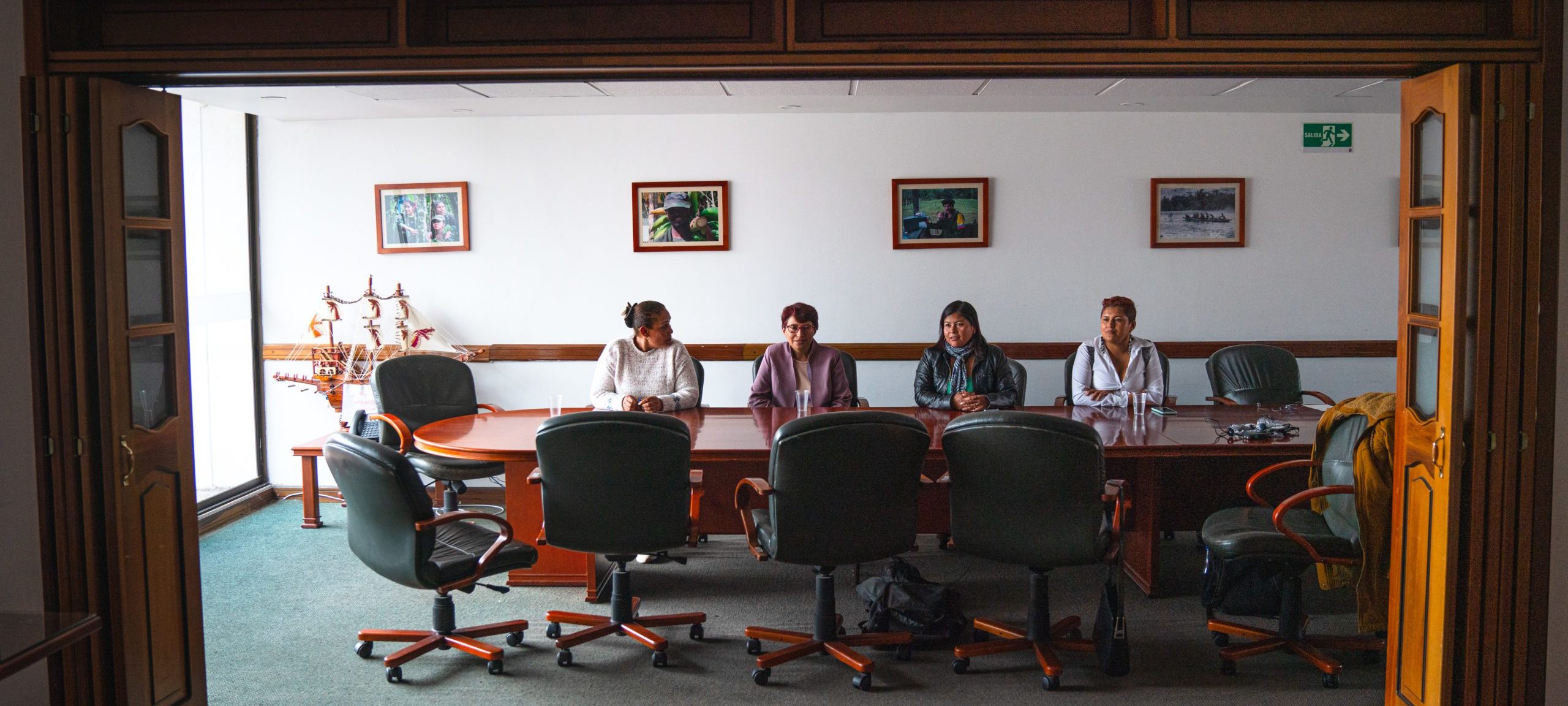
Photo credit: UN Women/Pedro Pio 2022 ©

This blog is part of Inclusive Peace’s 2025 series on women’s effective participation in peace processes. The series examines context-sensitive strategies women have successfully pursued or could pursue to shape peacemaking and peacebuilding in a changing geopolitical context marked by increasing levels of armed conflict, greater multipolarity – both in general and more specifically in terms of mediation actors – and a decline in comprehensive peace processes and agreements led by the UN. It is based on comparative findings of a project Inclusive Peace is undertaking in partnership with the Irish DFA in the run up to the 25th anniversary of UNSCR 1325 in October 2025.

The Women, Peace, and Security (WPS) agenda is instrumental in advocating for women’s meaningful participation in peace and security efforts. However, in situations of incomplete peace and ongoing political transitions, the challenges facing women peacebuilders and activists become even more acute. As the agenda approaches its 25th anniversary, it faces existential challenges.

Women and the WPS agenda already contend with significant hurdles, including underrepresentation in political spaces and formal peace processes, backlash from patriarchal and male-dominated societies, and a lack of protection as their work often exposes them to threats and violence. These challenges are exacerbated in contexts where peace is fragile, political landscapes are unstable, and transitions are contested and non-linear.

The Reality of Partial Peace and Political Transitions

Partial peace refers to situations where ceasefires or agreements have been reached but conflict dynamics persist. Political transitions on the other hand, are periods of change in governance structures that may or may not lead to democratic and inclusive outcomes. These conditions create both risks and opportunities for women’s involvement in peace and security processes.

The impact of partial peace and political transitions on the WPS agenda is particularly evident in Palestine, Syria, and Lebanon.

● Palestine: While women activists play a crucial role in advocating for peace, human rights, and community resilience, WPS work in Palestine is shaped by the ongoing occupation and the lack of any prospects for a two-state solution. The challenges they face are further compounded by the impact of the occupation exacerbating and reinforcing patriarchal structures.

● Syria: Over a decade of civil conflict, compounded by complex and overlapping political dynamics, has left Syrian women navigating multiple layers of exclusion. Despite this, Syrian women have emerged as key actors at the local level in serving as negotiators in securing local ceasefires and prisoner releases, distributors and monitors of humanitarian aid, and documenters of human rights abuses, often without formal recognition or protection.

● Lebanon: The country’s ongoing political and economic crises have created an environment where women peace actors struggle to gain influence. Despite their active role in civil society and protest movements, they face institutionalised discrimination and exclusion from governance structures that remain resistant to gender-inclusive reforms. Displacement resulting from the latest conflict with Israel, has disrupted women’s livelihoods in Lebanon and heightened their need for protection, shelter, food, and healthcare.

The Way Forward

Addressing the challenges facing women in contexts of partial peace and contested political transitions requires more than symbolic inclusion—it demands a structural rethinking of how peace is made, monitored, and sustained. Building on the recommendations of the WPS Working Group for the Arab States, several priorities stand out.

First, women must be included as negotiators, mediators, and signatories in peace and ceasefire processes—not as observers, but as decision-makers. Gender provisions should be mandatory in agreements, with independent monitoring to ensure they are not sidelined once the ink dries.

Second, accountability must move beyond rhetoric. Fact-finding missions, gender-sensitive audits, and publicly accessible indicators are needed to track violations and progress, particularly in places like Palestine and Syria, where women continue to face violence and exclusion under occupation and militarised governance.

Third, peacebuilding must be rooted in local realities. That means adapting WPS language and frameworks to cultural and political contexts, investing in grassroots women-led initiatives, and decentralising funding away from elite or capital-based structures. Regional leadership—rather than Western dependency—should drive these processes, with Arab states using their political leverage to broker inclusive peace.

Fourth, protection and support must extend to women activists, human rights defenders, and community mediators who take on extraordinary risks. Safe houses, legal aid, mental health programs, and rapid response mechanisms should be treated as non-negotiable investments in sustaining women’s leadership.

Finally, the agenda must look forward. Climate change, arms proliferation, and emerging technologies like AI are already shaping conflict dynamics in the region. Women’s voices and agency must be central in shaping how societies respond to these evolving threats.

The promise of the WPS agenda will not be realised through tokenism or symbolic commitments. It will be measured by whether women in Palestine, Syria, Lebanon, Sudan, and beyond are empowered to shape the peace and political futures of their societies—not in theory, but in practice.

Qabas Al-Musawi | Research & Peace Process Support Analyst

The 2014 and 2015 Minsk Agreements are a cautionary tale of the need to ensure Ukrainian interests are not sidelined and to include Ukraine in any peace negotiations.

Next week will mark the third anniversary of the full-scale Russian invasion of Ukraine. Three years on, the chances of either side achieving an outright military victory that would realise their respective stated aims continue to appear slim.

Since initial negotiations several weeks after the full-scale Russian invasion, public diplomatic exchanges between Ukraine and Russia have been limited, focusing on grain exports and prisoner exchanges. Publicly acknowledged diplomatic activity towards negotiations over the past two years has comprised the Ukrainian government’s 10-point peace formula, and other exploratory initiatives involving actors like Türkiye, Brazil, China, seven African states, the Vatican, and Saudi Arabia. The flurry of diplomatic activity over the past week has brought negotiations to end the war squarely into view. Despite some (how to put this diplomatically…) mixed messaging from the new U.S. administration about their intentions for the composition of peace negotiations, Donald Trump and Keith Kellog have stated that peace talks would involve Ukraine, and Marco Rubio confirmed last Sunday during a visit to Jerusalem that Ukraine and European states would be involved in any “real” negotiations.

Amid all the bloviation, false claims, and empty self-aggrandising rhetoric, this provided a measure of reassurance – at least temporarily – to everyone who is deeply invested in a just and sustainable end to the war. But any repetition of the message that Ukraine and Europe would have to be involved in any substantive talks and that a durable settlement would have to respect Ukrainian sovereignty were conspicuous by its absence during the U.S.-Russia talks in Riyadh on Tuesday.

Beyond the fairly intuitive proposition that any agreement to end the war is unlikely to be just or sustainable if it excludes the party that was invaded, the very recent history of the Russia-Ukraine armed conflict in the form of the 2014 and 2015 Minsk Agreements also provides a cautionary example of the need to ensure Ukrainian interests are not sidelined and to include Ukraine in any negotiation format both in the spirit, and to the letter, of “nothing about Ukraine without Ukraine.”

Both Agreements presented a settlement that was acceptable to Russia (at the time) and Ukraine’s patrons in France and Germany, but side-lined Ukrainian interests. This led to a lack of both elite and popular support in Ukraine for either agreement. An absence of confidence-building measures also perpetuated the low level of trust between Ukraine and Russia. All of this – along with other shortcomings of the Agreements, including the lack of clarity in the sequencing of implementation, the unclear obligations and roles of states in implementation, and the ensuing room for markedly different interpretations of the agreements by different parties – meant that the Minsk Agreements neither constituted a viable compromise nor managed to end the armed conflict in eastern Ukraine.

Bilateral talks between Ukraine and Russia are the default format option for ceasefire and peace negotiations. But given the multidimensional nature of the war and the need to integrate a regional security dimension, involving additional parties in the talks will be a key consideration.

The war in Ukraine is a multidimensional conflict encompassing two levels: a “hot” inter-state war between Russia and Ukraine and a “cold” war between NATO and Russia. The fact that the Trump Administration is seemingly in the process of reversing anywhere between four years and four generations of U.S. foreign policy orthodoxy towards the USSR/Russia doesn’t automatically mean that the NATO-Russia “cold” war has entirely thawed let alone already being on a path to resolution.

With the end of the Cold War in the early 1990s, the centre of contested geopolitical gravity in Europe shifted east. During the Cold War, the two Germanies (and particularly the division of Berlin, physically manifested in the form of the Berlin Wall) came to symbolise the two competing blocks. However, with the enlargement of NATO and EU expansion following the Cold War, Ukraine became the front line of the competing spheres of regional influence. Diplomatic initiatives like the 1994 Budapest Memorandum, under which Ukraine gave up its nuclear weapons arsenal in exchange for territorial integrity and independence assurances by Russia, the US, and the UK, or the Minsk I and II Agreements failed to promote enduring stability in the region. As such, one of the main underlying causes of the current war can be seen in the unresolved renegotiations of the post-Cold War political and security order between Ukraine and Russia and between Russia and the combination of NATO and the EU. Negotiations to end the war in Ukraine will de facto involve a discussion of regional security, and can thus be taken as an opportunity to proactively address new terms for the regional security architecture and also its global dimensions.  A more comprehensive negotiation format could help to address these related but distinct conflict dimensions.

Our report “Negotiating an End to the War in Ukrainedraws on comparative evidence to develop ideas and options for a negotiation process design that can maximise the chances of producing a sustainable and just settlement. It also discusses entry points for other stakeholders’ direct or indirect involvement in the talks, including European/NATO states – and potentially non-aligned states from the Global South – and representatives from civil society, business, and faith organisations.

A small group of states could be given official roles in Ukraine-Russia talks short of full participation; or a multi-party format could be used to foster a more cooperative dynamic by giving a degree of representation to a larger number of actors. Both these options could also include a small group of third-party states, and actors from civil society, business or faith organisations as participants or guarantors or in other roles. External intermediaries, including state and non-state actors, could play different roles including as mediators, facilitators, and guarantors.

The way the talks are structured can also help Ukraine, Russia, and any other actors involved to manage the complexity of issues and parties. Different thematic components of the negotiation process can take place in parallel or sequentially, and different negotiation tracks can feature different compositions of parties. A multi-party format typically involves specialised working groups or commissions that support the work of the respective thematic tracks. This allows for flexibility in the sequencing of negotiations in relation to questions that might be unanswerable when negotiations begin, such as whether a ceasefire can be reached while other issues remain unresolved.

Whenever negotiations ultimately materialise and whatever the process design that is adopted, one thing is patently clear: for any agreement to end the war to have a chance of being just and sustainable Ukraine must be involved in negotiating it. The sooner that is universally and irrevocably recognized, the sooner the important business of planning and preparing for negotiations can begin in earnest.

Alex Bramble | Head of Research, Inclusive Peace

For the key insights have a look at our briefing note.

Ready for a deep dive? Read the full report.

On 01 January 2025, Inclusive Peace enters a new stage in its organisational growth as a world-class facilitator of inclusive peacemaking and peacebuilding in some of the world’s most complex and protracted political processes.

For the past five years, Inclusive Peace has been led by Dr. Thania Paffenholz, who founded the organisation 10 years ago through its transition from the Inclusive Peace and Transitions Initiative hosted at the Geneva Graduate Institute.

At the end of December, Thania will step down from her role as Director and take on a new function as a Senior Advisor. Thania made this decision to dedicate more time to developing innovative avenues for creating broader impacts for peace and inclusive societies within and beyond the peacebuilding field to engage with global audiences, networks, and movements, including the next generation of societal and political change-makers. While exploring these new opportunities, Thania will also remain engaged in supporting peace and political change processes alongside Inclusive Peace’s partners.

The organisation will continue to benefit from Thania’s wealth of experience in this new function. To further strengthen Inclusive Peace’s position and build on the legacy of its founder, the organisation will be led by the current management team – with Zachary Taylor, Managing Director, and Alex Shoebridge, Head of Peace Process Support playing more prominent roles, complemented by a wider set of research, peace process support, and operations colleagues based across East Africa, Europe, and Asia/Pacific.

This includes a diversified portfolio of work across three continents supported by an advisory board comprised of a number of prominent figures from the world of mediation, diplomacy, security, and peacebuilding and a broadened partnership base spanning foreign ministries, development agencies, and foundations, and a renewed sense of direction.

Inclusive Peace wishes to thank Thania for the extraordinary contribution she has made towards putting inclusivity at the heart of conflict management and peacebuilding around the world, and we look forward to the next chapter Inclusive Peace continues to pursue its vision and mandate “to set change in motion” by supporting actors to engage and shape peace and political transition processes.

In this piece, we highlight the need to bring indigenous cultural and scientific knowledge into peacebuilding. In this Q&A with renowned peacebuilder Binalakshmi Nepram, she shares why the world of today needs indigenous knowledge more than ever and why indigenous peacebuilding should inform peace research.

As a child, Binalakshmi Nepram did not realise that she grew up in a war zone. She thought living amidst violent conflict was normal. She wanted to go into science and be a physicist, but her journey took a different route. At some point, she realised that growing up in conflict should not be considered normal for any child. Binalakshmi Nepram grew up in Manipur, a former nation-state located now in India’s North Eastern part, bordering Myanmar. She is the founder of the Global Alliance of Indigenous Peoples for Gender, Justice, and Peace and she is an advocate for not only victims of the forgotten conflict in Manipur but also of the power and wisdom of indigenous peacebuilding.

Inclusive Peace recently talked to Binalakshmi Nepram over a Zoom connection from her in a hotel room in New York in between her meetings during UNGA week about what the world can learn from indigenous peacebuilding.

How did your journey as a peacebuilder start?

My journey as a peacebuilder did not start as a project or a career choice. It started with trying to find answers to bring peace to one of the world’s most forgotten conflicts. I saw my 14-year-old niece die, my parents nearly being shot, and I, myself, have been threatened multiple times. My journey as a peacebuilder started with the spirit to be alive, to stay safe, and to be able to bring peace to the villages in my home region in the mountains of Manipur.

There are more than 134 armed conflicts [including intra-state conflicts: Source] in the world [including state-based intra-state and non-state conflicts, see more here], many of which you do not even know about. The conflict that I come from, the Manipur conflict, is one such conflict. My starting point as a peacebuilder was trying to find solutions to a crisis that the world does not acknowledge or understand. As someone caught in this conflict, I must spread awareness and offer my knowledge in search of solutions.

What is the type of knowledge that indigenous peacebuilding offers?

We live in an era of information and knowledge, but not all knowledge is considered equal worth. Indigenous knowledge is an example of a type of knowledge that is not always being taken into account. 476 million indigenous people are living in 90 countries and territories, and currently, 80% of the world’s conflicts are happening in biodiversity hotspots, where indigenous people live. In many of the peace agreements, peace talks, and peace conferences, I hardly see indigenous people at center stage. How can we try to resolve the conflicts of today, if we do not acknowledge the wisdom and power of indigenous knowledge and peacebuilding?

Our work is not just to be angry about what happened to us – our work is to engage and inform the right people, policymakers, and people who are working in different parts of the world on peacebuilding to include indigenous peoples in peacebuilding. The first objective is to convenience decision-makers to engage with Indigenous peoples. Do not just ignore them – listen and engage. Ask what wisdom they carry and what are some of the innovative methods they have evolved in their communities to coexist with one another despite differences.

How to do that?

To convince, decision-makers and nation-states, we need research and network. There is very little research done on the indigenous methodology of peacebuilding. We have started in the last year and a half to work on this, but there is still much more to do. We have to ensure that wherever we are working, we can sit down with indigenous people, learn from them, and weave their wisdom into peacebuilding methodology. Then we need convening spaces. This year, the first global summit on Indigenous peacebuilding in April was held, which brought together 120 Indigenous peacebuilders from 30 countries and territories from seven social and cultural zones of the world. At the summit, we launched the global network of indigenous peacebuilders, mediators, and negotiators. The aim is that this network of indigenous leaders, elders, women, and youth will eventually be able to enter conflict zones and negotiate meaningful peace.

Finally, we have now the International Declaration on Indigenous Peacebuilding. We would like the world’s decision-makers to take a look at that declaration and to ensure that decision-makers calculate the principles in the declaration. The blueprint for how to meaningfully integrate indigenous peacebuilding into mediation, negotiation, peacemaking, and conflict resolution is already there – now it needs to be applied. Currently, we are working closely with the United Nations to ensure that indigenous peacebuilding, indigenous mediation, and indigenous forms of negotiation in resolving and mitigating violent conflicts in included in the wider field. I repeat; when 80% of the world’s conflicts are happening in biodiversity hotspots, which is linked to environmental violence, the protection of people, peace, and the planet, will have to include and put indigenous people at the center stage if we want to build a more sustainable world that works for all.

But for all of our work on research and convening to have an impact, there has to come to both acknowledgment and investment from nation-states. First of all, acknowledge that indigenous peoples exist. Countries like China and India do not recognise indigenous peoples. Bangladesh has thrown out the term indigenous peoples and called them ethnic minorities. Nation-states need to embrace indigenous peoples and make them a part of the governance structure. It is time to learn from indigenous people and include them in this local, national, and multilateral decision-making.

Then comes investment. Indigenous peoples are one of the poorest communities in the world because of how post-colonial structures work. It is time for nation-states to apologise and help indigenous peoples live up to their potential. This also means investing in preserving indigenous ways of life, language, cultural and scientific knowledge such as music, medicine, and crafts and finally, wisdom. Indigenous people may just be 6% of the world, but they take care of 80% of the world’s biodiversity. And then, there needs to be investment in indigenous peacebuilding which means resources for research and resources for indigenous peoples to travel to conflict areas to engage.

Why is indigenous peacebuilding more important today than ever before?

The world is hurting, and the people of the earth are hurting because we have forgotten that we belong to each other. We are living under structures that dictate competition and sovereignty to kill. Indigenous people have done things differently. They have said that human beings are not alone in the Anthropocene world. We are not at the top. We are just one of the many elements. Our way of life is to live in humility with the world around us, and not with the arrogance that we think that we can control and conquer everything. Greed and the human search for power have destroyed our world. Indigenous peoples’ worldview and their cosmic vision bring peace and not war. They talk about coexistence, not annihilation. They talk about spirituality and not the domination of one or two religions. They talk about coexistence with the natural environment around us, and not to extraction and depletion of Mother Earth.

I grew up in an indigenous community in Manipur, but I am also a citizen of the modern world. I see two worlds, the indigenous world, and the non-indigenous world, and I realise that the more I go into the non-indigenous world, I feel that we are hurting ourselves. The indigenous worldview is like a bond on a wounded soul. It will bring that peace, that seven billion people on this planet deserve.

There is still a long way to go before the power asymmetries in the peacebuilding field between Northern and Southern peacebuilding actors are dissolved, but what does it take to change this? Peacebuilding experts from Sub-Saharan Africa share their points of view. 

Recent online consultations with peacebuilding experts from Benin, Cameroon, Côte d’Ivoire, Democratic Republic of the Congo, Libya, Mali, Nigeria, Senegal, South Sudan, and Sudan, show that despite a positive change in the donor-recipient relationship over the past years, local peacebuilding actors remain in an inferior position to international donors.

The peacebuilding experts described the relationship in various ways: International donors looking down on local actors, lacking respect towards local actors, or treating them as employees rather than partners on equal footing. 

So what does it take to change that? In this blog, we highlight the innovative suggestions from the peacebuilding experts for creating a donor-recipient relationship on equal footing. 

Rethinking How We Talk About and Support Local Peacebuilding Efforts

Participants suggested two main ways to improve how we think about and support local peacebuilding efforts.

1. Updating Terms and Concepts:

  • Change the Language: Instead of using the term “localisation,” which can seem vague and gives the impression that local agency depends on international donors’ localisation efforts, we should focus on “local ownership.” This means emphasising the role of local people in leading peacebuilding efforts.
  • Define “Local” Clearly: There should be a common understanding of who counts as “local.” This could be done by mapping out who is involved in peacebuilding locally and deciding which groups should get support from outside sources. Creating consortia of local peacebuilders working together can help with this.

2. Improving Communication Between Local and International Actors:

  • Donor Behaviour: International donors should be clear about their supportive but less central role in peacebuilding efforts. They should highlight the skills and achievements of local peacebuilders rather than just their needs. Donors could also work on strategies that present both local and international actors as equal partners working together to address security issues.
  • Local Efforts: Local peacebuilders should promote their skills and achievements publicly. They could run campaigns to showcase what they can contribute to peacebuilding, rather than focusing on what they need.

Promoting Local Leadership Early On

To boost local peacebuilders’ influence from the start the experts suggested to 

  • Involve Local Experts: Involve local knowledge and expertise right from the planning stages of peacebuilding projects to better address local security challenges.
  • Local Decision-Making: Ensure that local peacebuilders have leadership roles in international NGOs and decision-making bodies that control peacebuilding funds. This inclusion can be further enhanced by having a localisation expert in leadership teams.

Improving Collaboration Between Donors and Local Peacebuilders

  • Create Inclusive Spaces: Set up shared spaces where local and international actors can work together to plan and monitor peacebuilding projects. This collaboration should continue throughout the project, including developing joint monitoring and evaluation plans.
  • Widen Local Engagement: Donors should expand their reach by mapping out local peacebuilders, offering training on international standards, giving local groups more time to develop necessary skills, and committing to direct partnerships with a range of local organisations.
  • Local Networks: Local peacebuilders could form consortia to handle interactions with international donors more effectively. Networking among local actors will help create stronger connections with donors.

Reworking the Funding System

  • Institutional Funding: Shift towards providing institutional funding, which can help local organisations offer competitive salaries and maintain independence. This type of funding can also support effective monitoring and evaluation and allow organisations to focus more on their work rather than fundraising.
  • Flexibility in Support: Donors should be flexible in supporting peacebuilding efforts in countries facing international sanctions to avoid situations like in Sudan, where sanctions have diverted funds away from essential peacebuilding work. Flexible funding would also allow local peacebuilding actors to adapt their programs to rapidly changing security or political conditions.

Strengthening Local Networks

  • Collaborate, Don’t Compete: Local peacebuilders should focus on cooperating rather than competing. Professional local NGOs and grassroots organisations should work together to strengthen their influence over donors. Agreeing on certain principles can also help ensure that international donors commit to supporting local peacebuilders more consistently.

Navigating Local Government Challenges in Peacebuilding

When working on peacebuilding efforts in conflict-affected areas, it’s important to adjust strategies based on the local political environment.

In More Open Contexts:

  • Localisation Advisors: In countries where the government is more open, appointing advisors to work with different government ministries can help boost support for local peacebuilding efforts. This can strengthen local involvement in peacebuilding projects.

In Authoritarian Contexts:

  • Protecting Peacebuilders: In countries with repressive governments, the focus should be on protecting local peacebuilders from government crackdowns. It’s crucial to ensure they have the financial and technical resources they need.
  • Peer Support: Encouraging peacebuilders to share experiences and strategies, both within their country and internationally, can help them better navigate challenging political environments.

Inclusive Peace, as part of the Women, Peace, & Security (#WPS) Working Group for the Arab States, recently convened with fellow members in Geneva to tackle a pressing goal: advancing regional policies that strengthen women’s roles in peacebuilding ahead of the upcoming 25th anniversary of the WPS agenda in 2025.

Press release

Geneva, Switzerland – October 2, 2024 – The Women, Peace, and Security (WPS) Working Group for the Arab States convened its second meeting in Geneva from September 30 to October 2, 2024, as part of its commitment to establishing a regional mechanism to inform and shape WPS policies across the Arab region in anticipation of the 25th anniversary of the WPS agenda in 2025.

The 25th anniversary of the agenda provides a critical opportunity to assess its effectiveness and to redefine its relevance, particularly within conflict-affected regions such as the Arab states. Over the past two decades, the WPS agenda, enshrined in the United Nations Security Council Resolution 1325 (UNSCR 1325 (2000)), has aimed to enhance women’s participation in peace processes and ensure their protection in conflict and post-conflict settings. Despite the milestones achieved through UNSCR 1325 (2000) and subsequent resolutions, the Arab states region continues to grapple with deeply entrenched barriers, particularly in relation to women’s meaningful participation in peacebuilding and governance processes.

Building on the momentum from the inaugural meeting in Amman, Jordan, last June, the second meeting of the WPS Working Group brought together WPS practitioners, policy experts, academics, and peacebuilders, hailing from Iraq, Lebanon, Libya, Palestine, Sudan and Syria. Discussions centered on the identification of priority areas for the WPS agenda for the next decade, and on the existing gaps and challenges in the implementation of the agenda in the Arab Region. A central theme that arose from the discussions was the need to ensure the protection of women peacebuilders, activists and human rights defenders as an enabler for their meaningful participation in peace, political, humanitarian and conflict prevention efforts, which are urgently needed in the region.

During the meeting, focus was also given to further refining a white policy paper which proposes actionable recommendations for the implementation of the WPS agenda in the region. The evolving white policy paper will serve as a vital resource for stakeholders throughout the 25th anniversary year to include the narrative and amplify the voices of women WPS actors from the Arab States in high-level WPS policy discussions and fora. Hosted at the Friedrich-Ebert-Stiftung offices, the meeting included consultations and external engagements with representatives from the Women, Peace and Humanitarian Fund, the United Nations Institute for Disarmament Research, and the Office of the High Commissioner for Human Rights. The meeting also coincided with the Human Rights Council’s 57th annual session, allowing the Working Group participants to attend annual discussions of the council on gender as well as relevant side events, providing opportunities to engage with a broader network of international stakeholders in Geneva.

In honor of the Working Group meeting, a reception was hosted by the Swedish Dialogue Institute at the Swedish Permanent Mission Residence in Geneva. The reception provided an opportunity for the Working Group to meet, foster relationships, and engage in dialogue with Geneva based organizations and diplomats, including representatives from Permanent Representations in Geneva.

One participant remarked,

“Creating a safe space for dialogue, where we can listen to diverse viewpoints and address the challenges and gaps faced by women in the Arab region, offers a valuable opportunity to learn, find solutions, and reflect on our situation as women in relation to Women, Peace, and Security issues.” She further emphasized, “Meeting with women from various conflict-affected countries across the Arab region has enabled us to draw comparisons and explore ways to strengthen the role of women in peacebuilding, fostering international alliances, and even promoting healing and recovery.”

Given the growing instability in the Arab States Region and the well-documented disproportionate impact that conflicts and crises have on women and girls, the working group is a timely initiative aiming to foster solidarity among WPS actors and to influence peace and security policy spaces to encourage the full and meaningful implementation of the WPS agenda in the region. The rotational nature of participants of the Working Group ensures that consultations have a wide reach and that experts from diverse backgrounds enrich future dialogues with fresh perspectives.

The aim of the meeting is to further develop the WPS white paper, initially drafted during the working group’s first meeting in Amman. This paper outlines the priorities, challenges, and recommendations that need to be considered in advancing the Women, Peace, and Security (WPS) agenda. The goal is to eventually present the white paper to the UN Security Council as we approach the 25th anniversary of the adoption of UNSCR 1325 next year. – Heba Zayyan, Regional Women, Peace, Security and Humanitarian Action Advisor at UN Women Regional Office for the Arab States.

As the working group moves forward, it remains steadfast in its commitment to fostering collaboration among diverse stakeholders, advocating for meaningful policy change, and creating a more inclusive and equitable environment where women’s voices are amplified, their rights are safeguarded, and their contributions to peace are recognized and valued.

About the WPS Working Group for the Arab States:
The WPS Regional Hub at the Issam Fares Institute for Public Policy and International Affairs (IFI) at the American University of Beirut leads the WPS Working Group in partnership with the UN Women Regional Office for the Arab States, GIZ (Deutsche Gesellschaft für Internationale Zusammenarbeit), the Swedish Dialogue Institute for the Middle East and North Africa, Friedrich-Ebert-Stiftung MENA, the Middle East Council on Global Affairs, Inclusive Peace, the Arab Reform Initiative and the Embassy of Switzerland to Lebanon and Syria.
The WPS Working Group is committed to advancing gender equality, peace, and security in the Arab Region, as enshrined in the UN Security Council Resolution 1325 and subsequent resolutions.

Women and girls in the Arab region, which is often ranked as the least peaceful globally, are disproportionately affected by armed conflicts and political instability. They face challenges such as marginalization, violence, and significant hardships in accessing essential resources. Yet, evidence shows that women across the region have been making significant contributions to the stability and security of their communities through their leadership in mediating and preventing conflict.

By fostering collaboration among diverse stakeholders and advocating for policy change, the Working Group for the Arab States aims to create a more inclusive and equitable environment where women’s voices are heard, their rights are protected, and their contributions to peace are valued.

Note 
This initiative is supported by UN Women as part of the programme “Enhancing Women’s Leadership for Sustainable Peace in Fragile Contexts in the MENA Region”, funded by the German Federal Ministry for Economic Cooperation and Development (BMZ) in cooperation with the Deutsche Gesellschaft für Internationale Zusammenarbeit (GIZ) GmbH.

This initiative is also supported by FES as part of the BMZ’ special means fund to address core reasons of flight and migration. Other organizing partners also play a vital role by contributing financially to the organization of meetings for the WPS Working Group, ensuring the success and continuity of these collaborative efforts.

Each year on Mandela Day, South Africans dedicate 67 minutes to community service in memory of Nelson Mandela’s 67 years of social justice work. Lerato Selekisho recently joined our team as a Special Assistant and here reflects on what Mandela Day means to her.

As a young born-free South African, I am grateful for the legacy of Nelson Mandela and the values he embodied. Mandela Day, celebrated on July 18th each year, his birthday, serves as a reminder of his commitment to service and social justice. The idea of dedicating 67 minutes of our time to community service in honor of Mandela’s 67 years of social justice work is a powerful reminder of the values he stood for. These 67 minutes are dedicated to serving and bringing people together worldwide to fight poverty and promote peace, reconciliation, and cultural diversity. This initiative embodies the spirit of Ubuntu, the African philosophy that emphasizes all people’s interconnectedness and shared humanity.

While Mandela is widely revered as a hero and symbol of reconciliation, his leadership and legacy elicit mixed perspectives. Some criticize his compromises during the transition to democracy, while others praise his commitment to social justice and equality. Regardless of these differing views, Mandela’s sacrifices and contributions are undeniable. Mandela demonstrated what it means to be selfless and to place the needs of a nation before personal needs, family, friends, and ambitions. His dedication to fighting against oppression and injustice inspires us to continue working toward a more just and equitable society.

The famous African philosophy of Ubuntu is particularly significant on Mandela Day, reminding us of value systems that emphasize the interconnectedness of individuals with their societal and physical worlds. “Ubuntu” is often translated as “I am because we are.” I grew up in a Christian and politically aware home and Mandela Day was always taken seriously. Our activities ranged from handing out Bibles and making period hampers to organizing soup days in townships and distributing food parcels. For me, these acts served as a reminder that even one person can be a changemaker within their sphere.

While some may argue that dedicating just one day a year to service is insufficient, for me, we must recognize the significance of Mandela Day as an opportunity to raise awareness and inspire action. However, it is equally important to continue our efforts beyond a single day and incorporate them into our daily lives. Food parcels and soup kitchens may seem like small gestures, but they have the power to make a big difference in the lives of those struggling with hunger and poverty. By volunteering our time and resources on Mandela Day, we can help alleviate some of the hardships our fellow South Africans face.

Mandela Day is not about grand gestures or flashy displays of charity. It is about taking small steps towards creating lasting change in our society. As change-makers, we can shape the future of our country through acts of kindness and compassion. Now more than ever, in a world often marked by division, this Mandela Day serves as a time to remember and promote peace, reconciliation, and cultural diversity. It is a moment to embrace the philosophy of Ubuntu.

Mandela Day is not about grand gestures or flashy displays of charity. It is about taking small steps towards creating lasting change in our society. As change-makers, we can shape the future of our country through acts of kindness and compassion

More than 60 countries are heading to the polls this year, and in some countries, elections pose the risk of exacerbating polarisation. Our Founder & Director Thania Paffenholz reflects on how national dialogues might complement elections as a means to address societal and political tensions.

Author: Thania Paffenholz

More than half the world’s population is voting in elections this year, making 2024 the biggest election year in history. At the same time, the world is in a state of extreme polarisation both between states and within states and elections have become a barometer for this polarisation. Sometimes, holding elections is the right thing to do to address polarisation. But sometimes elections only exacerbate polarisation and a national dialogue or governments that unite different sides might be better placed to address the societal and political tensions in a country.

When you have extreme polarisation and an election law that favours a “winner takes it all” approach, like in the US, then elections manifest the divide and exacerbate the polarisation. To address the divide, a national dialogue or an election accompanied by a national dialogue could be better placed. In short, national dialogues allow all voices in a population to be heard, allowing the government to address grievances and concerns with members of civil society and political opponents.

In France for example, years of protest over contested reforms by the ‘yellow vest’ movements and others, were followed by a national dialogue in 2022, with members from all parts of French political and civil society to “address some of the country’s most pressing problems”. The dialogue might not have had the wanted outcome – but the strategy applied was well-suited to address polarisation.

In France, the electoral law favours coalitions and in such systems, elections could lead to a shift away from polarisation. When an electoral system allows for coalitions it can go in two directions. Either all parties from one camp form the government and polarisation cannot be addressed or, parties from grand coalitions form a government of national unity, as just seen in South Africa, which has a better potential to allow for addressing polarisation.

Beyond the temporality of elections, the electoral system can significantly affect the opportunities for dialogue. In systems that require a party or a coalition to win an electoral majority, there is more incentive to build even a modicum of consensus, whereas systems that are driven by a “winner takes all” approach fundamentally lack incentivization or even the possibility for political parties to build consensus. In South Africa, the elections presented a chance to address polarisation.

However, the picture could be different in countries where the electoral systems presents itself as a “the winner takes it all” system. In these electoral systems, elections might become powerful catalysators for polarisation.

This trend is evident in countries like Turkey and India, where electoral outcomes are often decided by narrow margins. In the United States, the situation is particularly notable, where the candidate who receives fewer popular votes can still win the presidency due to the electoral college system.

So if not elections what then? Instead of answering, I would rather pose the question: When do elections in polarised societies increase or decrease societal and political tensions and under which circumstances do election makes sense and under which circumstances elections could better be replaced or complemented by national dialogues or a negotiated (or elected) government of national unity?

Switzerland, for example, has a consensus government that reflects parties in parliament, yet Ministers are voted in for a lifetime, hence changes in parliamentary elections are only reflected slowly. Moreso, there is an understanding, that the seven Ministers who serve in government need to stand beyond their mere party interests. The composition of the Swiss government also follows the so-called ‘Miracle Formula’ which is a set of inclusion criteria reflecting the Swiss societal composition, i.e. gender; geographies, and language groups.

As we navigate through an era where political polarisation is increasingly becoming the norm rather than the exception, it is important that as a society we can collectively explore how to foster environments where elections contribute to peacebuilding rather than conflict and ask ourselves where national dialogues can potentially offer a more inclusive platform for addressing the concerns of all societal groups and fostering long-term peace and stability.

I am grateful for the inspiration I got from colleagues at the 6th National Dialogue Conference workshop on the linkage between Elections and National Dialogues, especially Matthias Wevelsiep, Paula Tarvainen, and Hope Chichaya which made me think deeply about the different trends during the 2024 election year.

Report,

A Practical Guide to a Gender-Inclusive National Dialogue

This guide is intended to be a practical resource for anyone preparing, advocating for, or participating in an upcoming or ongoing national dialogue, and it seeks to foster understanding of how to make a national dialogue truly inclusive of women and gender.

May 2023|Nick Ross,

Report,

What Makes or Breaks National Dialogues?

This report is based on the National Dialogue research project and its comparative analysis of 17 cases of National Dialogues (1990 – 2014). It aims to contribute to a better understanding of the functions of National Dialogues in peace processes.

October 2017|Anne Zachariassen, Cindy Helfer, Thania Paffenholz,

Briefing Note,

What Makes or Breaks National Dialogues?_BN

This briefing note summarises the findings of a research project on National Dialogues and inclusive peace processes commissioned by UNDPA. It is based on a comparative analysis of 17 cases of National Dialogues (1990-2014).

April 2017|IPTI,

In this blog, you will find key highlights from a recent closed-door discussion among women peacebuilders from the MENA region on gender-sensitive ceasefires. 

Last week, Inclusive Peace and UN Women hosted a peer exchange that brought together women peacebuilders from across the Middle East and North Africa, including Syria, Palestine, Yemen, Sudan, and Libya. The peer exchange sought to draw on perspectives, experiences, and lessons learned concerning influencing and engaging in gender-sensitive ceasefires. Unfortunately, the reality of the region means that questions around pursuing and implementing ceasefire agreements are acutely relevant at the moment. By bringing women peacebuilders together from across country contexts, the exchange provided a space to share reflections and strategies towards addressing similar kinds of challenges, albeit while recognising contextual differences.

Several key insights emerged: 

  • Drawing on a range of recent experiences and examples from across the region, participants highlighted that comprehensive peace agreements often were limited in their ability to include meaningful gender-sensitive provisions. These agreements are typically negotiated by conflict parties, who either do not have an interest in advancing certain provisions, or where doing so would have negative implications for their influence and positioning going forward (for example in relation to accountability for sexual and gender-based violence perpetrated during a conflict). 
  • At the same time, several countries in the region have seen closed-door negotiations (or attempted negotiations) between conflict parties, which has limited the scope for meaningful inclusion of a wider set of stakeholders, including women. This has taken different forms, in Yemen it has seen talks between Saudi Arabia and Ansar Allah, and in Sudan, it has involved talks between the Rapid Support Forces and the Sudanese Armed Forces. In Libya, a brokered agreement resulted in the creation of two national governments (one in Tripoli and one in Eastern Libya) which led to a decrease in violence, but also stopped a broader, more inclusive process in its tracks. In such circumstances, participants across country contexts were equally sceptical of inclusive outcomes emerging from non-inclusive processes.
  • In the wake of these trends and dynamics, and given the ongoing violence in Palestine, Sudan, and Yemen, many participants also called into question the efficacy and utility of the WPS agenda more broadly. The substantive focus and rationale for the WPS agenda are apparent when considering the ongoing violence across the region, but the political will and capacity to apply the agenda in the context of peacemaking efforts – whether from the UN Security Council member states through to those in the region engaged in peacemaking efforts – was seen to be largely absent. Women peacebuilders from Yemen, Sudan, and Libya shared examples of initiatives that have sought to fill this void – whether it be the Feminist Peace Roadmap in Yemen or a gender-sensitive shadow peace agreement in Sudan. 

The exchange highlighted the value of providing closed-door spaces for exchange and discussion amongst women peacebuilders from across the region, and many areas of interest were flagged by participants that would benefit from such spaces going forward, including in relation to negotiation strategies and trust-building measures, transitional justice, reconciliation, and security and military issues. 

Report,

Reaching an Inclusive Truce: Gendering Ceasefires

This paper serves as a guide to gender-responsive ceasefire agreements. It explores strategies to enhance women’s influence over ceasefire negotiations and provides both language and an approach to render ceasefire texts and their constituent provisions more gender responsive.

May 2023|Kaitlyn Hashem, Alexander Bramble,