Author Archives: EDITOR - Majken

Doubts are growing regarding the relevance of the Swiss-hosted Summit on Peace in Ukraine given the absence of Russia and the influential states from the so-called Global South. Our researcher Philip Poppelreuter explains why the summit constitutes an important effort towards a negotiated settlement of the war in Ukraine. He also reflects on the determinants of the summit’s success.

On behalf of Ukraine, Switzerland has invited more than 160 delegations to attend a Summit on Peace in Ukraine at the Bürgenstock resort above Lake Lucerne on 15-16 June 2024. Swiss organisers hope the summit will initiate high-level discussions about a peace process to end the war in Ukraine. Russia’s absence has caused skepticism regarding the summit’s relevance. Indications that influential states from the Global South will deliberately stay away from the summit have amplified those doubts. This blog puts the summit into perspective and reflects on its relevance and prospects of success.

Embedding the summit in the broader context of the war in Ukraine

Almost 28 months after the beginning of the Russian invasion, the fighting inside Ukraine continues unabated. Russia’s marginal territorial gains in the Kharkiv area in the Spring of 2024 suggest that the war has not reached a mutually hurting stalemate yet, which constitutes one of the key conditions under which conflict parties are willing to start negotiations. However, experts such as the Swedish army chief Micael Bydén continue to assess a military victory of either Ukraine or Russia as unlikely in the short and medium run. A negotiated settlement therefore remains the most likely path to end the war in Ukraine. 

A clear pathway towards a negotiated settlement is yet to take shape. Previous mediation efforts launched by state leaders from Türkiye, Brazil, a coalition of five African states under the leadership of South Africa, and the Vatican since February 2022 have failed to gain traction. Creating a conducive environment for negotiations between Ukraine and Russia remains challenging as of June 2024.

Our research shows that peace negotiations are inherently complex and technical and require thorough preparation over a prolonged period. In combination with continued fighting and the failure of past mediation initiatives, it is therefore important to manage expectations regarding the results that the Summit on Peace in Ukraine may generate.

Specifically, the summit does not constitute an isolated event. It builds on four meetings of Northern and Southern national security advisers since June 2023, who gathered in Copenhagen, Jeddah, Malta, and Davos to discuss Ukraine’s Peace Formula. 

While initially announced as a peace conference in January 2024, Russia’s absence implies that the summit will not make peace. The summit will not touch on contested issues such as a ceasefire or Ukraine’s territorial borders. Its agenda will rather focus on three concrete thematic issue areas, including humanitarian issues, freedom of navigation and food security, and nuclear safety.

That said, it is important to highlight the summit’s three-fold ambition, namely:

  • Initiating high-level dialogue on what a comprehensive, just, and sustainable peace for Ukraine could look like
  • Promoting consensus among participating states on how to achieve that goal;
  • Developing a roadmap for involving Russia in the process of moving forward.

Those intentions highlight the summit’s potential and relevance in paving the way toward a negotiated settlement of the war in Ukraine. First, it brings negotiations as a potential option for ending the war back on the international agenda. This is particularly laudable against the backdrop of the ongoing polarisation around the summit and the war more generally (see below). Any peace process must start somewhere after all.

Second, the summit strives to make an unprecedented effort among Western supporters of Ukraine to start exploring the design of a peace process that all conflict parties regard as viable. Specifically, the clearly stated intention to discuss how Russia’s future participation in the process could be ensured offers a promising entry point for a peace process involving both Ukraine and Russia to take shape. Corresponding discussions during the summit are likely to increase political buy-in for the process among Southern states such as China and Brazil.

Third, the ambition to formulate a roadmap for involving Russia signals the summit organisers’ commitment to stay engaged in the preparation of a peace process. Swiss Foreign Minister Ignazio Cassis announced at a press conference on 10 June 2024 that Switzerland will be willing to support a potential follow-up conference to the summit. Those signals create hope that meaningful high-level efforts to reach a negotiated settlement of the war in Ukraine will continue beyond the 16th of June.

Who will be there? 

The organisers of the summit will only publish the final list of participating states and organisations on Friday evening, 14 June. 90 states and organisations have indicated that they will participate as of 10 June. That number might still increase or decrease on short notice until the summit kicks off. 

Switzerland’s decision to exclude Russia from the invitation list is no reason to dismiss the summit right away. First, the Kremlin had sent strong signals from the onset that it would have refused to participate, even if it had been invited. Second, Kyiv’s and Moscow’s perceptions of acceptable solutions to the war remain opposed. While Russia would have to be part of any negotiated solution, direct talks between both conflict parties are currently unfeasible. 

The confirmed absence of some influential states from the Global South including China, Brazil, and Saudi Arabia constitutes a more serious blow to the summit’s prospects of success. Türkiye and South Africa are yet to confirm their participation or abstention. India has committed to attend the summit but remains silent on the composition of its delegation. Russia’s aggressive propaganda efforts to discredit the summit over the past few weeks have likely contributed to the reluctance among Southern states to confirm their participation.

It remains to be seen which country will be represented at the summit and at what level. Importantly, the rank of individual delegations’ members is not decisive. A high-level representative of any participating state would be a strong signal regarding the importance that a state attaches to the summit. If reluctant Southern states ultimately decided to send junior delegates this would demonstrate their interest in the summit and ambition to shape the discussions there. This would bode well for the number of actively involved Southern states in the follow-up of the summit.

That said, moving forward, it will be important for summit participants to commit to and plan for incorporating civil society actors, whose networks, expertise, and creativity will be an asset in ongoing efforts to initiate a peace process.

At the same time, it is important to stress that the summit may still achieve the goals outlined above, even if it ends up being dominated by Western supporters of Ukraine. The substance of the discussions during the summit will be a key determinant in this regard.

What will be discussed? 

Specifically, irrespective of which influential Southern states will be present at the summit, Western supporters of Ukraine will have to deliver on their ambition to turn the summit into more than just a support conference for Ukraine. Dedicating sufficient time to discuss options and the next steps towards setting up a peace process that features Ukraine and Russia will be conducive.

Regarding the potential results of the summit, Swiss Foreign Minister Ignazio Cassis confirmed on 10 June that a final declaration was already being prepared. If a final declaration ultimately materialises, it would ideally present a roadmap, however vague, on the next steps of the initiative to bring Russia and Southern states on board. This would provide a tangible foundation for summit participants to build on over the next months. Summit participants’ willingness to implement any such roadmap moving forward will be equally important to amplify the summit’s impact and thereby turn it into a success. 

Other preparatory activities towards a negotiation process would ideally be embarked on in parallel. Forming expert groups on potential negotiation topics, forging civil society alliances to capitalise on their subject matter expertise, networks, and mediation skills, and developing communication strategies around a negotiated settlement of the war will allow influential stakeholders to capitalise on the momentum created by the summit. 

Overall, the summit at the Bürgenstock resort offers a concrete entry point toward a negotiated settlement of the war in Ukraine. It is a laudable move from Switzerland to host it. Informed conclusions about the summit’s success will only be possible to draw in the future. For now, it is important to give the summit and potential follow-up activities to initiate a peace process a chance.

Report,

Preparing for peace: Getting to a negotiated settlement of the war in Ukraine. A proposal for getting to and setting up peace talks

This report provides ideas and options for a framework for reaching a negotiated settlement of the war in Ukraine. It draws on comparative evidence to illustrate what the negotiation process could look like, but it deliberately refrains from discussing the substance of any potential agreement.

January 2023|Philip Poppelreuter, Thania Paffenholz, Nick Ross, Alexander Bramble,

Briefing Note,

Briefing Note: Negotiating an End to the War in Ukraine: Ideas and Options to Prepare for and Design a Negotiation Process

This briefing note provides a summary of Inclusive Peace's full research report that draws on comparative evidence to explore ideas and options to prepare for and design a negotiation process to end the war in Ukraine.

August 2023|Philip Poppelreuter, Thania Paffenholz, Nick Ross, Alexander Bramble,
Briefing Note,

Verhandlungen über ein Ende des Krieges in der Ukraine

Diese Kurzinformation bietet eine Zusammenfassung des umfassenden Forschungsberichts von Inclusive Peace, der vergleichende Evidenz nutzt, um Ideen und Optionen für einen Verhandlungsrahmen zur Beendigung des Krieges in der Ukraine, sowie die Vorbereitungen eines Verhandlungsprozesses zu geben.

September 2023|Philip Poppelreuter, Thania Paffenholz, Nick Ross, Alexander Bramble,
Inclusive Peace’s Founder & Director Thania Paffenholz, recently attended a conference at Wilton Park on the role of gender in conflict. The conference provided a reminder of the necessity of collaborative efforts to achieve gender equality and pathways toward inclusive societies.

In late April, I had the privilege of attending a conference at Wilton Park, co-hosted by the UK government, focused on Gender in Conflict. This gathering was not just another gender conference but a melting pot of perspectives from diverse backgrounds.

The conference participants had varied backgrounds as established players in the WPS arena, representatives from Southern governments, policymakers, grassroots activists, civil society representatives, and military sectors, each bringing a unique lens to the table of gender dynamics in our world today. This diversity of perspectives underscored the need for differentiated approaches to gender in different political situations.

One of the resounding agreements from the conference was the acknowledgment of two primary challenges facing the WPS agenda: the insufficient implementation and effectiveness of existing measures, and the looming threat of the agenda being sidelined in a new geopolitical landscape where Western influence is waning. In light of these challenges, it becomes imperative to chart a course that ensures gender-sensitive work is not just a checkbox but a meaningful, ingrained practice that can withstand the current backlash.

As the world evolves and traditional peace processes give way to more localized and complex dynamics, our strategies must adapt accordingly. Whether it is navigating closed authoritarian spaces like Afghanistan or broad-based national dialogues like Ethiopia, the advocacy and practice of the WPS agenda must be tailored to provide nuanced and relevant answers.

The conference also served as a platform for challenging stereotypes and rebranding gender. Instead of pigeonholing women into traditional roles as good at the grassroots, participants emphasized the importance of recognizing their agency and leadership across all aspects of peacebuilding.

Similarly, the concept of menstreaming highlighted the significance of involving men in the conversation, recognizing that gender equality is not just a women’s issue but a societal imperative. By moving beyond superficial labels and marketing, we can foster more inclusive societies where gender considerations are ingrained rather than treated as an afterthought.

A recurring theme throughout the conference was the importance of collaboration and empowerment. Involving military and security actors was identified as crucial for comprehensive and effective peacebuilding efforts. Similarly, support for women’s organizations and prioritizing protection against gender-based violence emerged as key priorities. By nurturing leadership champions, fostering innovation partnerships, and securing multi-year funding commitments, governments can take meaningful steps toward advancing gender-sensitive work. Embracing a critical friend approach that encourages openness to critical feedback and gender audits is essential for refining strategies continually.

Here are some key takeaways that emerged from the discussions:

  • Differentiated Approaches: The evolving nature of peace processes demands tailored and nuanced approaches to gender advocacy and practice in diverse political contexts.
  • Changing Narratives: It is essential to move beyond stereotypical narratives and focus on the actions and actors needed to end violence and build inclusive societies.
  • ‘Menstreaming’: Involving men in the conversation on gender equality is crucial, recognising that it is a societal imperative.
  • Rebranding Gender: Shifting away from superficial labels and marketing gender differently can help broaden its appeal and impact.
  • Collaboration with Military and Security Actors: Engaging with these stakeholders is vital for comprehensive peacebuilding efforts.
  • Empowering Voices: Support for women’s organisations remains central to advancing gender-sensitive initiatives.
  • Prioritising Protection: Legal frameworks to combat gender-based violence are essential for pushing the agenda forward.

These findings from the Wilton Park conference provide a road map for navigating gender policies and practices in today’s global landscape. In a world where power dynamics are always altering, protecting gender considerations is about more than simply effectiveness. It is also about preserving our societies’ integrity in the face of crises and geopolitical threats.

Our latest report zeroes in on crucial gaps in the Track II Kosovo-Serbia peace process, highlighting the importance of reshaping the process to make engagements more inclusive.

Despite progress in women’s representation in leadership positions, significant barriers still hinder women’s meaningful inclusion in both Track I and Track II peace processes between Kosovo and Serbia.Our joint report Shaping Peace: Women’s Inclusion in the Kosovo Serbia Peace process, written in partnership with the Research Institute of Development and European Affairs and funded by the Women’s Peace and Humanitarian Fund’s Rapid Response Window, underscores key entry points to advance women’s inclusion, such as promoting local ownership and empowering Kosovo women peacebuilders.

Key insights from the report

The interview data revealed contrasting perspectives regarding potential solutions to address the commonly recognised deadlock. Across the interviews, what stands out amid this broad spectrum of perspectives is the shared understanding that women have been excluded and that there is a need to enhance their inclusion.

First, peace processes between Kosovo and Serbia are viewed as being in a condition of stalemate, with political stakeholders perceiving them as a platform for unnecessary compromises or a zero-sum game. Others express concerns about weak internal commitments and the diminishing external leverage of the EU, which has spearheaded dialogue efforts aimed at advancing the process. The findings substantiate the notion of the broadly exclusive nature of the process, with many respondents criticising it for being elitist, top-down, and imposed by international actors.

Second, the interviews bring into focus the challenge of meaningful women’s inclusion, particularly in the sense of women being present but not represented. Despite advancements in women’s representation in leadership positions, this progress has failed to translate into broader meaningful inclusion. There is a lack of genuine commitment to a gender-sensitive agenda that is mindful of how women are affected in different situations.

Third, concerning women’s inclusion in Track II, only a limited number of the participants who directly engaged in previous initiatives could identify specific examples of women’s contributions to the Kosovo-Serbia dialogue. Even in the few examples of previous activities, women actors encountered obstacles in recognition. The most prominent process and context-related constraining factors for women’s inclusion in peace processes include underrepresentation in decision-making and formal negotiations, and societal attitudes and expectations pertaining to gender roles in Kosovo.

Furthermore, women’s inclusion in contributing to and monitoring the progress is still lacking. Across those interviewed, consensus exists on the need to reshape the implementation process into a more bottom-up, citizen-centred undertaking. Interview participants seeking new solutions and instruments to improve monitoring and implementation emphasise inclusive joint monitoring, consisting of civil society, women peacebuilders, government, and international representatives. Effective collaboration in separate tracks and across tracks would also benefit from concrete indicators and steps that engage local communities in Kosovo.

The report identifies the following entry points and options to move forward and enhance women’s inclusion in the Track II peace process and transfer across the tracks:

  • Rethinking and changing the approach and strategies on inclusion vis-à-vis domestic and international actors
  • Local ownership and an intersectional approach in developing inclusion criteria; ● Promoting trust-building and reconciliation on the grassroots level (and scaling up local engagement)
  • Improved transparency and communication between government and civil society in Kosovo
  • Developing shared advocacy strategies among Kosovo women peacebuilders
  • Establishing consultative mechanisms between Track I and Track II actors
  • Changing the scope of the agenda to ensure it is gender sensitive.

The interview respondents underlined that enhancing women’s inclusion is seen by many as being necessary for the sustained successful implementation of the Kosovo-Serbia peace process.

The significance of women’s involvement in advancing stalled processes emerged as a critical focal point for potentially breaking the current stalemate.

As a part of growing our internal capacity as peacebuilders, junior staff members are invited to join more senior staff to gain hands-on experience with peacebuilding. Read here our Peace Process Support and Research Assistant Qabas al-Musawi reflect on her recent experience with first-time facilitation.

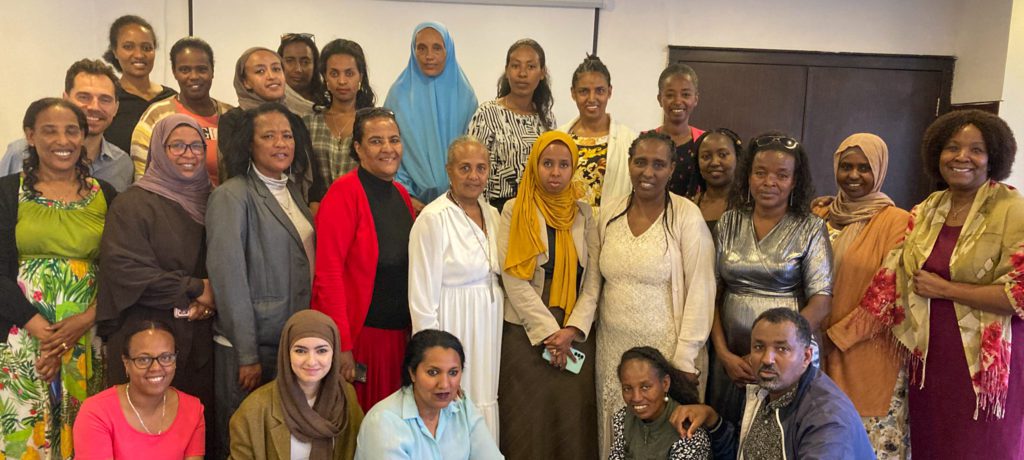
In early March, I was invited to co-facilitate the ‘Empowering Women of Faith’ workshop in Ethiopia, a role that deeply resonated with me as a woman of faith. I found the prospect of participating in a space that empowers women religious leaders to realise and fulfill their role as peacebuilders very exciting. The trip also served as my inaugural visit to Ethiopia and only second to Africa, offering a chance to explore a new destination and immerse in a distinct culture very different from my daily reality.

Going into it, I had a vague idea of what facilitation meant. I was only familiar with the term from hearing my Peace Process Support colleagues recount their experiences and insights during team meetings. But despite this, I had yet to fully comprehend the depth of its significance. Achieving a genuine understanding of facilitation necessitated direct involvement and first-hand experience.

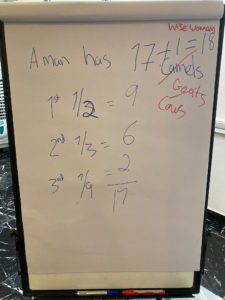
For the three-day workshop with the ‘Women of Faith’ network representing Ethiopia’s diverse religious landscape, which included Catholic, Orthodox, Seventh-Day Adventist, and Muslim leaders among others, we crafted a preliminary plan outlining each day’s agenda, the evidence from our research, and our overarching objectives in engaging with these women. However, the term ‘adaptive’ came up frequently throughout our discussions. We needed to remain flexible and open to last-minute adjustments to ensure the flow and efficacy of the workshop. For one particularly memorable instance, we found ourselves grappling with the women on the monumental decision of which animal to use in an exercise.

We decided to switch from a camel to a goat and eventually settled on a cow, all in the pursuit of aligning with Ethiopian cultural contexts. Ah, the trials and tribulations of workshop facilitation!

On the first day of the workshop, I observed my colleague Rainer Gude utilise his skills and wealth of experience in facilitation to transform the dynamic of the room from an atmosphere of apprehension and blank expressions into a safe, welcoming, and inclusive space for the women participants. Establishing a rapport with the women through small talk and plenty of jokes before diving into the workshop agenda aided greatly

in that. But also maintaining a supportive and positive tone throughout the workshop, not just for the participants but between the facilitators too, really set the stage for a constructive and enjoyable learning experience for all of us.

Stepping into the role of facilitator meant taking the responsibility of guiding discussions and fostering collaboration. As someone who has always preferred not to be at the center of attention, I expected to be much more nervous and apprehensive about commanding a space that I was not used to. But I surprised myself with how easy and almost natural it was to assume that role. That was largely due to seeing how the women engaged with the material we presented the day before and witnessing their enthusiasm and conviction grow throughout the session.

What was obvious was that these women had a lot to say and that they were keen to be heard. What was just as obvious, was that they hail from a society that is not always particularly interested in listening to them. The women expressed that they believed they bring a richer and different perspective to peace talks but they are often sidelined and their ideas are dismissed, which is why a space like this was so important to them. Ethiopia, like many societies, has elements of patriarchy within some of its cultural and traditional practices where men hold more power and authority than women. I was therefore eager beyond any feeling of apprehension, to step into the role as I knew how important it was for these women to have someone there to guide the conversations they were so keen to have and to help make them feel comfortable sharing their thoughts and ideas without fear of judgment.

As the workshop progressed, the women increasingly recognised that they were indispensable to peace, and that is what I found most rewarding. Seeing how empowered they became simply from sharing the space with other like-minded women, being given the freedom to speak, and perhaps most importantly, heard.

On the last day of the workshop, one of the women said “I now understand that peace starts here” as she pointed at her heart. One recurring analogy used by the women when speaking to each other was the ‘home’. The home was used to contextualise and to help each other realise what being a woman peacebuilder looks like, and that actually, it is a role they are all too familiar with and already play as mothers, wives, and sisters.

It was inspiring to witness them reclaim titles that are often used to pigeonhole and marginalise women and leverage them to their advantage. They recognised that these roles had equipped them with the resources and skills necessary to thrive as peacebuilders.

Ethiopia is a deeply religious society and tolerance and co-habitation are extremely important values to its peace and prosperity. There was a strong desire to continue these spaces of collaboration and meet more women of faith, to find strength and motivation in each other’s stories and experiences, and to work together to become active, not just passive, peacebuilders. As well as a desire to break down the patriarchal barriers placed on them in the home, society, and religious institutions.

By the end of the three days, the collective hope was for peace and love to prevail. I left the workshop and the country feeling energised and inspired to continue the work I do. For the first time in my career, I was seeing the tangible impact of our work on real people, in real time. This experience has reinforced my dedication to promoting peace and empowerment and reaffirmed the significance of our work in fostering positive change.

The African Union’s new policy framework to support women’s participation on the continent is a promising step in the right direction. This blog reflects on the importance of the policy framework and what it takes to secure implementation.

Inclusive Peace has recently supported our partners at the African Union’s Women, Peace, and Security Reference Group with inputs for the new policy framework promoting the WPS agenda on the continent.

A prominent feature of the framework is a commitment to a minimum of 30 % gender quota for women’s participation in all conflict prevention and management missions, peace processes, and election observation missions led by the AU.

In this blog, our Peace Process Support Advisor Dr Ayak Chol Deng Alak reflects on the importance of the policy framework and what’s next for implementation.

Why is this an important resolution?

This is a demonstration of political will. This gender affirmative action quota, a minimum of 30% of women representation across all institutions, has been passed in Namibia at the African Union Peace and Security Council. This means that the highest level of government representatives, prime ministers, and the heads of the African Union mechanisms were present. The commitments in the policy framework show the highest form of political will at the continental level. By proxy, national governments will adopt and include the policy framework in their national policies.

The policy framework does not just speak on the affirmative action quota, it also highlights all the necessary instruments, processes, and procedures that need to be adopted to see this implementation come to fruition.

Sometimes, these resolutions are made without the political will to implement them. Implementation comes on a different level. Implementation means having the capacity, the expertise, and setting aside the necessary instruments for implementation. It also means reserving funding and advocating for this new policy. It is also important to note that this offers an important “hook” for civil society to push further for more inclusive processes, leverage this new policy standard, and seek to put it into practice.

What risks do you see that could hamper implementation?

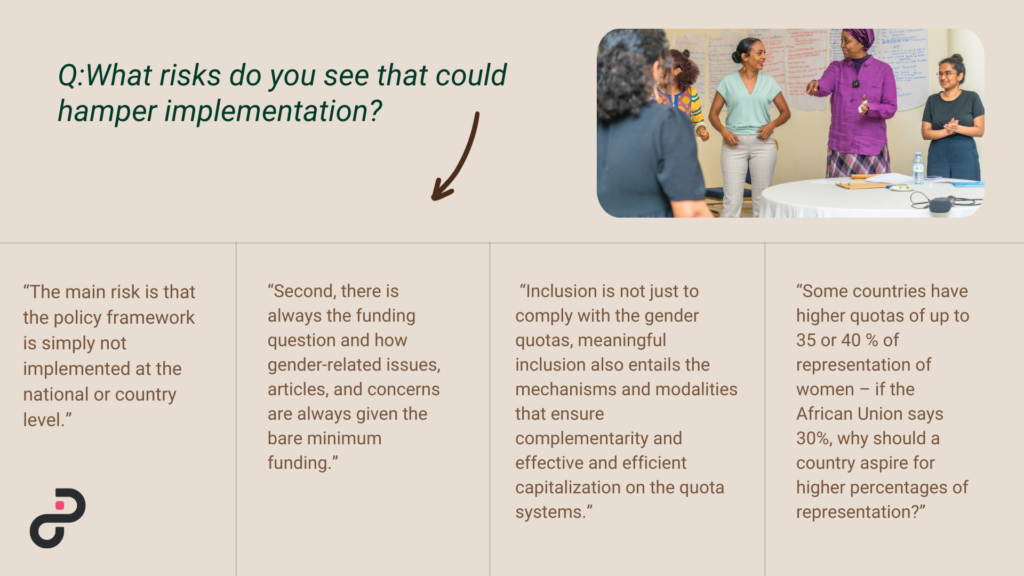
The main risk is that the policy framework is simply not implemented at the national or country level. Second, there is always the funding question and how gender-related issues, articles, and concerns are always given the bare minimum funding.

Third, is it a risk that policymakers focus exclusively on the inclusion aspect of 30% without considering all the other institutions and mechanisms that need to be put in place. Inclusion is not just to comply with the gender quotas, meaningful inclusion also entails the mechanisms and modalities that ensure complementarity and effective and efficient capitalization on the quota systems. How are women involved in decision-making within a process? What does their engagement in implementation look like? How can a more inclusive process, also lead to more inclusive outcomes in terms of inclusive structural change? These are the kinds of questions which need to be explored further.

And then lastly, some countries have higher quotas of up to 35 or 40 % of representation of women in government institutions and other policy-making institutions. The fear then becomes that it might push back or reduce the participation of women because if the African Union says 30%, why should a country aspire for 35% of representation? There is a discussion currently underway on how to guard against backtracking on the gains made in other contexts with higher quota systems for women’s participation.

What are the main strategies to mitigate these risks?

The fact that this is a high-level resolution is one of them. Secondly, it is advocacy. Advocacy for capacitation, and advocacy for funding to ensure that all these mechanisms are in place. Because funding is the highest form of demonstrated political will.

Inclusive Peace’s Director & Founder, Thania Paffenholz, recently attended the closing panel of the International Cooperation Forum Switzerland, where she joined colleagues from the field in a discussion on the state of peacebuilding today and Switzerland’s role in peace promotion.

The phrase: Not a World War but a world at war – was the starting point of the concluding panel of the International Cooperation Forum Switzerland titled ‘What is peace” on April 12. I had the honor to participate in the panel with Ambassador Mirko Manzini and Comfort Ero moderated by Simon Geissbühler.

The world of peace promotion is changing as we see the highest number of armed conflicts since 1945 and these wars have the longest duration ever. The diminishing power of the UN and comprehensive peace agreements as well as new actors on the scene challenge many of the concepts we as an expert community have developed over the last 25 years.

The use of force has become a new normal in conflict resolution. We see a loose, but emerging non-alignment movement where both, the ‘West’ and the ‘East’ are fighting for influence, and it’s a fact that the dominance of Western influence is over.

What does this mean for Switzerland, precisely for Swiss peace promotion policy and practice? Switzerland entered the peacebuilding and mediation field like many others at the end of the 1990ies by institutionalising Swiss peace policies in diplomacy and international cooperation.

The legal framework was set up, the Peace and Human rights division within the political department and a conflict unit with the SDC were founded as well as civilian efforts by Swiss NGOs working more coherently with the government by coordinating efforts and information exchange under the Center for Peacebuilding (KOFF) at swisspeace that I had the pleasure of being the founding director.

Swiss peace promotion policy quickly professionalised with priority countries with advisors working at the Embassies, joint country programs, and mediation training courses that became signature courses in our field. Switzerland also put a strong focus on supporting the efforts of the UN and regional organisations, in particular the OSCE.

25 years later an entirely new world order is emerging, and Swiss peace promotion policies and practices need a rethink based on three dimensions: ‘

First, a differentiated analysis of the variety of different contextual situations that present different responses (e.g. closed political spaces like Afghanistan or Myanmar; new emerging national dialogue spaces in different political sectors; situations of military coups and armed conflicts with no peace processes or minimal ones). This analysis also entails consequential conversations about the core values and strategies and how to achieve them considering changing actors and contexts. This might require the courage to let go of established concepts such as a linear understanding of peacebuilding including the tracks and our understanding of success.

Second, there is a need for a move towards flexible and creative response strategies that build on core Swiss strengths, such as defining entry points and niches for change quickly and strategically; intentionally influencing policy spaces that matter including and beyond the UN system, e.g. OECD/DAC; World Bank, IMF and new forums set up in the ‘Global South’.

Third, providing dialogue platforms for interesting topics to advance the field and include fostering dialogue with new actors from the emerging non-alignment alliance as well as other unusual actors within and beyond our field. This is a role Switzerland can play much easier than other actors in particular when co-chaired with new actors.

Swiss peace promotion policy is built on a solid base and can allow itself to be courageous to foster its relevance in a new area.

One year into the ongoing conflict in Sudan, our Peace Process Support Advisor Dr. Ayak Chol Deng Alak, reflects on her work with our Sudanese civilian counterparts in Kampala and the challenges and needs emerging.

INGOs compete internally to support Sudanese civilian actors

When the war erupted in Sudan, initially there was a slow response by INGOs. The war came as a shock to many INGOs and as a result, it took a while for there to be a visible response.

Most of the responses were locally-led responses, emergency rooms, and other such responses. And then extraction of INGO staff. All the international organizations, removed their staff from Sudan, which meant that funding, partnerships, and sustained presence/ access were also left.

The humanitarian space collapsed as the needs arose. The emergency rooms developed from local Sudanese initiatives took up humanitarian aid coordination, and they did it locally, getting from within the communities and serving the communities.

This was the beginning – however, as soon as the international space realized the magnitude of the situation and started pledging funds, many INGOs came into the space. This was particularly visible in regional capitals neighboring Sudan, in Kampala, Nairobi, Addis, and, to an extent, Cairo.

And unfortunately, many of them started duplicating initiatives. For instance, in Kampala, there could be three to four workshops in different locations happening on the same day, on the same topic of transitional justice. “Workshop shopping” is a phrase often used as a throw-away line, but in this case, it’s a very real – and far too regular – occurrence.

Which is what I would call competition in this space. It would do better for INGOs to have some sort of coordination mechanisms, loose coordination mechanisms to ensure there is no duplication, but complementary activities. To ensure that all the resources and taxpayers’ money that is being pledged for support to Sudan are capitalized and maximized on, and done in a way where Sudanese actors are in the lead.

Multiple negotiation platforms create confusion

This confusion and competition is mirrored when it comes to peacemaking efforts. What I see is that Sudanese actors are overwhelmed with multiple negotiation platforms that do not complement each other.

There is the IGAD process; there is the Jeddah process that has been trying to reach a cessation of hostilities agreement between the two warring belligerents. And then there are shuttle diplomacy efforts in addition to efforts from Egypt, UAE, and other countries.

It would do well to have some sort of complementarity between the activities – that the processes are linked so each effort can benefit from the experiences and the outcome of the other.

So that they do not become competing venues of engagement and negotiation. Because this also scatters the efforts of the Sudanese civilian actors.

I observe that they already are overwhelmed with the humanitarian response. And then now these multiple platforms add overwhelm in addition to dealing with being new refugees and trying to figure out their everyday livelihoods.

In my opinion, it is immoral to be competing and opening multiple platforms for negotiation that are not complementary to each other. It is scattering the efforts of the Sudanese actors which should be centered around one or two complementary processes.

Donors need to widen the scope of the actors to receive funding

There is a clear need to widen the scope of the groups that receive funding.
There are known actors in the Sudanese space, known political actors, and known civilian groups, known activists. But one year into the conflict, new dynamics have created room for the emergence of new actors. Given all the talk around localisation and innovation in both the humanitarian and peacebuilding spaces over recent years, there are real opportunities to now “walk the talk”.

New people are coming into activism and coming into active citizenry because of the situation that has been thrust on them. This means that donors should consider supporting these new and emerging actors and civilian groups as well and not just continue to support their older partners.

Donors in general need to find avenues of extending beyond the usual and find flexible mechanisms of funding and accessing funds. If people fled with their clothes on their backs, it does not make sense to ask them for their banking statements, for example.

There is a need to make access to funds easier, especially for new and emerging groups. Because in situations like this, we know that citizens rise to the occasion, get better organized, start mobilizing, and get more engaged, and citizen ownership is a crucial component of any political process. To encourage that, access to funding needs to be more flexible.

Our Founder & Director Thania Paffenholz and our Head of Peace Process Support, Alexander Shoebridge, recently met with our new partner The African Women Peace and Security Institute, in Addis Ababa, to discuss how women mediators and peacemakers can advance peacemaking in their contexts.

The African Women Peace and Security Institute (AWPSI) is a new initiative set up in Ethiopia to create a network of women mediators and peacemakers who work in leadership positions in different sectors of politics and society intending to be ready for advancing peacemaking in their contexts. AWPSI currently starting to build the network in Ethiopia before moving to the neighboring countries. The founders of AWPSI are two amazing committed women with impressive careers in diplomacy, Ambassador Tadelelech Hailemichael and Ambassador Kongit Sinegiorgis.

Inclusive Peace had the honor to conduct the first training and exchange workshop for the first cohort of 20 Ethiopian women leaders last week in Addis Ababa. The workshop took place at an interesting time, both globally and in Ethiopia. Globally we observe setbacks to the #WPS agenda – the number of formal peace processes is substantially reducing and women’s inclusion remains challenged.

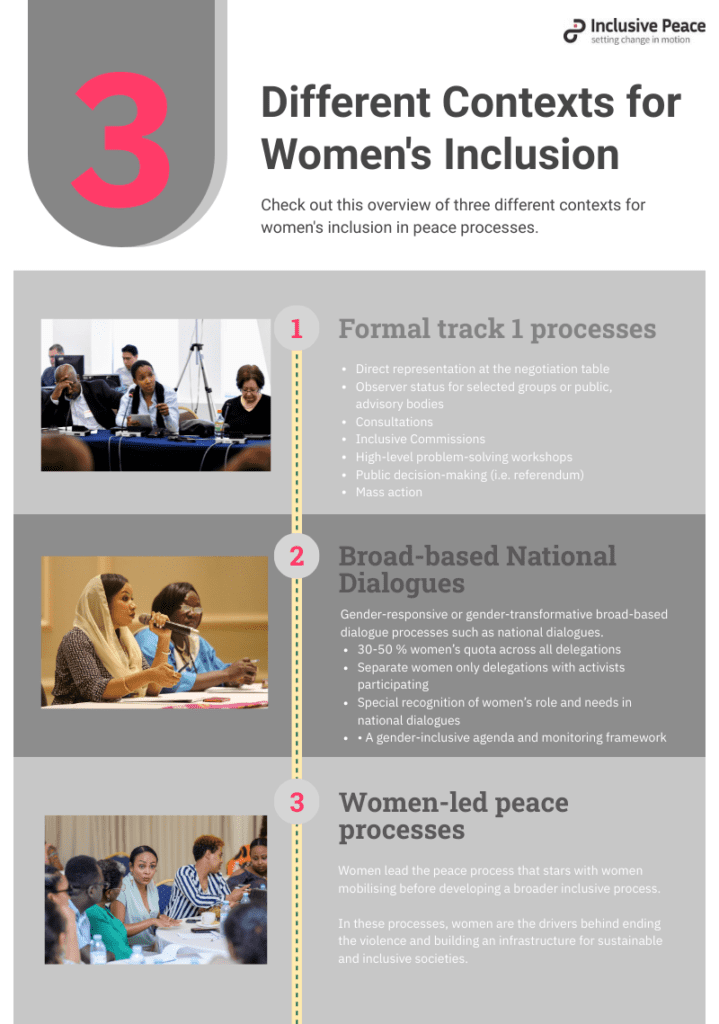
However, Ethiopia is an interesting case that shows that there are different models of peacemaking and dialogue happening at the same time that show different realities for women’s inclusion. In Ethiopia, the national dialogue is currently in its pre-dialogue consultation phase and women play a key role in the process – there will be a 30% women quota across all delegations as well as a separate women delegation comprised of women organisations.

At the same time, there are peace talks between the government and armed groups taking place, but women’s inclusion is here an absent feature. And then again, we see Ethiopian women activists organising and mobilising even before a broader inclusive process. During the workshop, the women developed the idea of a women-led peace process, where women are not only included but the drivers behind the process in all stages.

Upon reflecting on these different realities and contexts for women’s inclusion, we realised that the inclusion modalities we developed for women inclusion only make sense for the traditional track 1 peace table and not for other forms of high-level peacemaking or dialogue.


Report,

A Practical Guide to a Gender-Inclusive National Dialogue

This guide is intended to be a practical resource for anyone preparing, advocating for, or participating in an upcoming or ongoing national dialogue, and it seeks to foster understanding of how to make a national dialogue truly inclusive of women and gender.

May 2023|Nick Ross,

Briefing Note,

Making Women Count in Peace Processes

This briefing note summarises key findings on women's inclusion and influence in peacebuilding and peace processes. It is based on the “Broadening Participation in Political Negotiations and Implementation” research project.

February 2016|IPTI,

Inclusive Peace’s Researcher Philip Poppelreuter, shares three impressions from the recent PeaceTech Hackathon in Lausanne, where students and professionals from various backgrounds came together to solve challenges around peace & tech.

As Inclusive Peace, we have increasingly examined opportunities for using technology in our peace process support work. The first-ever PeaceTech Hackathon in Switzerland on 9-10 March 2024, organised by the EPFL EssentialTech Centre and Open Geneva, provided an exciting environment to delve further into the intersection between peace and technology. The event brought together students and professionals from various backgrounds to discuss in small groups of 5-10 individuals how technology can help tackle global peace challenges.

I had the privilege to represent Inclusive Peace as one of nine “challenge owners” at the event. Our challenge focused on entry points for refining the open-source deliberation technology Polis to render national dialogues more inclusive. Polis has been applied in several contexts to promote online brainstorming and consensus-building on various political issues among large groups of individuals. However, it is yet to be applied in the context of national dialogues, which come with specific challenges in facilitating consensus-building on highly sensitive political, social, and economic issues.

I left my first-ever Hackathon with three main impressions:

Hackathons as spaces of mutual learning and unique discussion dynamics

Hackathon participants’ diverse thematic expertise made them look at our challenge from different angles. Rich discussions on how to approach the challenge started as soon as the group assembled and pulled into different directions at times. A pronounced collaborative spirit enabled the group to jointly agree on a working process and labor division in addressing our challenge, nevertheless. It was highly interesting to see how the participants, who did not know each other, navigated the inherently challenging discussion space and created a conducive environment for mutual learning.

Handling technology with care

The conversations had during the hackathon highlighted the necessity to handle technology with care. In-depth discussions on what is technically feasible to implement with a tool like Polis will also have to explore pathways towards enhancing people’s trust and feelings of ownership in applied technologies. For Polis, for example, this implies finding ways to include communities based in remote areas with limited or no internet access in the deliberation process, collating people’s feedback on the results of the consensus-building process, and ensuring participants’ safety throughout the process. Collaborating among experts from various fields will be a genuine asset in carefully crafting a deliberation process that generates trust and maximises technology’s potential to promote inclusion.

Hackathon as the start of a process

The end of the Hackathon felt like the start of a continuous collaborative process on how to tap into the entry points identified over the two days. I see several ways to build on the hackathon and am looking to collaborate with counterparts who met at the hackathon in moving the conversations forward. I would therefore like to express my appreciation for the hackathon organisers’ initiative and great work in enabling this space to explore innovative ways of promoting inclusion, peace, and protection of human rights in the 21st century.

Collaborating among experts from various fields will be a genuine asset in carefully crafting a deliberation process that generates trust and maximises technology’s potential to promote inclusion.

Inclusive Peace’s Director, Thania Paffenholz, reflects on her recent experience supporting our partners at the forefront of steering and shaping Ethiopia’s national dialogue process. 

Author: Thania Paffenholz

I recently had the privilege to spend time with colleagues and friends from Ethiopia who are at the forefront of steering and shaping the Ethiopian national dialogue process. From my engagements last week here are some lessons from and for the Ethiopian and other multi-stakeholder political dialogue processes currently planned.

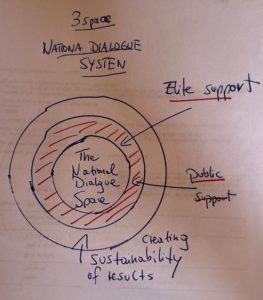
Addressing the dialogue as a three-layered complex system

Once a national dialogue process is planned or started, the focus is mostly on the dialogue space itself; questions are raised like who will participate, how to include marginalised actors, how to link the grassroots with the national process, how to get actors involved that do not want to engage or cannot be engaged out of legal or other reasons, how to access difficult to access geographical areas and how to develop the agenda setting for the process in an inclusive legitimate way. These are all pertinent challenging questions, see more below. What is not addressed sufficiently in most national dialogues are the other spaces outside the immediate dialogue that are equally important for an effective sustainable process.

The first is the political and social context around the dialogue. Comparative research from past national dialogue processes shows that support from key political, economic and societal elites as well as public support for the process are a make or break factors for any dialogue. It is not enough to have elite and public support at the beginning of the process; this support needs to be sustained throughout the process. In Yemen, for example, the dialogue process was very inclusive and decision-making was transparent and democratic. Nevertheless, the dialogue lost elite and public support over time and after the closure of the dialogue in 2014, war broke out that lasted until to date.

The third space for a national dialogue to consider is its sustainability: How can the results of such dialogues be used to shape the future of a peaceful and inclusive society? These questions are mostly left open to the end of the process. Dialogue organisers and participants often feel that there is an automatism between the discussions at the dialogue and its sustainable implementation. However, comparative research shows that the majority of national dialogue results are never implemented. It is thus crucial to shape the dialogue design and procedures in such a way that contributes to future sustainability.

What does this mean? For example, how transparent, inclusive, and democratic the selection of participants and the decision-making procedures will be designed, will determine how this will be applied in future governance procedures. The dialogue needs to pave the way into the future by example. Inclusion quotas for all delegations participating in the dialogue like gender, age, and geography, have been used in the cases of South Africa and Nepal as affirmative action for future government and public institutions. In Nepal, these quotas even permeated public life as they were automatically applied in social settings like associations or schools.

The inclusion challenge
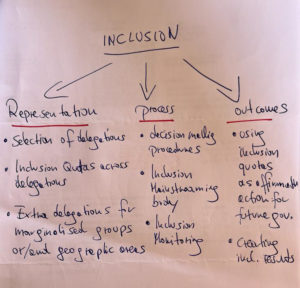
Getting Inclusion right is at the heart of broad-based dialogue processes. However, there is often big confusion around inclusion centred around misunderstandings of the goals and strategies of inclusion. Is inclusion seen as representation, as a process or as an outcome? The simple answer is, that it is all of this, but different strategies and procedures need to be applied for each of these goals.

Inclusion as representation has three dimensions: First, who are the groups and constituencies participating in the dialogue; second, what is the quota system across delegations (the so-called ‘Inclusion formula’) representing the population right large as delegations will nominate or elect their members, they will have to apply a quota system during this process determined from the beginning, i.e. gender – what is the ratio of men and women within the delegations; age; geographic distribution, etc. Third, specific marginalised groups will get an extra delegation. For example, this happened in the Yemeni dialogue where women, youth and representatives from a marginalised geographical area received an extra delegation to ensure that their interests were met.

Second, inclusion as a process means that it is crucial how inclusion is practised during the process, ie. Are selection and decision-making criteria transparent and inclusive, or do they favour some over others? For example, in one of the very representative Somalia Dialogue processes, all decisions were made by a leadership committee comprised only of the big clans.

Third, inclusion as an outcome, it is not only important to have an inclusive process but to design for inclusive sustainable outcomes.

Strategic communication is a lacking essential
Strategic communication is an absent feature of many national dialogues. While operational communication is always practised (press briefings, social media or website information on the process) a holistic proactive strategic communication strategy that is better understood as active marketing of the dialogue, is mostly missing. Why is it important? Public and elite support is essential and can only be achieved with proactive strategic communication that guides all activities, gets the awareness and buy-in of the population and prevents potential conflicts.

Timeframe
Finding the right balance between rushing for results and leaving no one behind is a context-dependent and essential question bothering organisers of national dialogues. If the national dialogue is rushed, it often lacks legitimacy as it does not take sufficient time to get all relevant stakeholders on board or procedures right; if a national dialogue or its preparation is dragged on for too long, there is also a risk of losing public and elite support. Strategic communication is the most important element to counteract these risks in both cases.

Agenda setting
This is a complex task and often part of the national dialogue process at the beginning. The most important is to listen to people and develop an agenda that is legitimate and representative. Important as well is important to consider the mandate of the dialogue and other processes or institutions in the country that might be able to take over and immediately address some agenda points so that they do not have to be dealt with by the national dialogues. Not overloading the agenda to be able to produce implementable results is another important takeaway from other processes.

Armed conflict and national dialogues
National Dialogues often take place when there is still violence in the country. Evidence shows that national dialogues can take place in parallel to violence and there are different ways of including or connecting armed groups to the dialogue process – however, if armed conflicts are managed it is often easier to pursue the dialogue.

Protection, safe spaces and psycho-social support
Another set of overlooked issues in dialogue processes is the protection of participants. Often people take risks in participating in dialogues and their political and physical security needs to be considered when planning the dialogue process. Protection from social media shaming campaigns is a very relevant feature of current processes that is equally overlooked.
Creating the dialogue as a safe space is equally important as is psychosocial support for participants during the entire process as most people are traumatised and need healing and support to be able to participate.

Preparing for a national dialogue is a major task
Next to the political and technical preparations for a dialogue, preparing participants for the dialogue is key. Some groups are often much better prepared than others, which creates inequalities. Hence, systematic capacity building for understanding the dialogue and its functioning, as well as how to strategise for influence and develop joint positions are needed components.

Report,

A Practical Guide to a Gender-Inclusive National Dialogue

This guide is intended to be a practical resource for anyone preparing, advocating for, or participating in an upcoming or ongoing national dialogue, and it seeks to foster understanding of how to make a national dialogue truly inclusive of women and gender.

May 2023|Nick Ross,

Report,

What Makes or Breaks National Dialogues?

This report is based on the National Dialogue research project and its comparative analysis of 17 cases of National Dialogues (1990 – 2014). It aims to contribute to a better understanding of the functions of National Dialogues in peace processes.

October 2017|Anne Zachariassen, Cindy Helfer, Thania Paffenholz,

Briefing Note,

What Makes or Breaks National Dialogues?_BN

This briefing note summarises the findings of a research project on National Dialogues and inclusive peace processes commissioned by UNDPA. It is based on a comparative analysis of 17 cases of National Dialogues (1990-2014).

April 2017|IPTI,