Category Archives: highlight list

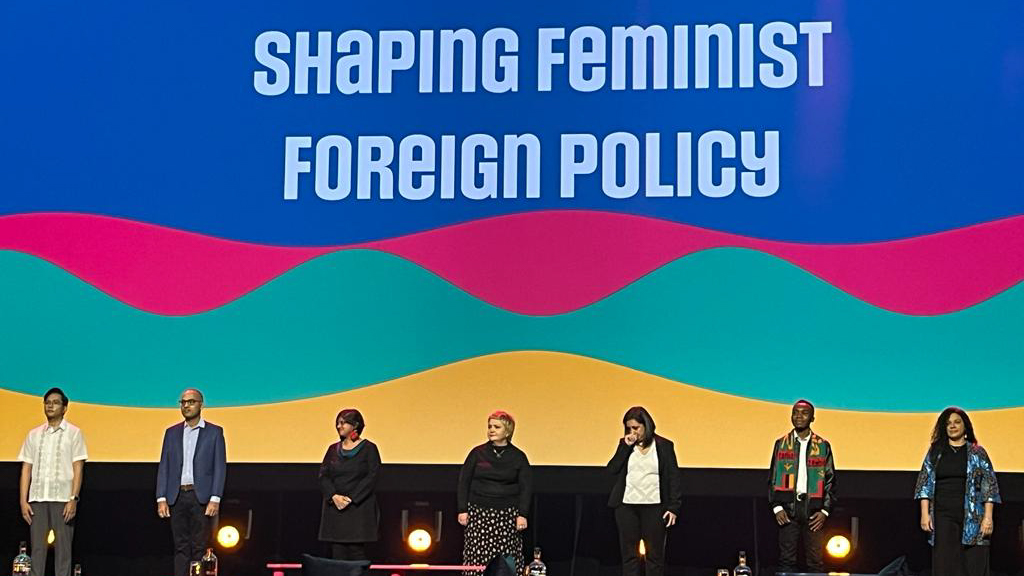
Inclusive Peace’s ED, Thania Paffenholz, here reflects on her recent participation in the Shaping Feminist Foreign Policy 2023 Conference in The Hague.

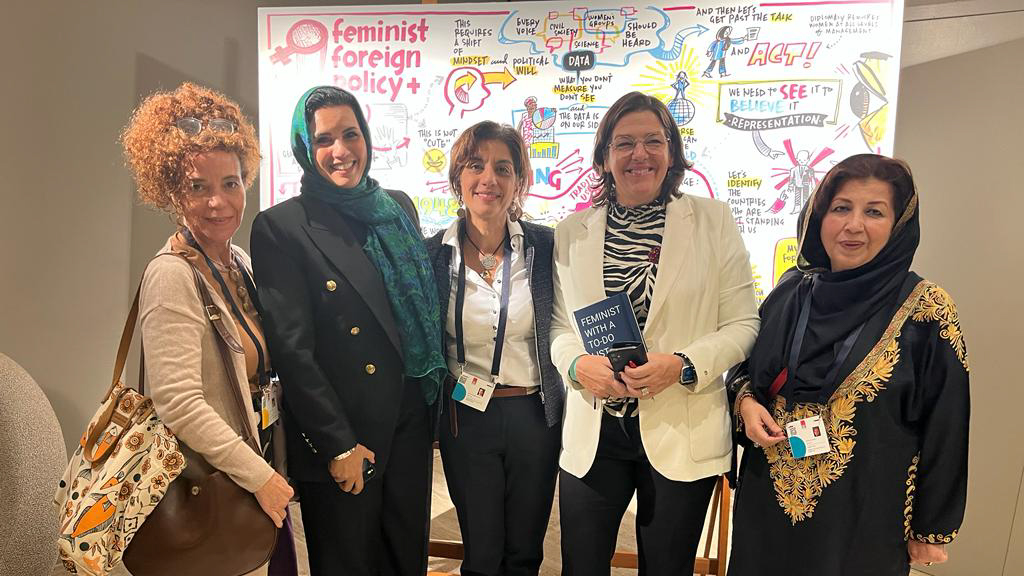
After an intense WPS week in New York, I arrived exhausted in The Hague ahead of the Shaping Feminist Foreign Policy 2023 Conference. However, I eventually left the city energized by all the wonderful encounters with friends and colleagues and the rich and critical discussions before, during and after the conference. In this blog I reflect on the conference as such and share my observations emerging from the formal and informal discussion and debates at the conference.

In short my five takeaways are:

          • The conference was excellently organised with a diverse participant group and a conference organization that allowed for critical debate
          • There is a gap between a gender-inclusive and gender-transformative FFP
          • Gender budgeting and making funding mechanisms fit for purpose is central
          • The tension between FFP and militarisation was not sufficiently addressed
          • FFP seems to be a useful label

# 1: Diverse participant group and a conference organization that allowed for critical debates

The organisers, The Dutch Ministry of Foreign Affairs, brought together a wonderful diverse group of people from all around the globe and they organised the conference in a way that placed activists from challenging contexts at the centre of the event. The organisers also resisted to only showcase successes or to repeat simplified complaints on why women are not included in various processes. Instead, we saw honest exchanges with very practical reflections on next steps to address the existing gaps in FFP and we saw honesty about stark realities. One of them being that dismantling patriarchy is a major objective for a FFP, but that it is not realistic that this will be achieved easily.

Connecting and reconnecting with the many activists, experts and supporters was simply wonderful. Prior to the conference, the Dutch WPS and Feminist INGOs organized a Feminist Community Festival that allowed for more informal exchanges, practical conversations which prepared us participants well for the conference.

# 2: The gap between a gender-inclusive and gender-transformative FFP

FFP is at the very beginning in trying to implement more gender-inclusive programming but still must come a long way before being truly gender-transformative. While specific funds mostly focused on support to local women organisations in the Global South have been set up for gender inclusion, donors are also asking themselves how to move beyond and address power asymmetries through programming. This might work in specific cases, however, there are many obstacles such as incoherent programme budget lines; lack of joint country or regional planning in sector protective aid programmes; tensions between development , trade and diplomacy, and the challenge that most big funds go to humanitarian aid that is less open for transformative approaches.

The gap between a gender-inclusive and gender transformative FFP is also related to a lack of progress on the localisation agenda. This particularly means a lack of an explicit feminist localisation agenda that openly discusses not only funding mechanisms but also who distributes the funds, who employs whom for what in the aid industry and how these post-colonial power imbalances can be addressed as part of a broader inclusive FFP. Philanthropy donors seem to be a step further ahead as some give either high overheads or non earmarked institutional funding with less bureaucratic hurdles and explicitly focus on support to feminist movements.
# 3: Gender budgeting and making funding mechanisms fit for purpose is central

Many debates at the conference focussed on funding mechanisms as a precondition for changed programming and enabling support to feminist movements. This is a good start and we heard interesting examples from smaller and bigger donors like development banks, new modalities such as the Women Peace and Humanitarian Fund that brings INGOs and local organisations into partnerships and should allow for quicker and more flexible disbursement and donor funds that include Southern actors in a some decision making bodies. However, activists criticised the funding mechanisms of being still far too colonial with upwards accountability persisting and overburdensome administrative hurdles that make the dependency on the INGO intermediaries here to stay and discourage equal partnerships between Global South and Global North.

#4: The tension between FFP and militarisation was not sufficiently addressed

Government representatives at the conference were challenged throughout by activists that vividly pointed to the tension between the anti-militarised FFP normative frames and current practices. The call for a humanitarian ceasefire between Israel and Hamas dominated the scene culminating in a walk out of many activists during the speech of Hugh Adsett, Ambassador of Canada to the Netherlands and Permanent Representative to the OPCW (Canada voted against a ceasefire resolution) as well in shouting at the Dutch Minister of Foreign Affairs, Hanke Bruins Slot, during the closing ceremony (The Netherlands had obtained the resolution). These current debates need more space in the future and should be moved from these expressions of frustration and informal conversations to public debates on how to deal with these tensions and ultimately overcome them.
.

# 5: FFP seems to be a useful label

My last takeaway is more of a question of whether FFP is a useful label. The case of Sweden is telling here: With the change in government last year, the new government instantly abolished the label and made substantial financial cuts for civil society, peace and development policies and programming with the result that the entire sector is suffering from these financial cuts. Nevertheless, gender equality is enshrined in the Swedish constitution and the years of FFP in Sweden have not only inspired other countries, but have shown how to more effectively practise inclusive policies and programming. This was echoed by government representatives of countries like Germany, Mexico or the Netherlands who find themselves in more vivid, concrete and results-oriented discussions in their respective ministries about how to implement gender-transformative policies which creates a more conducive environment for civil society action.
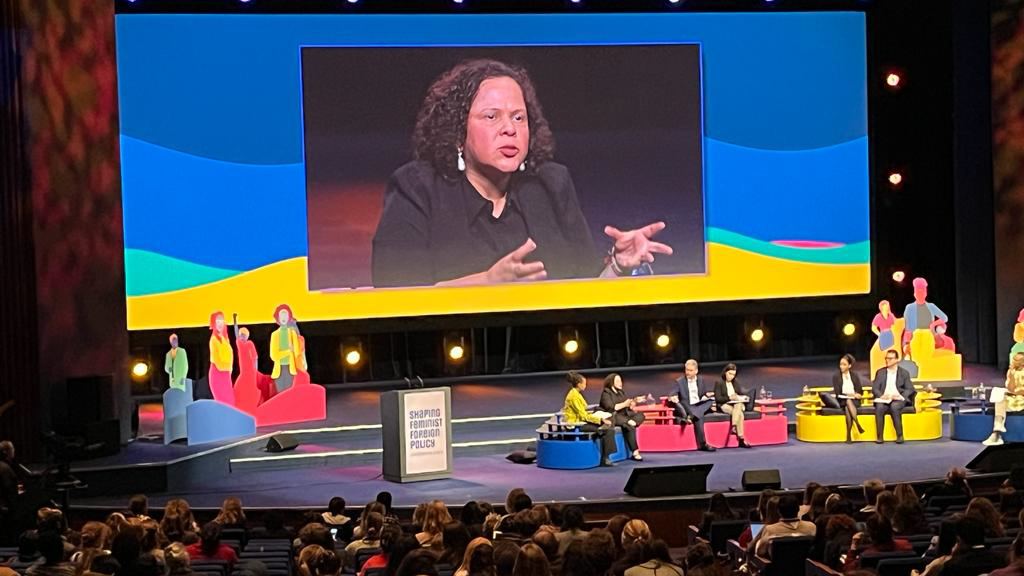
I am grateful to have been a part of these rich discussions and I look forward to the Shaping Feminist Foreign Policy Conference 2024 in Mexico.

Authors: Thania Paffenholz and Nick Ross

Violent conflict in Sudan continues to escalate with the country teetering on the brink of fragmentation. While attention within and outside of Sudan is understandably focused on the disastrous armed conflict between the Rapid Support Forces (RSF) and the Sudanese Armed Forces (SAF), the roots of violence run deeper. This blog outlines pathways to a civilian-lead peace process in Sudan that focus on addressing the root causes of the conflict. 

The 2019 civilian revolution testified to the powerful democratic aspirations of the Sudanese people and brought an end to decades of authoritarian rule. However, the civilian political transition was short lived as the military staged a coup  in 2021. The attempts by many international actors to form a coalition government between military and civilian forces failed, and mainly further empowered the armed actors. The conflict between the RSF and SAF is a consequence of this failed model of peacemaking as it further reinforced the message that the pathway to power, either in Khartoum or in the regions, is through violence. 

A comprehensive peace agreement (CPA) that aims to persuade the RSF and SAF to end their war in exchange for the chance to share in lavish rents extracted from natural resources, control of key infrastructure, export concession, or the treasury, has a compelling humanitarian logic in Sudan. Every day the war continues, more lives are lost, more people are displaced, and more vital infrastructure is destroyed. But, a settlement of this type – a CPA that centers around the two major armed forces – inadvertently strengthens the prevailing notion that violence is the primary means for achieving political legitimacy in Sudan. How long will it be before this deal breaks down? How long before another ambitious general in the SAF or the RSF, or in one of the regional militias, tries to capture a share of this wealth through a new rebellion or coup in Sudan? Sudan’s own history, and the history of similar kinds of CPA elsewhere, tells a rather foreboding tale. 

The African Union’s (AU) and the Intergovernmental Authority on Development’s (IGAD) recent announcement offering support to a civilian-led Intra-Sudanese dialogue has the potential to change Sudan’s trajectory. These parties recognise that the only path to prosperity and stability is through supporting an inclusive, democratic process in Sudan. The primary challenge to such a process is how to ensure that the armed actors will not spoil or control the process. For the RSF and the SAF much is at stake: their own security if they demobilize, and the potential loss of control over a major part of Sudan’s national wealth. So, the key process question is, how can the armed actors be ‘tamed’ in such a way that the civilian led process can be viable and durable? 

Considering this, the civilian led process cannot be influenced by the logic of the 1990s international peacemaking model. This approach has persistently involved bringing armed factions to the negotiating table to broker a CPA (often based on a power-sharing deal among these same armed actors) to quell violence and establish a new government. Civilian actors have usually not been part of these processes or at best, have been added to the process in extra spaces without decision making power (despite the accumulation of normative commitments to inclusion of women, youth, alongside longstanding rights to political participation).

The so-called ‘inclusion challenge’ for many mediators has been how to best include and support civilian actors without harming the process with the “guys with the guns”. The current, AU/IGAD suggested, civilian led process can turn this problem on its head.  From numerous lessons learned, such a process must start from the premise that only a civilian-led, all-inclusive process can lead the country on a pathway to peace and political transition. The ‘inclusion challenge’ thus becomes how to include the  armed actors in a way that they will not harm the process. 

Comparative experience on parallel and inclusive negotiation formats suggests a few modalities for such a “composite” process that can integrate the concerns of the RSF and SAF, with the need for a democratic outcome and an ultimately civilian political order. First, the US/Saudi led negotiations with the RSF and the SAF must be committed to and focused on ceasefire, security, and humanitarian access: setting political questions aside for a more legitimate forum. These negotiations could continue to serve as a parallel security track, the results of which would be fed into the civilian-led process, the Intra-Sudanese dialogue. Second, a focus should be placed on strategically engaging the armed actors in such a way that they do not dominate the Intra-Sudanese Dialogue process? The dialogue should be run by civilian actors and strategically focused on identifying and discussing the key priorities for the country to get back onto a pathway towards a democratic transition.

There are several options for how to best engage the armed actors in the process. One option is to engage armed actors each or jointly in a separate delegation that would be bound by the same rules and procedures applied to all other delegations (e.g., inclusion representation quotas along gender, age, and geographic lines). This would mitigate the risk of armed actors dominating the process. Decision making procedures would be thoughtfully established so that no delegation would have special privileges over another. Another option would be that the armed actors only take part in the Jeddah process as a separate security track,  the results of which would contribute to the political process, possibly supported by SAF/RSF having observer status in the Intra-Sudanese dialogue. Another option could be a proxy representation at the Intra-Sudanese Dialogue via political actors that are close to the armed actors as seen in the Northern Irish peace talks with Sinn Féin acting as proxy for the IRA, the armed actor. 

The proposed options could only work with the support of the states and regional bodies within the region including Egypt, the AU and IGAD, as well as the Gulf states and the United States. Of course, there will be many opportunities and challenges along the way – what counts now is that the new peacemaking model that puts the civilian-led process at its centre will be whole-heartedly supported by all relevant regional and international actors. Creating consensus among these actors will be a diplomatic balancing act that must happen as soon as possible to ensure lasting peace in Sudan while generating broader stability in the region.

Our latest policy paper outlines pathways to ending the violence and creating an inclusive Sudanese society. Read a summary of the paper and four key takeaways here and dive deeper into the paper linked below.

Since the escalation of the conflict in Sudan in April 2023, the state has been on the brink of collapse. Fighting has killed an estimated over 600 people, wounded 11,796, and evicted more than 2.8 million from their homes as of June estimates by the UN.

Ending the fighting and giving the Sudanese people’s access to humanitarian support should be the highest priority for all national and international stakeholders. At the same time, the current collapse of Sudan’s governing system creates opportunities to rebuild the political system towards a civilian led inclusive governance system. As the Jeddah talks convened by Saudi Arabia and the United States continues to stumble without any meaningful progress, our policy paper reflects on alternate pathways to ending the violence and creating an inclusive post-conflict settlement.

Sudanese civilian actors might want to start preparing such a civilian led inclusive political transition process. Preparing to push for a civilian-led political transition will be key for creating an inclusive, sustainable peace in Sudan. This preparation includes among other aligning visions for Sudan’s political future and establishing strong civilian leadership.

African governments should now start collaborating towards ending the violence and supporting the installation of a civilian led inclusive government. The international community should stand ready to support such an African led initiative as well as enable civil society to contribute.

To guide this preparatory phase, this policy paper analyses the drivers of the current conflict and identifies entry points for Sudanese civilian actors, particularly women and the international community.

KEY TAKEAWAYS

  • The conflict in Sudan is not only caused by the power struggle between two armed factions, but as well the result of a dysfunctional state and a long history of divide and rule. Understanding the underlying constraints to a peaceful political transition in Sudan process is key in order for civilian actors to strategize
  • There is a need to be more complementary across the various diplomatic efforts at regional and international level to date, and to be more creative in how inclusivity is pursued (both in process and outcome). The international community needs to put aside traditional approaches to ending the violence and peacemaking in Sudan – many of which have largely been tried in Sudan before over the past three decades, and many of which have contributed to the point the country finds itself at. Different outcomes require fundamentally different processes, including support to civilian-led pathways.
  • Evidence suggests that local ceasefires with limited scope can be effective in halting violence and enhance the population’s access to humanitarian support. Civil society actors and women could push for such local ceasefires wherever possible, ensuring that the ceasefires are both substantively and procedurally inclusive.
  • Next to pushing for civilian inclusion into ceasefires and formal negotiation processes, Sudan’s civil society and other civilian actors could establish their own civilian led peace process to end the violence and lead the country back on a pathway to an inclusive democratic civilian led transition


Photo: UNAMID – Olivier Chassot

Policy Paper,

Entry Points Towards Ending Violence, Inclusive Peacemaking, and Democratic Transition in Sudan

The escalation of armed hostilities between the Sudanese Armed Forces (SAF) and the Rapid Support Forces (RSF) on 15 April 2023 have pushed Sudan to the brink of collapse. This policy paper considers potential scenarios for the country's political development in the short- and medium-term and identifies seven entry points for furthering inclusive peacemaking in Sudan.

July 2023|Philip Poppelreuter, Thania Paffenholz, Alexander Bramble,

Transitional justice processes play a pivotal role in addressing past wrongs, holding perpetrators accountable, and providing reparations to victims. The processes are complex and challenging, which require the cooperation and commitment of various stakeholders.

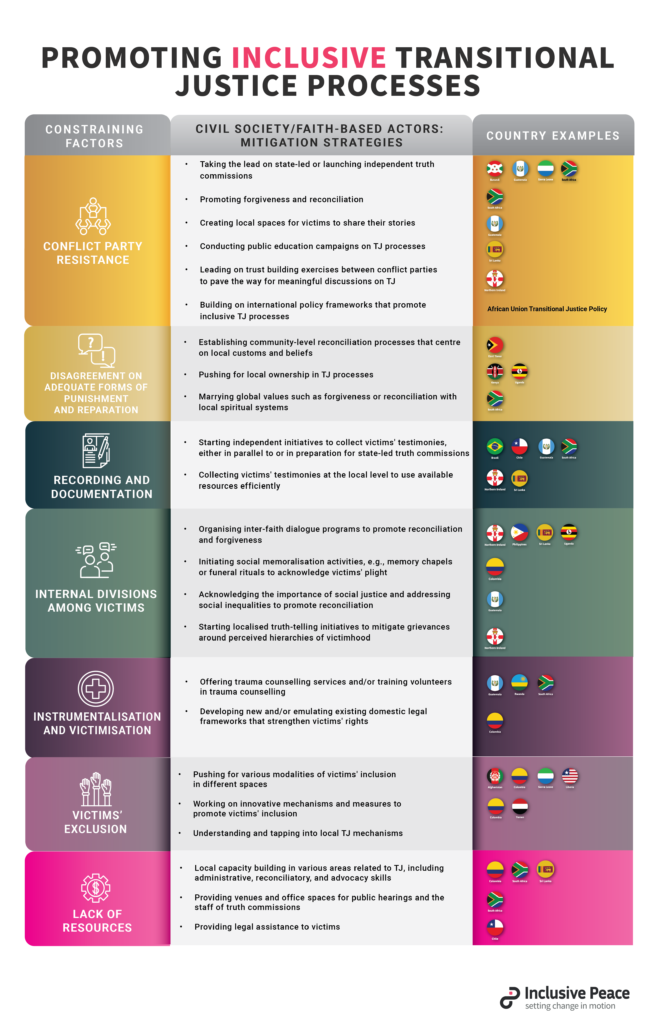
In this Inclusive Peace learning we have outlined the seven most common constraints and how civil society organisations and faith-based actors can work on the mitigation of these challenges with country examples. These learnings are based on our comparative knowledge from peace processes worldwide.

The seven constraints to inclusive transitional justice processes include (but are not limited to)

→ conflict party resistance
→ disagreement on adequate forms of punishment and reparation
→ recording and documentation
→ internal divisions among victims
→ instrumentalisation and victimisation
→ victims’ exclusion
→lack of resources

Seven constraints to inclusive transitional justice processes

Conflict Party Resistance
Resistance from parties involved in the conflict is one of the major constraints of transitional justice processes. The resistance can manifest in various forms, from attempts to obstruct accountability mechanisms, the unwillingness to cooperate with investigations to actively undermining the truth-seeking efforts. The lack of cooperation from key actors can make it difficult to achieve justice and reconciliation.

Disagreement on Adequate Forms of Punishment and Reparation
Transitional justice processes often encounter challenges in determining the appropriate forms of punishment and reparation for perpetrators and victims, respectively. Stakeholders may have different opinions on what constitutes justice, leading to tensions and disagreements. For example, societies may be divided on issues like capital punishment, amnesty, or alternative forms of justice such as truth commissions or community-based reconciliation. Likewise, disagreements may arise regarding the extent and scope of reparations, creating tensions among stakeholders seeking to achieve justice while promoting societal healing.

Recording and Documentation
After a period of conflict, evidence may be lost or destroyed, making it difficult to identify perpetrators and bring them to justice. Insufficient documentation can undermine the credibility of a transitional justice process. Accurate and comprehensive documentation is vital to any successful transitional justice process.

Internal Divisions among Victims
It is common for conflict situations to fracture societies and result in victims belonging to different ethnic, religious, and social groups being siloed. As a result of these divisions, the solidarity necessary to pursue justice collectively can encounter barriers. Furthermore, some victims would prefer retributive justice, which seeks harsh punishment for perpetrators, while others would be interested in restorative justice, which emphasises healing and reconciliation.

Instrumentalisation and Victimisation
Transitional justice processes can be manipulated for political gain by elites and others with vested interests. These actors may use the justice system to target political opponents or avoid accountability themselves, while victims may face further victimisation such as through re-traumatisation or stigmatisation if they participate in justice-seeking initiatives.

Victims’ Exclusion
In many cases, marginalised groups, such as women, minorities, or indigenous people, are excluded from transitional justice processes, which poses a significant challenge to its legitimacy and effectiveness. This can lead to the continued marginalisation of these groups leaving them feeling helpless and unsatisfied, which would hinder efforts to achieve a comprehensive and inclusive reconciliation.

Lack of Resources
Transitional justice processes are time-consuming, requiring adequate funding and infrastructure. Many countries emerging from conflict may lack the necessary financial and human resources to establish and sustain effective justice mechanisms. This limitation can result in delayed or compromised justice outcomes, furthering the frustration of victims and impeding the path to lasting peace.

Want to learn more about transitional justice?

In our blog series, PEACEBUILDING LESSON, Transitional justice and reconciliation expert Tecla Namachanja shares her experience of the use of various mechanisms found in Kenya to provide support to those who suffered violent conflict and human rights violations.


Top featured photo: “Enhancing Relationships in The Gambia” by Diplomatic Security Service is marked with Public Domain Mark 1.0.

In the framework of our “Enhancing Women’s Leadership for Sustainable Peace in Fragile Contexts in the MENA region” project in collaboration with UN Women, over the past two years Inclusive Peace has been working on an overarching body of research exploring how to make peace and political transition processes more meaningfully inclusive and gender-responsive, and how this in turn can increase the likelihood that these processes give rise to sustainable inclusive outcomes. This work has resulted in a series of publications ‒ a research report, a policy brief and four research papers ‒ that are summarised below:

The report Transfer from Track Two Peacebuilding to Track One Peace-making: A Focus on Yemen and Syria and its companion policy brief present insights about transfer from track two peacebuilding to track one peace-making activity in Yemen and Syria. They discuss five main obstacles and barriers to transfer between track two and track one and encourage researchers and practitioners to rethink, refine, and clarify the concept of transfer to promote participatory, homegrown peacebuilding and peacemaking.

The paper Reaching an Inclusive Truce: Gendering Ceasefires reviews and edits gender provisions drawn from ceasefire texts around the world to provide both language and an approach to render ceasefire texts and their constituent provisions more gender inclusive, and examines existing literature on gender and ceasefires. The overall analysis results in 15 concrete strategies, which promote inclusive ceasefire negotiation processes and inclusive, gender-responsive outcomes.

The paper A Practical Guide to a Gender-Inclusive National Dialogue fosters understanding of how to make a National Dialogue truly inclusive of women and gender responsive. It describes process design and context factors that can affect women’s opportunities in a dialogue as well as strategies to counteract resistance to the meaningful inclusion and influence of women and gender. A spectrum is introduced to differentiate between levels of gender-inclusiveness.

The paper Protection of Women Peacebuilders in Conflict and Fragile Settings in the MENA Region identifies the offline and online risks and threats that women peacebuilders and activists from the MENA region encounter in their daily work. A thorough review of the gaps and best practices in existing protection regimes points to twelve entry points for enhancing women peacebuilders’ protection.

The paper Using Temporary Special Measures for Inclusive Processes and Outcomes examines the capacity of temporary special measures (TSMs) to render peace negotiation processes more gender inclusive and to promote political, economic, and social gender equality in the post-agreement phase, including ways to counteract patriarchal backlash and transform patriarchal norms. The analysis gives rise to thirteen lessons on how to design effective TSMs, which can help to foster sustainable inclusive outcomes.


_D3S9439” by U.S. Embassy Jerusalem is licensed under CC BY-SA 2.0.

Our team is sharing various books and a podcast, which kept them turning the pages and listening to most episodes.

Read

Cho Nam-Joo, Kim Ji-young, Born 1982

Kim Ji-young, whose name is the Korean equivalent of “Jane Doe”, experiences a life that is both crushingly banal and nightmarish. An initial dissociative episode is the start of a descent into multi-personality madness, clinically chronicled by her psychiatrist, through which Ji-young comes to represent the unheard everywoman in South Korea.

The novel shines a glaring light on endemic sexism, misogyny, and institutional discrimination in the country, and shows how they are tied into many other socio-economic issues. The book is up there with Bong Joon-ho’s film Parasite in the vanguard of South Korean cultural social criticism.

Recommended by Alex Bramble

The Peacebuilding Puzzle

A book I think about often and have occasionally returned to (though not as much as I would like), it provides a compelling analysis of why international investments in peacebuilding have not led to sustainable outcomes, chiefly because they have been co-opted by or have failed to transform dominant modes of power and influence associated with the political economy of conflict, and associated modes of governance. While approaching in on 10 years old, the analysis in the book remains highly relevant.

Recommended by Alex Shoebridge

Risk Savvy, Gerd Gigerenzer

This book is about how in an age of data and information overload we can manage risks and uncertainty (which the author shows are not the same) and become more risk savvy. Often it is simple rules of thumb, knowing how to read and communicate the risks well, and trusting our intuition, that can guide us much better than so called “experts” can. An easy, straight-forward and often funny read.

Recommended by Rainer Gude

Listen

The Mediator’s Studio

This podcast is from the Oslo Forum. It gives the space to practitioners in diplomacy and peacebuilding to share their experiences of mediation/negotiation behind closed doors.

Recommended by Tamar Tkemaladze

Our team has selected books and webinars that they found interesting, engaging and informative to enjoy this month.

Read

The Earth Transformed, Peter Frankopan

The book explores the interactions between human societies and the environment, with a particular focus on how closely the environment has shaped human civilisation. Impressive in its sweeping scope. I haven’t yet finished; I have a sneaking suspicion the news at the end isn’t going to be great…

Recommended by Alex Bramble

Monocle’s The Foreign Desk, “The Good Friday Agreement 25 years on”

A critical look back at how the Good Friday Agreement was achieved, the intended and unintended consequences of the Agreement on political and social dynamics since, and some remaining questions regarding pathways to reconciliation and collaborative governance.

Recommended by Alex Shoebridge

The Swarm by Frank Schätzing

Having already reached the status of a classic in Germany, this novel makes you think about what the consequences of the destruction of the earth’s ecological balance could look like further down the road. Thrilling and disturbing.

Recommended by Philip Poppelreuter

Transformative Scenario Planning, Adam Kahane

Sometimes instead of just adapting to the future, we need to take a step back, create a diverse group of people from across the whole spectrum, and start imagining different scenarios of what could (not should) happen. In that slow process, new ideas can be planted and eventually grown that can help transform systems. Some interesting anecdotes and good examples as well.

Recommended by Rainer Gude

Listen

Queen’s University Belfast’s Agreement 25 conference

To mark the 25th anniversary of the Belfast/Good Friday Agreement (B/GFA), Queen’s University Belfast hosted a three-day conference under four themes:
celebrating the achievements of those who signed the 1998 Belfast/Good Friday Agreement (GFA), recognising the role of women in peace building, amplifying the voice of the next generation of young leaders, and creating a dialogue that proposes and considers social and economic solutions to the major issues that will impact the region over the next 25 years. On Day 2, the one event “Media in Conflict and Peace” looked at the role journalism played from the Troubles to the present day.

Recommended by Wairimu Wanjau

This week marks the 25th anniversary of the Belfast (Good Friday) Agreement (GFA) in Northern Ireland, which was signed on 10 April. The specific peace process that gave rise to the GFA, as well as events during the 30 years before the GFA and in the 25 years since are an excellent illustration of how building peace is a perpetual, non-linear process, involving constant negotiation and re-negotiation of the social and political contract, marked by a mixture of progress, resistance, and setbacks.

Paving the way for the GFA: Northern Ireland’s protracted official peace process(es)

During the 30 or so years of conflict known as “the Troubles”, there was a series of formal attempts at reaching a constitutional settlement to reconcile loyalist (unionist) and republican (nationalist) divides. While they did not resolve any major substantive issues, they did lay the groundwork for the GFA process by improving and institutionalising Anglo–Irish cooperation at the inter-governmental level, and reaching a consensus on the main topics and discussion strands future negotiations would address, including devolved democratic institutions in Northern Ireland, formal bodies dedicated to North–South relations (Northern Ireland and Ireland), and structures dedicated to institutional East–West cooperation (the United Kingdom and Ireland). The two Governments outlined these themes in a comprehensive set of proposals, the “Frameworks Document,” which served as a blueprint for the Belfast (Good Friday) Agreement.

The GFA process itself was also far from plain sailing. The IRA’s attack in London in February 1996, ending its ceasefire, meant that while Sinn Féin still contested the election to the Northern Ireland Forum for Political Dialogue it was initially barred from attending the multi-party talks. Elections in the UK in May 1997 and in Ireland in June 1997 catalysed the peace process: the new Labour Government in the UK was better placed to temper the suspicions of nationalists in Northern Ireland about the UK Government’s commitment to the process, and it had a more solid parliamentary base for engagement in the process; the new Irish Fianna Fáil government was in a better position to deal decisively with the republican movement due to its traditional association with the ideals of republicanism. In July 1997, the IRA announced the renewal of its ceasefire, prompting an invitation to Sinn Féin to join the multi-party talks. Despite a brief withdrawal of the Democratic Unionist Party (DUP), substantive negotiations began in October 1997. After all-night discussions and a 17- hour extension of the deadline, the talks resulted in the signing of the GFA on 10 April 1998.

The political Rubik’s Cube: navigating the post-GFA political landscape

The GFA is a multifaceted agreement dealing with issues relating to sovereignty, governance, decommissioning and security, policing and the judiciary, and discrimination. In addition to establishing formal institutions across these thematic areas, it also established a devolved system of government in Northern Ireland comprising a legislature – the Northern Ireland Assembly (“Stormont”), and a power-sharing executive – the Executive Committee – run by a duumvirate appointed by the two largest parties in the Assembly.

Yet, the political settlement ushered in by the GFA has proved highly contested; Northern Irish politics has remained extremely polarised, and there have been multiple collapses of the executive (which has now not functioned for over a third of its lifespan) and suspensions of the Assembly since 1998. Renewed talks in 2006 attempted to provide a road map (the 2007 St Andrews Agreement) towards addressing the major bones of contention, chiefly the acceptance of devolved policing and the rule of law for Sinn Féin, and the acceptance of power sharing for the DUP. The power-sharing arrangement subsequently was slightly more stable, until circumstances – notably the result of the referendum in June 2016, on the United Kingdom leaving the European Union – once again muddied the constitutional waters. The power-sharing arrangement was suspended for three years in 2017 following a crisis over a renewable energy payments scandal, before being uneasily restored. Brexit provoked another collapse in early 2022 that is yet to be resolved; whether the February 2023 Windsor Framework for post-Brexit trading arrangements can do so remains to be seen.

Healing a divided and changing society

The inherent weaknesses in the power-sharing arrangement are both rooted in and reflect the fact that societal tensions are yet to be fully reconciled. While efforts at peace-making and peacebuilding in Northern Ireland have significantly attenuated generations of violent inter-communal division in Northern Ireland, ongoing sectarian tension – including a lack of integration and cohabitation amongst communities and, in recent years, disputes over the use of flags and symbols, parades and marches that showcase sectarian identities, welfare and police reforms, the arrest of Sinn Féin leader Gerry Adams in 2014, and the Irish National Language Act – is both a symptom and a cause of ongoing distrust between loyalists and republican communities.

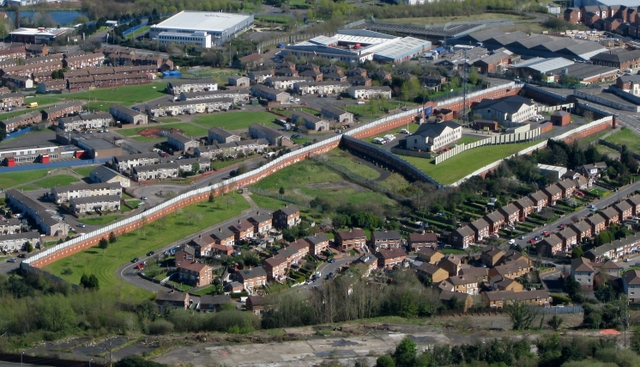
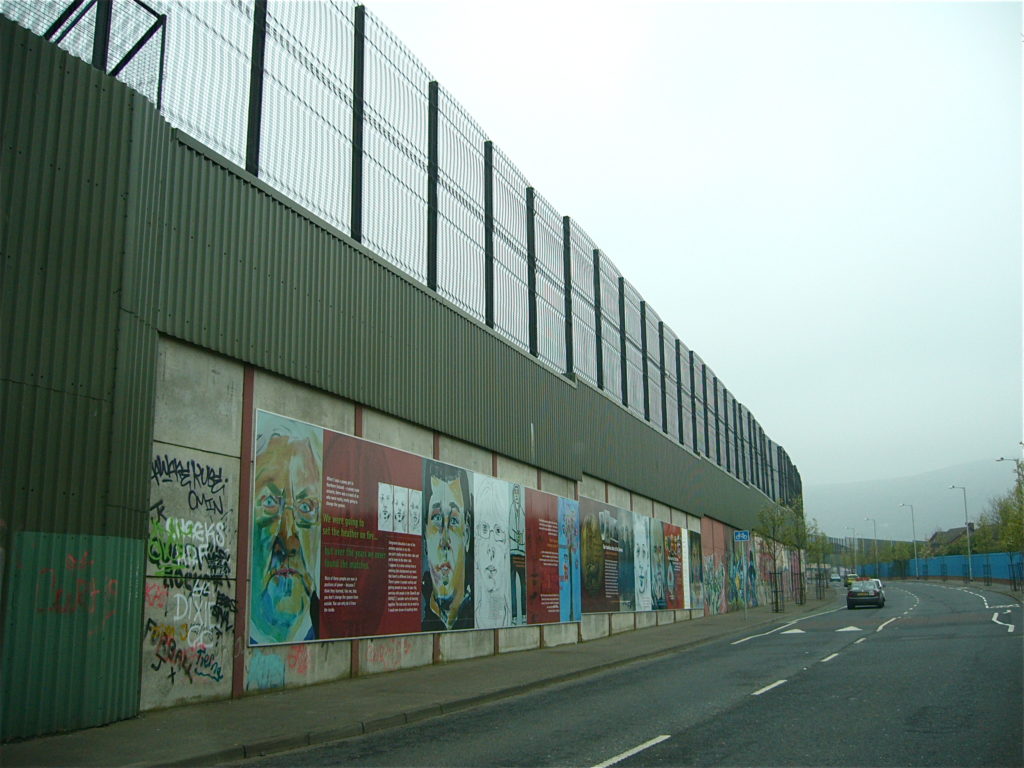
Caption: The persistence of about 60 peace walls, which physically separate loyalist and republican neighbourhoods in various cities, bear witness to the ongoing divisions in Northern Irish society.Yet, there has also been a marked recent shift in political and societal attitudes and priorities beyond sectarianism. The electoral success of both Sinn Féin and the non-sectarian Alliance Party in the 2022 Stormont elections are the manifestation of the Northern Irish population attaching greater importance to (universal) issues like education, healthcare, the welfare system, and economic considerations – chiefly inflation and the cost-of-living crisis – than to sectarian issues and Northern Ireland’s constitutional status. Polls in 2022 found that 21% Northern Ireland’s citizens consider themselves as “Northern Irish” rather than “British” or “Irish”.
This can partly be explained by a (natural) generational shift; younger people in the country who didn’t grow up during the Troubles seemingly view their aspirations and the challenges they face through other lenses than a purely or even principally sectarian one. All of this shows that what peace means and looks like in a specific context is a constantly moving target.

Building lasting peace is a society-wide endeavour

Northern Irish society during the Troubles has been widely referred to as a state of “armed patriarchy” underpinned by conservative, masculinised values and discourse of nationalism and religion.

In spite of that, women were heavily involved in civil rights and particularly local community work during the Troubles, advocating for peace and social change. Women’s groups succeeded in securing the participation of a dedicated women’s caucus – the Northern Ireland Women’s Coalition – in the track one negotiations. Women successfully advocated for the inclusion of language and provisions in the GFA on equal opportunity, women’s rights to equal political participation, social inclusion, reconciliation and the needs of victims of violence, integrated education and mixed housing, and for a Civic Forum to engage with a broad range of stakeholders on the implementation of the GFA. Women were also included in official consultations, played a key role in the “yes” campaign that succeeded in ratifying the GFA by referendum, and were involved in GFA-mandated commissions.

Faith-based actors have also made a major contribution to building peace in Northern Ireland. During the Troubles, in spite of the sectarian divide, which was partly both crystalised around and perpetuated by socio-cultural religious organisations like the Orange Order, a number of Protestant and Catholic actors mobilised for peace. This included organising large scale Peace Marches, acting as mediators between militants, and advocating for and facilitating ceasefires. They also worked to build trust and understanding within and between different sectarian groups through hosting meetings between paramilitary leaders on both sides of the conflict. Faith-based actors have been involved in the implementation of the GFA and have continued efforts to foster social reconciliation and healing, including through creating and facilitating spaces where people who identify as loyalist or republican can come together and have uncomfortable, but necessary conversations to humanise one another.


Caption: Peace walls decorated with hopeful murals are just one example of the myriad ways in which communities in Northern Ireland are trying to reconcile their differences and build a shared peaceful future

We know from evidence and experience that society-wide involvement in building peace is crucial to making peace inclusive and sustainable. Bottom-up initiatives and spaces for societal involvement take on even greater importance in contexts like Northern Ireland, where the formal political arena is deadlocked. Recent and current examples, ranging from consultative bodies the Civic Forum and the British-Irish Parliamentary Assembly, to existing inter-sectarian civic spaces such as the Suffolk and Lenadoon Interface Group or the 174 Trust provide a blueprint to consolidate and expand. Doing so is a crucial aspect of reimagining and diversifying the ways we understand and undertake peacemaking and peacebuilding, which is essential to making sure these processes are an integral part of – rather than separated from – the arc of a society’s changing development, and to ensuring that that arc bends towards a peaceful, just, and inclusive future.

————————————————————-
This blog post was written by Alexander Bramble and Philip Poppelreuter

Check out our case study and our infographic on women in the 1996-1998 Northern Ireland peace process, our digital story on faith-based actors’ peacebuilding work in Northern Ireland, and our blog post on Perpetual Peacebuilding.


Photos: “File:Nothing with us.jpg” by Michael Lovito is licensed under CC BY-SA 4.0, “Peace in Northern Ireland – geograph.org.uk – 3551004” by Oliver Dixon is licensed under CC BY-SA 2.0. “Belfast Murals – Sandy Row (5702530038)” by William Murphy from Dublin, Ireland is licensed under CC BY-SA 2.0. “File:Peace Line, Belfast – geograph – 1254138.jpg” by Ross is licensed under CC BY-SA 2.0.

Case Study,

Women in Peace and Transition Processes: Northern Ireland (1996–1998)

This case study analyses women’s influence in Northern Ireland’s Belfast (Good Friday) Agreement (1996-1998).

December 2018|Alexander Bramble,

Infographic,

Infographic: Women’s role in Northern Ireland’s Belfast (Good Friday) Agreement (1996-1998)

This infographic analyses women’s influence in Northern Ireland’s Belfast (Good Friday) Agreement (1996-1998).

December 2018|IPTI,

Faith-based actors can have a fundamental influence in relation to peace and political transition processes. Given the legitimacy, influence, and public platform they possess, religious leaders (and institutions) can either sow the seeds for peace, or fan the flames of war.

In the course of a joint project with The United States Institute of Peace (USIP) and The International Center for Religion and Diplomacy (ICRD), Inclusive Peace have produced a forthcoming report that draws on 71 case studies of peace and transition processes assessing the involvement of faith-based actors. The report lays out a series of comparative findings examining why, the extent to which, and how faith-based actors have been engaged in formal peace processes over the last 30 years. Despite significant differences in terms of conflict dynamics, recent experiences from Ukraine and Ethiopia illustrate the significant bearing faith-based actors can have on the trajectory of a conflict as well as a strong influence on any rapprochement, dialogue, and reconciliation attempts. Our comparative research also explores a number of factors which either enable or constrain faith-based actors’ influence.

This blog explores a few of these factors that may be particularly pertinent to consider with regard to the current dynamics at play in relation to Ukraine and Ethiopia.

Unity: Internal unity of faith-based actors has a pronounced effect on the influence they can exert on peace and political transition processes. This can often be a gargantuan task, given that cleavages within or between faith communities often mirror conflict lines. In Sri Lanka, polarisation within the Catholic Church prevented it from adopting a clear anti-war message. Such divisions are not uncommon, and in some contexts can also be used to demonstrate a commitment to internal dialogue and reconciliation, as was seen in the Catholic Church in Guatemala, where internal divisions were addressed through dialogue. By demonstrating and seeking to peacefully manage divisions, the Church’s legitimacy was actually bolstered, which then positioned the Church to play a central role in the country’s peace process. Similar kinds of dialogue – initially informal grassroots dialogue – are currently happening amongst Ukrainian Orthodox Church-Moscow Patriarchate (UCO-MP) and the Orthodox Church of Ukraine (OCU), including through public joint prayers. It remains to be seen the extent to which religion will become a central point of contestation in the conflict itself, which could fundamentally shift conflict dynamics (and how broader parts of society and the international community are mobilised to support, or not, military objectives). In Ethiopia, recent tension within the Orthodox Tewahedo Church has threatened to create new waves of instability (both at national and community level), and it remains to be seen to what extent a reconciled Orthodox Church can now play an active role in advancing dialogue and reconciliation efforts more broadly in the country.

Coalition building: Faith-based actors’ ability to build coalitions among different actors of different faiths and other stakeholders, particularly those likely to have an influence over conflict parties, strongly contributes to their ability to influence peace and political transition processes. In some instances, these coalitions are formal mechanisms or institutions, such as Inter-Religious Councils. The Inter-Religious Council in Liberia played a critical role in bringing together Muslim and Christian leaders (and communities), who in turn pushed for an end to the civil war, and who subsequently were deeply involved in the country’s pathway to reconciliation. In other contexts, such as the Philippines, faith-based actors worked with civil society and business actors to increase public mobilisation and support for a peace process, while also using the breadth of the coalition to influence main actors in the implementation process and to engage with political leaders.

Resources and organisational capacity: Faith-based actors, particularly when members of large powerful social organisations such as churches, have important material, infrastructural and political resources that facilitate both their inclusion and influence in peacemaking and peacebuilding efforts. The fact that these organisations have their own resources rather than being dependent upon others increases their independence and, in turn, their legitimacy. In Afghanistan, the ulama councils of religious scholars supported outreach and public mobilisation in the Constitutional Loya Jirga process, increasing their influence in and around the process. Yet this influence was also exploited by certain Mujahideen leaders (claiming religious leadership) to take a stance against transitional justice, which made more moderate clerics and mullahs fearful of supporting such an initiative. Because they have the necessary financial and human resources, faith-based actors can invest in long-term involvement both in mediation efforts among conflict parties but also within communities. Many religious groups remain involved in the post-agreement phase and help parties heal, build social institutions, and seek justice. In Sierra Leone, the Inter-religious Council of Sierra Leone (IRCSL) was involved in reconciliation, relief, human rights training, democratisation, and reintegration programs, especially of child combatants. In this way, the resources and organisational capacity of faith-based actors can lend themselves to sustained engagement and involvement overtime as conflict dynamics change, and the potential for peace processes (and their implementation, including through reconciliation) also evolves over time.

Early involvement: Early involvement of faith-based actors in dialogue efforts establishes a precedent for their continued involvement and increases its legitimacy. While the conflict dynamics may not lend themselves to overt engagement (or even in the use of rhetoric around “negotiation” or “reconciliation” given the political sensitivities and the realities of the violent conflict “here and now”), finding ways to engage with conflict parties (and the wider community/ society) can ultimately create the conditions for faith-based actors to play a meaningful role in peacemaking efforts. This can be true of faith-based actors within a particular context, as well as faith-based actors from neighbouring countries or at the international level. In the case of the Beagle Channel dispute between Chile and Argentina, early Papal mediation was key to preventing further escalation. On the other hand, Buddhist actors in Sri Lanka strongly opposed the Norwegian-led peace process, which served as a major “spoiler”. In Ethiopia, the Inter-Religious Council and a number of individual faith communities made individual and joint statements calling for violence in the north of the country to be avoided during the early period of the internal conflict. While these calls weren’t headed, they have subsequently conferred a degree of legitimacy on the Inter-Religious Council (and national faith-based bodies such as the Orthodox Church, Catholic Church and the Islamic Supreme Council) as the country now looks ahead to a National Dialogue process.


Photo source: Dimitris Avramopoulos/Flickr

We’ve put together a selection of readings and podcasts that we think you might enjoy in December.

READING

Yemen’s Incomplete National Dialogue: Insights on the Design and Negotiations Dynamics by Ibrahim Jalal

An analysis of Yemen’s National Dialogue, identifying a number of lessons learned and the legacy and implications of the National Dialogue for peacemaking efforts in the country going forward.

Recommended by Alex Shoebridge

All Quiet on the Western Front by Erich Maria Remarque

It is a classic on describing the horrors of war and the dangers of hyper-nationalism and propaganda. It is beautifully written and also manages to find a deep humanity in the chaos that humans can bring upon one another. It follows a young German who enthusiastically enlists in WWI and then is soon mired in the atrocity of the trenches. A story of great humanity and still extremely timely. There is also a film out on Netflix now.

Recommendation by Rainer Gude

Ideology and Mass Killing: The Radicalized Security Politics of Genocides and Deadly Atrocities by Jonathan Leader Maynard

Maynard’s book, Ideology and Mass Killing: The Neo-Ideological Motivation behind Genocide and State Terror, advances an alternative ‘neo-ideological’ perspective which systematically retheorises the key ideological foundations of large-scale violence against civilians. By combining cutting-edge research from multiple disciplines — ranging from political science and political psychology to history and sociology — to demonstrate how ideological justifications for violence shape such violence in ways that go beyond deep ideological commitment. Most disturbingly of all, the key ideological foundations of mass killings are found to lie, not in extraordinary political goals or hatreds, but in radicalized versions of those conventional, widely accepted ideas that underpin the politics of security in ordinary societies across the world.

Recommended by Nick Ross

PODCAST

Crisis Group “Hold Your Fire” Season 3, episode 12: Football and Politics in the Gulf

In honour of the self-styled Greatest Show on Earth™, Crisis Group’s “Hold Your Fire” series has an episode on Football and Politics in the Gulf. One of the respondents is Dina Esfandiary, an extremely astute observer of all-things MENA and particularly Iran (with whom I had the pleasure to work in a previous professional life).

Recommended by Alex Bramble

Into Africa (produced by the Center for Strategic and International Studies (CSIS) in Washington D.C.

This bi-weekly podcast discusses security, political, economic, and cultural themes that occupy the continent. An exciting and enjoyable opportunity to stay updated on and better understand the multi-faceted change that African countries are currently undergoing individually and/or collectively, including the opportunities and challenges that they are encountering.

Recommended by Philip Poppelreuter

Seeking Peace podcast

The Seeking Peace podcast, produced by the Georgetown Institute for Women, Peace and Security in partnership with UN Peacekeeping and Our Secure Future, explores women’s roles in bringing lasting peace to communities—whether it be through grassroots activism, peace negotiations, journalism, politics, or as uniformed peacekeepers. The podcast has covered themes such as the role of women in negotiations , building peace , defying gender norms , leadership and allies , and more. Interviewees range from grassroots activists and peacebuilders to scholars and academics to UN officials.

Recommended by Wairimu Wanjau