Category Archives: highlight home

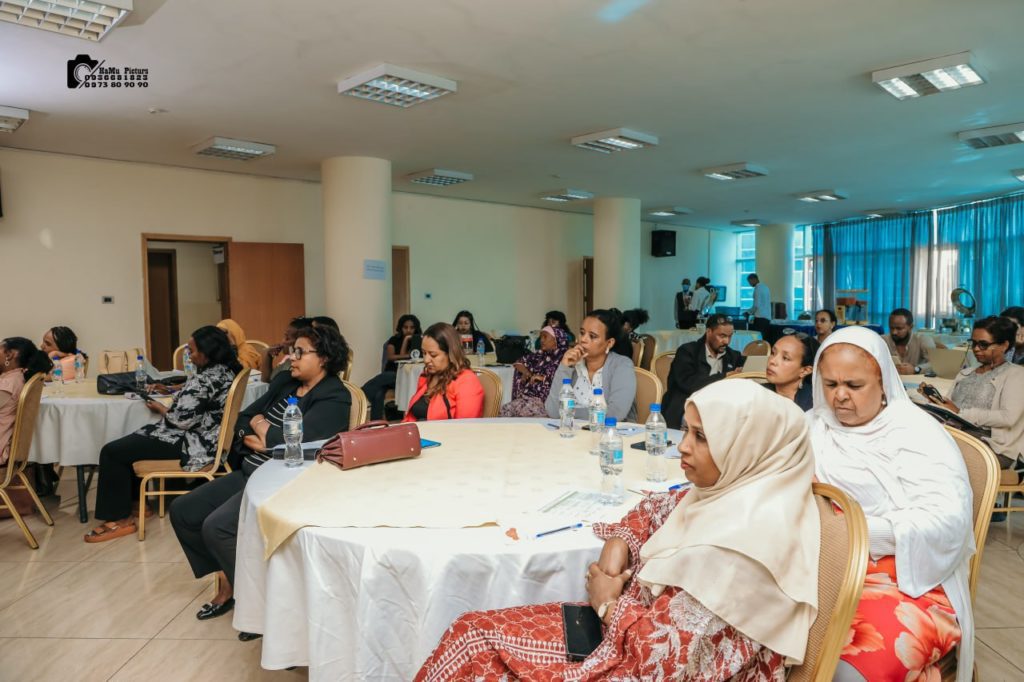
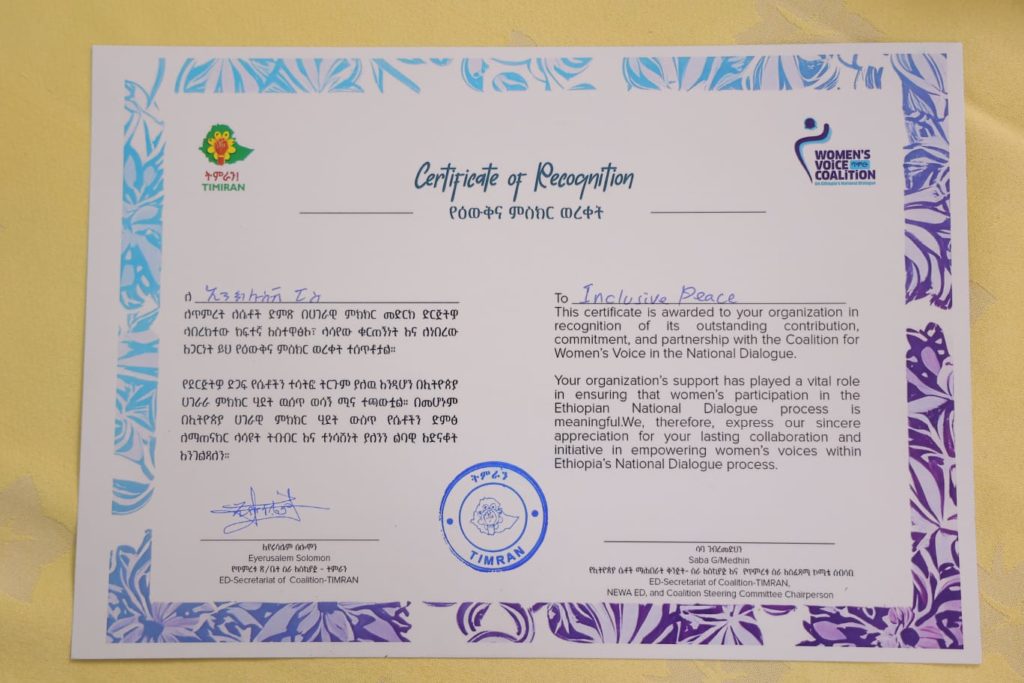
As Ethiopia still grapples with divisions, women are building bridges. TIMRAN and the Coalition for Women’s Voice in the National Dialogue  just closed a three-year push to get women’s priorities at the forefront of Ethiopia’s National Dialogue, and they did it while fighting ensued. They did it for everyone, including getting the voices of youth and disabled communities heard.

These three years were of connection and creation:

  • 6,134 women mobilised across 11 regions and two city administrations
  • 3,352 agendas gathered
  • 2 rounds of prioritisation and validation before submission to the Ethiopian National Dialogue Commission (ENDC)
  • From 22 member organisations to around 60

It was three years of building a coalition, steering the secretariat, and drawing a shared agenda intact when war, lack of resources, and fatigue were constant threats. But their resilience never wavered.

We were there from the start. From encouraging different people to organise, to providing technical support, facilitating experience sharing with others in similar contexts, to helping to shape agenda selection criteria, and funding both their General Assemblies. Staying close enough to answer the practical questions coalitions always have, providing the accompaniment they deserve.

The dialogue process is still unfinished and has been extended. There are another eight months ahead, as Tigray is still missing from consultations. But TIMRAN keeps working with the Commission to keep the process, and the outcomes, inclusive of not just women, but youth and disabled communities, while preparing organisers for the next chapter. And we will continue to be by their side.

On September 1, DT Institute and Inclusive Peace entered into a long-term strategic partnership, bringing together peacebuilders and civic leaders with national and regional peace processes to build more open, informed, and peaceful societies.

At a time when violent conflict is now regarded by the WEF as the number one global threat, and peace-making and peacebuilding systems are breaking down, this partnership represents a deliberate commitment to draw together the power of grassroots movements and conflict mediation with institutional actors that have deep implementation capacity across the development field. We recognise that the work must continue no matter how challenging the circumstances — and this partnership allows us to pool resources and maximise impact.

“I’m thrilled to welcome Inclusive Peace into the DT Institute family,” said John De Blasio, Founder and CEO of DT Institute. “This new partnership brings together U.S. and European partners into a shared peacebuilding framework and links that to real development assistance across the world.”

Inclusive Peace’s Managing Director, Zachary Taylor added “I am incredibly excited by this partnership as it widens the scope of our organisation’s proud record of supporting inclusivity in peacebuilding and provides scalability and real peace dividends to communities that have been ripped apart by conflict.”

Enduring peace requires respect, dignity and trust. With staff based around the world, hubs in Washington, DC and Geneva, and deep programmatic roots in the Middle East, the Horn of Africa, the Sahel and Eastern Europe, this new partnership will model these values and work with a broad range of partners to ensure peace delivers for everyone.

For more details on this new partnership, please contact Digital Media Officer, Mia Oak at mia.oak@inclusivepeace.org

Quotas as a standalone measure have struggled to guarantee women’s influence over peace processes. This blog presents tangible complementary measures, which when combined with quotas can help to catalyse women’s meaningful participation.

Quotas have featured prominently in research and practice-oriented debates on how to realise the WPS agenda’s participation pillar for years. Over the past quarter-century, several states and inter-governmental bodies have embraced gender quotas. Two particularly recent examples stand out.

The National Dialogue Commission (NDC) in Ethiopia has adopted a 30 percent gender quota for the country’s ongoing national dialogue. A new policy framework from the Peace and Security Council of the African Union (AU PSC) also includes a commitment to a 30 percent minimum gender quota for AU-led formal peace processes as well as conflict prevention, management, and election observation missions.

Quotas can enhance their influence over a peace process but do not automatically do that in and of themselves. Men political and security decision-makers have found various ways to sideline women who are directly represented in formal peace talks. They have excluded women negotiation delegates from informal decision-making spaces; stigmatised women who they depicted as dishonourable and incompetent; and threatened, harassed, and intimidated women delegates in offline and online spaces.

Political, ethnic, religious, and other divisions have also prevented women from speaking with one voice and thereby capitalising on their quota-induced presence in formal peacemaking spaces. Weak monitoring and enforcement mechanisms have further undermined gender quotas’ impact.

These multi-faceted constraints indicate the need to both properly design and implement gender quotas and also think about them not in isolation but as one tool among a variety of mechanisms and measures that, when combined, can holistically advance meaningful women’s participation. Twelve tangible entry points stand out in this regard. They draw on comparative evidence as well as potential ideas for how to make quotas work.

Quota Design

The early adoption of gender quotas can strengthen women’s presence in a formal peace process from the outset, which puts them in a better position to counter early forms of patriarchal backlash. Women’s guaranteed representation throughout the post-agreement phase can amplify their influence as implementation-related activities unfold. Yemeni women, for example, drew on a 30 percent gender quota that applied throughout the entire National Dialogue Conference (2013-2014) to ensure that the emerging outcome document was gender sensitive.

More ambitious quotasthat set women’s minimum representation at 50 percent and grant women access to decision-making power are also conducive to their meaningful participation. In Colombia, for example, women’s rights organisations’ and activists’ advocacy for a 100 percent gender quota regarding the Gender Sub-Commission contributed to women’s majority in this innovative body.

Gender quotas that account for women’s intersectional identities will ensure that the voices of women from various backgrounds can be heard in a peace process. Political, ethnic, religious, geographic, and socio-economic affiliation as well as age are some of the identities that gender quotas would ideally account for. The Local Level Election Act (LLEA) in Nepal from 2017, for example, stipulates that at least one woman and one Dalit woman must be represented in each municipality ward.

Complementary Measures

Combining gender quotas with other inclusion modalities can strengthen women’s influence over a peace process. Extra (standalone) women-only delegations comprised of gender experts and representatives from women-led organisations can amplify women’s voices in peace and political transition processes in various ways, including:

➜  Mitigating the negative effect of women’s potential co-optation by men in negotiation delegations or women voting in accordance with their political, ethnic, or regional interests.

➜ Moving beyond women’s tokenistic inclusion in negotiation delegations.

➜ Promoting women’s collective voice and facilitating consensus-building among them.

Women-only delegations included in formal peace and political transition processes in Yemen (2013-2014), Northern Ireland (1996-1998), and Ethiopia (ongoing national dialogue), as well as Colombia’s Gender Sub-Commission (2014-2016) are pertinent examples. In Nepal (2008-2012) and Yemen (2013-2014), women capitalised on their direct representation in technical and thematic working groups to shape the negotiations under the respective constitution-making process.

Tangible and legally binding monitoring and accountability mechanismsare also important complements to effective gender quotas. This includes sanctions for negotiating parties who refuse to comply with a gender quota.

Frequent reports that assess the progress made regarding the implementation of a gender quota as well as quotas’ quantitative and qualitative impact on women’s influence over peace processes could inform any accountability measures. An effective monitoring system that traces physical or online attacks against women negotiation delegates will also enhance their protection.

Access to context-specific, targeted, and needs-based capacity strengtheninginitiatives can help women negotiation delegates to acquire or deepen the required technical skills and knowledge to shape a peace process as well as strengthen coordination amongst themselves.

Consultations, Coalition Building, Advocacy —What Women Can Do.

Women negotiation delegates’ willingness and capacity to overcome internal divides, represent the voices of all women, and engage in constant advocacy around a minimum shared agenda determine gender quotas’ impact.

Intra-women coalition building efforts have taken various forms. Women from the Somali region in Ethiopia have joined tribe-based dialogue spaces as members of a women’s tribe rather than individual women over the past couple of years. An internal problem-solving workshop in 2002 helped women negotiators from the DRC to agree on a common agenda ahead of the inter-Congolese Dialogue in Sun City (South Africa) in 2003. Over 400 women organised a national summit in Colombia in 2013 to coordinate their outreach and advocacy activities regarding the peace process between the government and the FARC.

Consultations with women at the grassroots level can help women negotiation delegates to affect gender-transformative change that benefits all women. Inter-women consultations can be formal or informal. They would benefit from logistical, technical, and financial support from domestic actors and inter-governmental organisations like the AU.

Constant lobbying, advocacy, and mobilisation for women’s meaningful participationcan create the necessary level of public pressure on negotiating parties to adopt and subsequently implement gender quotas. Women-led civil society organisations, women members of unions and political parties but also third-party mediators and moderate traditional and religious leaders can play a key role in this regard.

Tapping into the various entry points presented above will require significant political will and funding. The establishment of a dedicated fund could be effective in this regard. Any such fund could also support the work of women-led civil society networks and organisations to dismantle patriarchal norms and values, which is key to transforming women’s position in society.

Philip Poppelreuter | Researcher, Inclusive Peace

Photo credit: UN Women/Pedro Pio 2022 ©

This blog is part of Inclusive Peace’s 2025 series on women’s effective participation in peace processes. The series examines context-sensitive strategies women have successfully pursued or could pursue to shape peacemaking and peacebuilding in a changing geopolitical context marked by increasing levels of armed conflict, greater multipolarity – both in general and more specifically in terms of mediation actors – and a decline in comprehensive peace processes and agreements led by the UN. It is based on comparative findings of a project Inclusive Peace is undertaking in partnership with the Irish DFA in the run up to the 25th anniversary of UNSCR 1325 in October 2025.

The Women, Peace, and Security (WPS) agenda is instrumental in advocating for women’s meaningful participation in peace and security efforts. However, in situations of incomplete peace and ongoing political transitions, the challenges facing women peacebuilders and activists become even more acute. As the agenda approaches its 25th anniversary, it faces existential challenges.

Women and the WPS agenda already contend with significant hurdles, including underrepresentation in political spaces and formal peace processes, backlash from patriarchal and male-dominated societies, and a lack of protection as their work often exposes them to threats and violence. These challenges are exacerbated in contexts where peace is fragile, political landscapes are unstable, and transitions are contested and non-linear.

The Reality of Partial Peace and Political Transitions

Partial peace refers to situations where ceasefires or agreements have been reached but conflict dynamics persist. Political transitions on the other hand, are periods of change in governance structures that may or may not lead to democratic and inclusive outcomes. These conditions create both risks and opportunities for women’s involvement in peace and security processes.

The impact of partial peace and political transitions on the WPS agenda is particularly evident in Palestine, Syria, and Lebanon.

● Palestine: While women activists play a crucial role in advocating for peace, human rights, and community resilience, WPS work in Palestine is shaped by the ongoing occupation and the lack of any prospects for a two-state solution. The challenges they face are further compounded by the impact of the occupation exacerbating and reinforcing patriarchal structures.

● Syria: Over a decade of civil conflict, compounded by complex and overlapping political dynamics, has left Syrian women navigating multiple layers of exclusion. Despite this, Syrian women have emerged as key actors at the local level in serving as negotiators in securing local ceasefires and prisoner releases, distributors and monitors of humanitarian aid, and documenters of human rights abuses, often without formal recognition or protection.

● Lebanon: The country’s ongoing political and economic crises have created an environment where women peace actors struggle to gain influence. Despite their active role in civil society and protest movements, they face institutionalised discrimination and exclusion from governance structures that remain resistant to gender-inclusive reforms. Displacement resulting from the latest conflict with Israel, has disrupted women’s livelihoods in Lebanon and heightened their need for protection, shelter, food, and healthcare.

The Way Forward

Addressing the challenges facing women in contexts of partial peace and contested political transitions requires more than symbolic inclusion—it demands a structural rethinking of how peace is made, monitored, and sustained. Building on the recommendations of the WPS Working Group for the Arab States, several priorities stand out.

First, women must be included as negotiators, mediators, and signatories in peace and ceasefire processes—not as observers, but as decision-makers. Gender provisions should be mandatory in agreements, with independent monitoring to ensure they are not sidelined once the ink dries.

Second, accountability must move beyond rhetoric. Fact-finding missions, gender-sensitive audits, and publicly accessible indicators are needed to track violations and progress, particularly in places like Palestine and Syria, where women continue to face violence and exclusion under occupation and militarised governance.

Third, peacebuilding must be rooted in local realities. That means adapting WPS language and frameworks to cultural and political contexts, investing in grassroots women-led initiatives, and decentralising funding away from elite or capital-based structures. Regional leadership—rather than Western dependency—should drive these processes, with Arab states using their political leverage to broker inclusive peace.

Fourth, protection and support must extend to women activists, human rights defenders, and community mediators who take on extraordinary risks. Safe houses, legal aid, mental health programs, and rapid response mechanisms should be treated as non-negotiable investments in sustaining women’s leadership.

Finally, the agenda must look forward. Climate change, arms proliferation, and emerging technologies like AI are already shaping conflict dynamics in the region. Women’s voices and agency must be central in shaping how societies respond to these evolving threats.

The promise of the WPS agenda will not be realised through tokenism or symbolic commitments. It will be measured by whether women in Palestine, Syria, Lebanon, Sudan, and beyond are empowered to shape the peace and political futures of their societies—not in theory, but in practice.

Qabas Al-Musawi | Research & Peace Process Support Analyst

In August 2023, Gabon underwent a major power transition following a successful military coup d’état, the eighth in the region since 2023. The military’s government takeover ended the 55-year dynastic rule of the Bongo regime, which had faced long-standing accusations of widespread corruption and poor governance.

The coup occurred minutes after Ali Bongo, who had taken power following his father’s death, was declared the winner of the 2023 general elections, amid electoral fraud allegations by both the political opposition and the military.

General Nguema, Ali Bongo’s cousin, led the coup and subsequently declared himself as Transitional President in September 2023. While pledging to ensure a swift transition back to civilian rule, Nguema’s regime took several steps following the coup to consolidate the regime’s position of power. These included selecting and appointing all nine members of the Constitutional Court, as well as hosting a highly scripted National Dialogue in mid-2024, during which the military played a prominent role and 200 political parties were banned.

In November 2024, a referendum was held to obtain public approval for the proposed new constitution. The latter provides for a maximum of two presidential terms (extended from five to seven years in length), no prime minister, no dynastic transfer of power, and the abolition of the two round electoral system. The latter therefore lowers the threshold of popular support needed for a candidate to win a presidential election. The ratification of the new constitution was swiftly followed by the introduction of a new law that allows military figures to stand for election.

Post-coup legislative amendments have been viewed by some as means of reinforcing the authority of Gabon’s executive branch, which is already highly centralised. In addition, opposition parties and independent analysts have argued that such changes raise concerns of the military’s intention to remain in power by further eroding checks and balances on the government, which it currently controls.

These concerns are particularly pertinent given the announcement made by coup leader Nguema, who had been open about his intention to run for president since the coup, to announce his candidacy in presidential elections scheduled for April 12, despite the fact that transitional leaders are not usually allowed to run for office.

In March 2025, the Constitutional Court, the members of which were all appointed by Nguema following the coup, approved the coup leader’s candidacy, as well as the former PM. Only one of the eight presidential candidates is a woman.

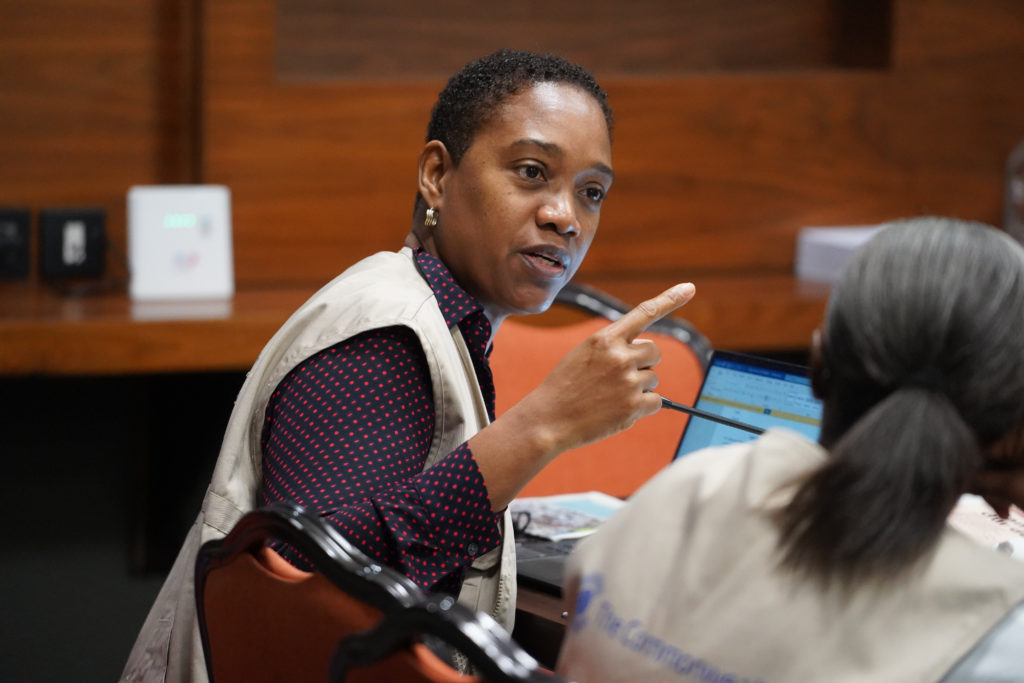
A black woman with short hair wearing a beige vest gestures while talking to another person at a conference, with a laptop and wood-panel wall in the background.

Commonwealth observers in Gabon for presidential election 2025 | The Commonwealth 2025 © Flickr

Recent developments in Gabon seem to echo findings from a research paper recently published by Inclusive Peace regarding post-coup d’état political trajectories. Using comparative examples from other contexts, this research identified five medium-term scenarios following a successful military coup d’état.

One of these possible transitional trajectories suggests that, following a coup d’état, a military regime may take steps that indicate both a transition back to some form of civilian rule but also a consolidation of the military’s power.

Most often, this will manifest as the military regime following the transition plan to multiparty-elections, while trying to retain influence in the political sphere by either creating its own party or co-opting an existing party or candidate.

As such, the military regime’s actions in Gabon – organising presidential elections but changing the law in order to allow military figures, including the coup leader, to stand for president – may also be viewed in this light.

In addition, research shows that the return to constitutional order is not necessarily sufficient to ensure that a transition back to civilian rule is sustainable since the new constitution in any given context may not incorporate sufficient guarantees for civilian rule going forward. Gabon’s new constitution, in particular the extension of presidential terms and the elimination of certain checks on the President’s power such as the removal of the position of Prime Minister, may therefore prove to be inadequate for a lasting transition to civilian rule.

The outcome of, and the regime’s reaction to, the election on April 12 will provide greater clarity on the extent to which civilian rule in Gabon will be restored. It is possible that these elections will constitute an important step in the military’s promised transition back to civilian rule, while simultaneously working to better ensure continued military dominance of the political space and the Gabonian state.

Maura McGoldrick | Peace Process Support Analyst, Inclusive Peace

Despite the importance of reconstruction in post-conflict settings, the topic has typically been overlooked in many peacebuilding processes. Less than a third of peace agreements since 1990 have included provisions on socio-economic development. Fewer still (10%) have addressed issues pertaining to reconstruction and infrastructure (University of Edinburgh’s Peace Agreements Database). This gap may yet become even more pronounced given the decrease in comprehensive peace agreements, and with the increase in limited ceasefire or cessation of hostilities agreements. In an attempt to address this gap, this blog post explores why reconstruction must be approached inclusively. It draws insights from a recent Inclusive Peace webinar featuring three researchers and practitioners with expertise on reconstruction in the MENA region:

Dr. Deen Sharp, Visiting Fellow in Human Geography & Environment at the London School of Economics and senior consultant and academic advisor for the Aga Khan Prize for Architecture;

Dr Nourah Shuaibi, PhD, Assistant Professor of Political Science at Kuwait University;

Zozan Alloush, independent political and development consultant and mediator.

The topic of post-conflict reconstruction is more relevant than ever in the MENA region, including in Syria, the Occupied Palestinian Territories, and Yemen, where several countries are currently undergoing significant political transitions or are engaged in peacemaking processes, which have provided an opening for reconstruction efforts. Similar to other conflict-affected contexts, the issue of reconstruction will be a significant determinant of how post-conflict societies are rebuilt in the region. Inclusive reconstruction processes will enable inclusive societies and, in turn, sustainable peace.

Similar to other conflict-affected contexts, the issue of reconstruction will be a significant determinant of how post-conflict societies are rebuilt in the region. Inclusive reconstruction processes will enable inclusive societies and, in turn, sustainable peace.

The reconstruction of public spaces and socio-economic infrastructure in post-conflict settings is not merely a technical process – it carries significant political and structural implications. Reconstruction efforts can in turn be instrumentalised to exclude certain groups from peace-making and political transition processes, or to ensure the actors and interests which were previously invested in violence, also guarantee and protect their influence and interests in any post-conflict settlement. The engagement of regional and international actors in such contexts, with their associated influence and motives, engenders further complexity.

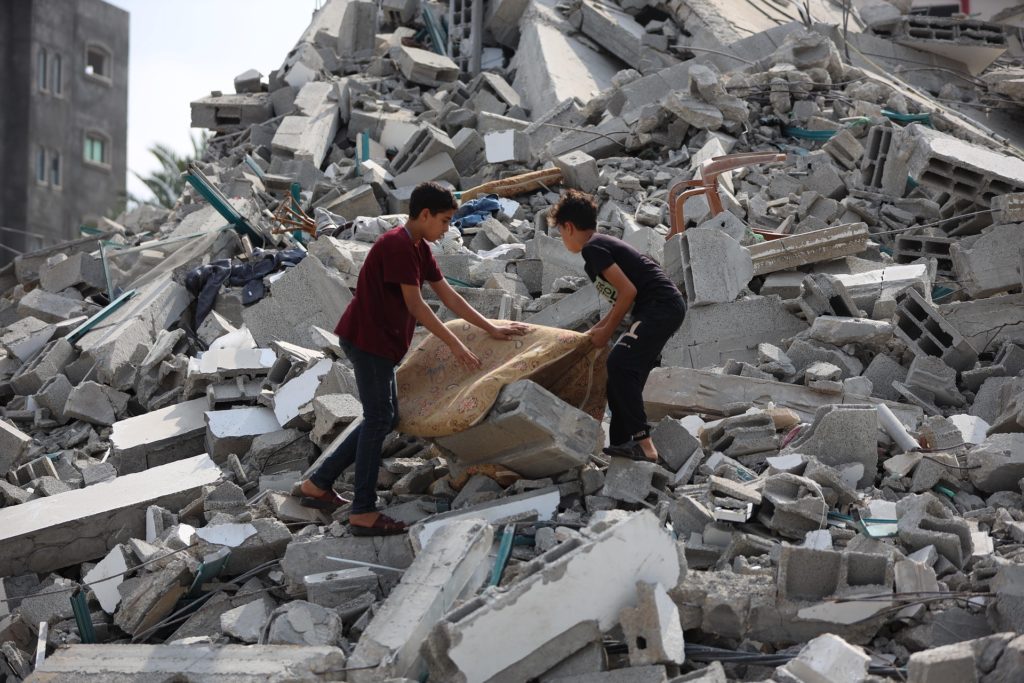
Two boys search through rubble, carrying a large cushion amidst debris from collapsed concrete buildings in Gaza, Occupied Palestinian Territories.

Gaza, Occupied Palestinian Territories | Hosny Salah ©

Additionally, reconstruction provisions establish the new parameters of public life (e.g. accessibility to critical infrastructure, spaces for community gathering, etc.) in the post-conflict environment and can therefore serve to entrench existing structural inequalities in the new post-conflict environment. Examples of such dynamics are already visible across a number of protracted conflict settings. The potential for the enactment of further violence through the reconstruction or “post-conflict” phase is perhaps most apparent in Gaza. Continued Israeli restrictions on Palestinians’ mobility and the blockade of goods entering Gaza are actively preventing its inhabitants from clearing the rubble left in the wake of Israeli missile strikes and rebuilding, thereby further entrenching a vast and long-standing power imbalance. As such, pathways to inclusive reconstruction need to be situated in the broader context of peace-making and political transition processes.

Citing the example of the Assad regime’s weaponisation of the reconstruction process in Syria from the beginning of the civil conflict in 2011, Dr. Sharp described how laws around property rights were changed to create exclusive zones, thereby feeding certain social elites and excluding and restricting any group viewed as opposing these elites.

As a means of fostering conversation on this pertinent and underexplored topic and its link to peacebuilding in complex geopolitical contexts, Inclusive Peace recently hosted an online webinar to discuss civil society inclusion in post-conflict reconstruction. Dr. Sharp began the conversation by sharing his reflections, which, linking to the example of Gaza, centred the idea of reconstruction as violence and as facet of conflict itself, which he further elucidates in a forthcoming book (Reconstruction as Violence in Syria, 2025, AUC press). Citing the example of the Assad regime’s weaponisation of the reconstruction process in Syria from the beginning of the civil conflict in 2011, Dr. Sharp described how laws around property rights were changed to create exclusive zones, thereby feeding certain social elites and excluding and restricting any group viewed as opposing these elites. As such, reconstruction policies were utilised to serve a particular political agenda and further entrench existing inequalities.

On a global scale, as issues of conflict and urbanisation and their intersection are becoming increasingly complex, the misappropriation of reconstruction policies to feed specific political agendas is increasingly likely. Dr. Sharp emphasised that the key to the success and sustainability of any reconstruction process is to ensure that this is not exclusively conceived or implemented in a top-down manner, but rather centres the needs and desires of the inhabitants themselves who will be subject to this reconstruction. As suggested by Dr. Sharp, whilst bottom-up inclusive reconstruction is vital in post-war and peacebuilding contexts, the multilateral environment remains valid and valuable for the development of clear global principles to be laid out to guide locally led reconstruction processes. Particularly in cases where the state has been decimated by conflict, it becomes necessary to have some sources of support that are institutional and structural.

Moreover, state-building since the 1990s has included specific ideas about what a ‘new’ state should look like, which has typically prioritised the establishment of some form of free-market, liberal economy.

Offering a differing but complementary perspective, Dr. Shuaibi argued that, in the context of increasingly complex conflict realities, for example in the MENA region, the age of multilateral frameworks established by international agencies is ending. Such frameworks, as highlighted by Dr. Shuaibi, have usually been based on a traditional state-building model and a top-down and elite-driven approach, under the supervision of international actors. Moreover, state-building since the 1990s has included specific ideas about what a ‘new’ state should look like, which has typically prioritised the establishment of some form of free-market, liberal economy. Afghanistan and Iraq are cases in point. In today’s climate, Dr. Shuaibi suggested that a policy of what she termed “reparative justice” in processes of state-building and reconstruction, which is predicated on a grassroots and survivor-led approach including reconciliation through education and restitution, is more appropriate. Echoing Dr. Sharp’s point about the need to centre the needs and desires of inhabitants where reconstruction will take place, Dr. Shuaibi advocated for the localisation of state-building and reconstruction processes, with international actors acting only as a support system.

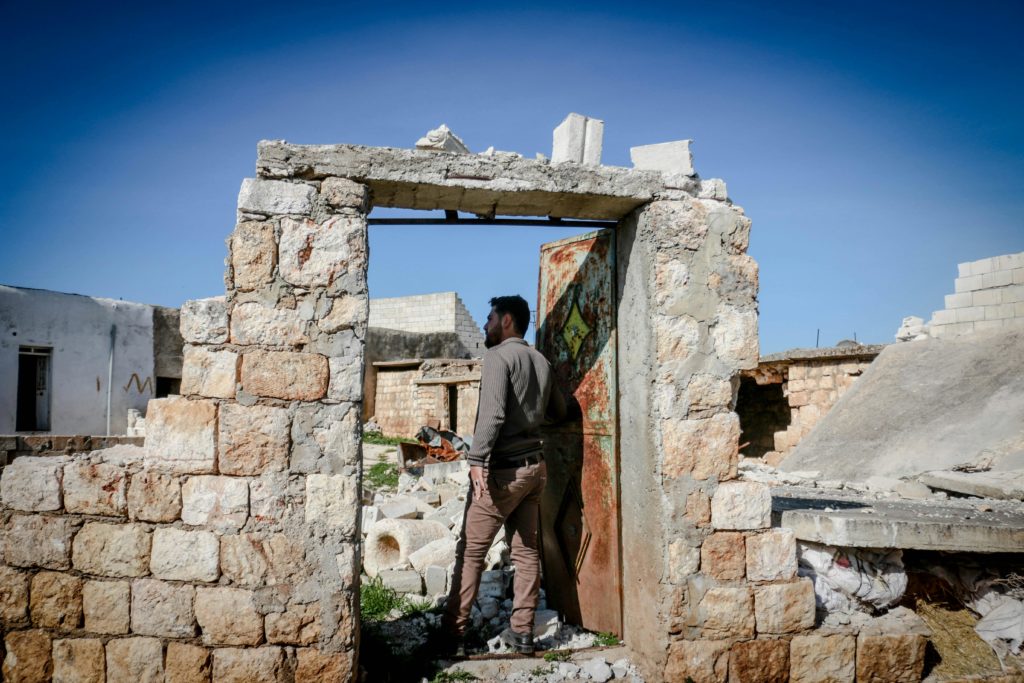
A man stands in a doorway of a crumbling brick structure on a clear day, surrounded by rubble and remnants of buildings in Idlib, Syria.

Idlib, Syria | Ahmed Akacha ©

Ms. Alloush, who joined the webinar from Syria, shared her impressions of the sheer scale of infrastructure destruction in the country, which far surpasses anything that could be captured in a report or statistics. She stressed that decentralised thinking and planning for reconstruction is crucial in the Syrian case, most significantly since the current authorities control only 50 per cent of the country’s territory and communities in different parts of the country have different needs as they recover from years of conflict. However, the approach to this process thus far seems to have been focused on attracting foreign investment and therefore on the “strategic reconstruction” of areas most relevant for external actors looking to invest in the reconstruction process, such as airports, oil extraction sites, and ports. As such, it seems that the reconstruction process in Syria remains top-down and dominated by the new authorities, at the expense of Syrians facing the rebuilding of their lives as well as their country.

The fruitful discussion between these three speakers suggests that bridging the gap between research and practice when it comes to the issue of inclusive reconstruction in the context of peacebuilding and peace-making, whilst incredibly challenging, must involve bringing together stakeholders invested and engaged in this area in different ways, from academics to practitioners. The online webinar, whilst facilitating an interesting and engaging exchange, should therefore be seen as only the beginning of a much wider conversation.

Maura McGoldrick | Peace Process Support Analyst, Inclusive Peace

Deep dive into this 70-minute recording of the webinar.

Stay up to speed with peacebuilding: get our latest toolkits, comparative research, and events straight to your inbox. Sign up to our quarterly newsletter.

Patriarchal backlash and increasing levels of armed conflict are currently compounding long-standing challenges to women’s meaningful participation in peacemaking and peacebuilding. In various contexts, building collaboration and coalitions have served as an effective strategy in this regard.

Comparative research shows that advocating for a common agenda can be an effective means for women to make themselves heard during and after peace and political transition processes. Burundi, Colombia, the DRC, Nepal, the Philippines, and Northern Ireland are cases in point.

Women-led coalitions’ primary purpose naturally depends on the specificities of the context women peacebuilders are operating in. A nuanced, context-specific approach is therefore key for making coalition building work.

Women coalitions emerging under conditions of escalating armed conflict usually focus on mitigating the dire consequences of large-scale combat. Sudanese women, for example, formed networks and initiatives following the outbreak of the armed conflict between the SAF and the RSF on 15 April 2023 to advocate for peace talks and women’s inclusion therein; to conduct shuttle diplomacy efforts; provide humanitarian relief; and document human rights violations committed by conflict parties.

In recent consultations organised by Inclusive Peace featuring Sudanese women, forming a coherent women-led anti-war movement that pushes for the pursuit of inclusive peace talks was cited as a key priority. Developing a joint roadmap for women from different Sudanese regions to implement the resolutions from the 2024 Geneva talks emerged as a tangible entry point in this regard.

Armed fighting obviously undermines efforts to connect individual women-led initiatives inside Sudan, while also reinforcing and shaping political and social fragmentation. However, wherever the security situation permits, efforts to strengthen collaboration and coordination among Sudanese women can facilitate their ongoing advocacy and humanitarian relief activities while also giving them a space to plan their involvement in any ongoing or future peacemaking initiative. Any related coalition building effort may also target active women fighters to give women peacemakers and peacebuilders access to the conflict parties.

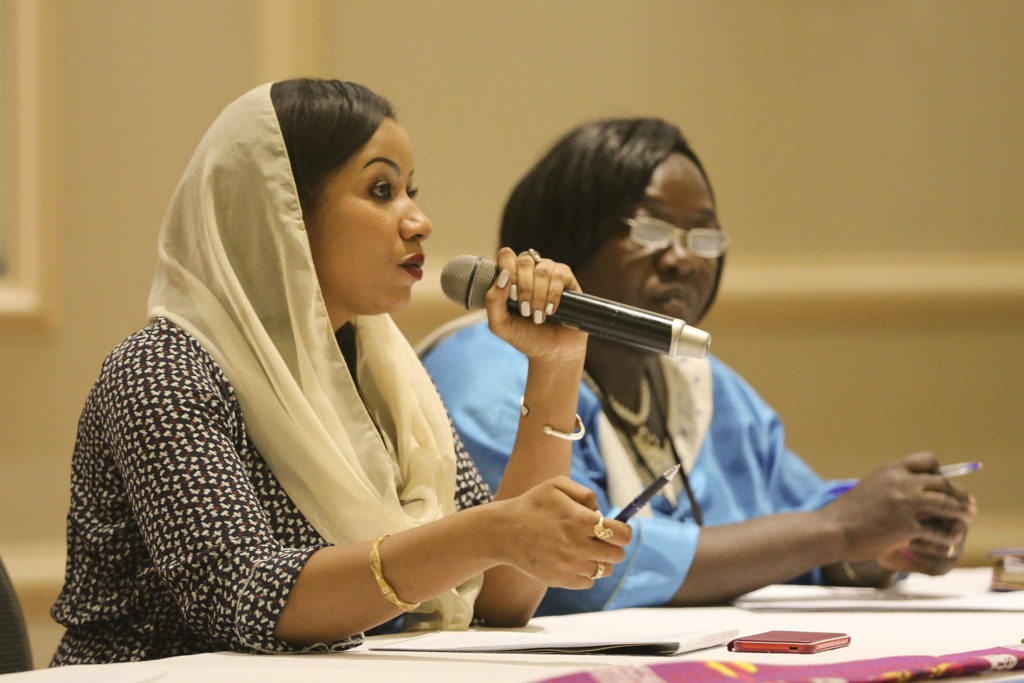
Two black women sit at a table during a formal meeting. One speaks into a microphone while the other listens attentively with a pen in hand.

A coalition building success story: The CWVND in Ethiopia

The Coalition for Women’s Voice in the National Dialogue (CWVND) in Ethiopia shows that coalition building can enhance women’s leverage over ongoing peacemaking initiatives in various ways. Importantly, this also applies to alternative peacemaking spaces like the country’s ongoing National Dialogue process, which is currently proceeding in the absence of a formal peace process.

CWVND, which was established in March 2022, currently encompasses over 50 women-led CSOs from Ethiopia. Its members’ joint commitment to ensuring women’s meaningful participation in Ethiopia’s national dialogue at the national level more broadly is the glue that holds the coalition together.

Two of CWVND’s activities are worthy of particularly close attention.

First, in 2023, the coalition planned and implemented consultations with more than 3,000 women from eight subnational regions and two city administrations. CWVND and TIMRAN (ትምራን), which serves as the coalition’s secretariat, subsequently condensed women’s priorities, concerns, and demands into a succinct 10-point women’s agenda, which they shared with the Ethiopian National Dialogue Commission (ENDC).

Second, CWVND and TIMRAN trained 151 women as consultation facilitators. The ENDC subsequently deployed 28 of those trained women facilitators for the regional agenda consultations under the national dialogue process.

Three key lessons emerge from the CWVND’s work regarding coalition building and its capacity to promote women’s participation in alternative peacemaking spaces like National Dialogues:

Be quick: CWVND started preparing agenda setting women’s consultations soon after the ENDC officially started operating in February 2022. This short reaction period allowed CWVND to be ahead of the curve in the national dialogue process and increase its visibility during the agenda setting phase.

Maximise local ownership: CWVND had significant agency throughout the agenda consolidation process. Ethiopian women hence own the resulting agenda, which provides them with a strong foundation for advocating for a transformation of women’s position in Ethiopia’s society during the national dialogue and beyond.

Support women with diversifying their participation modalities in peacemaking spaces: Women-led coalitions can support women with entering and influencing peacemaking spaces in different functions. The ENDC’s decision to draw on 28 CWVND-trained women facilitators indicates that CWVND’s training interventions have strengthened women’s reputation as stakeholders with relevant thematic knowledge, skills, and expertise regarding the national dialogue. Their formal involvement as facilitators and technical experts allows women to shape the national dialogue process in various roles.

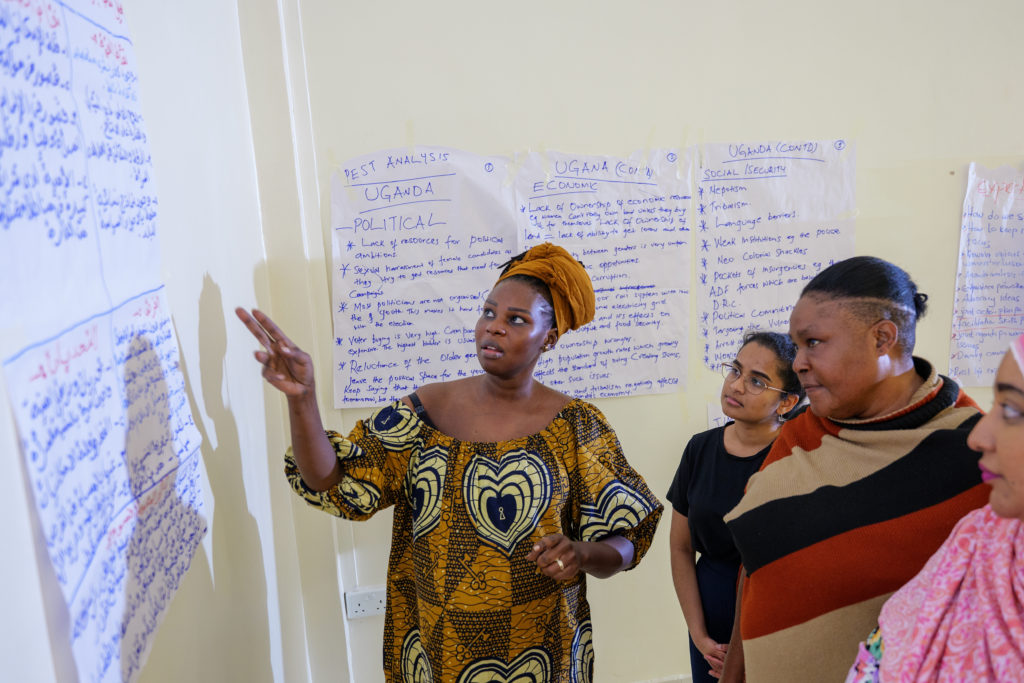
Ayak Chol Deng Alak, Inclusive Peace’s Peace Process Support Advisor, points at handwritten notes on the wall during a women’s coalition workshop on Ugandan political issues.

Coalition building: Challenges and implications for external supporters

Building coalitions among women comes with multi-faceted challenges. Four issues stand out. First, women are a heterogeneous group. They often pursue different political agendas and disagree on the priorities and ideal outcomes of a peace or political transition process, particularly in more polarised environments. In Nepal, for example, women representatives in the first Constituent Assembly focused on advancing the position of their respective political party rather than women’s rights.

Second, women peacemakers and peacebuilders operating in conflict-affected and more markedly patriarchal contexts often encounter severe threats and backlash in the physical and digital space. Abduction, arbitrary arrests, rape, defamation, slander, smear campaigns, and intimidation make coalition building a dangerous undertaking. Managing and mitigating those risks is therefore a key pillar of any impactful coalition building effort.

Third, women-led coalitions may only enable women’s meaningful participation if they can grow organically and make independent decisions about which activities they want to pursue. The case of the women-led civil society organisation Ugaaso in Ethiopia’s Somali region shows that strong and vocal women coalitions take time to evolve, yet can make a significant impact along the way.

Fourth, women often lack information and awareness of other ongoing women-led peacemaking initiatives, which can constrain their collaboration and coordination. In Yemen, for example, women often receive information about ongoing mediation initiatives very late in the day, if at all, which significantly constrains their efforts to collectively strategise and influence those processes.

The next iteration of this series on participation will draw on Ethiopian women’s recent coalition building experiences to highlight lessons learned regarding the practicalities of addressing some of those challenges and establishing and maintaining a women-led coalition.

In the meantime, several entry points exist for the international community to enhance women’s coalition building efforts. For example, skilful external facilitation and technical as well as financial accompaniment can help women to develop trustful relationships with each other through repeated exchanges. 

External actors’ commitment to serving as a long-term companion can also bolster a women’s coalition’s development. The same holds for local ownership. As indicated above, providing on-demand, subtle support from behind the scenes allows external actors to maximise women’s agency in any coalition building initiative.

Philip Poppelreuter | Researcher, Inclusive Peace

This blog is part of Inclusive Peace’s 2025 series on women’s effective participation in peace processes. The series examines context-sensitive strategies women have successfully pursued or could pursue to shape peacemaking and peacebuilding in a changing geopolitical context marked by increasing levels of armed conflict, greater multipolarity – both in general and more specifically in terms of mediation actors – and a decline in comprehensive peace processes and agreements led by the UN. It is based on comparative findings of a project Inclusive Peace is undertaking in partnership with the Irish DFA in the run-up to the 25th anniversary of UNSCR 1325 in October 2025.

The prospect of negotiations to end the war in Ukraine starting soon has become more likely over the past three weeks, particularly following US-Ukraine talks in Jeddah this week. This blog explores entry points for preparing for comprehensive peace negotiations that can give rise to just and lasting peace in Ukraine.

Events surrounding the war in Ukraine have come thick and fast over the past three weeks, with significant progress towards a ceasefire over the past week.

US-Russia talks in Riyadh in mid-February sent a clear signal that both sides are seeking to improve their bilateral relationship and jointly discuss a potential end to the war in Ukraine. Ukraine’s absence from the talks was notable.

Subsequently, France and the UK started working on a proposed peace plan to end the war in Ukraine, including a limited one-month truce covering the seas, the air, and Ukraine’s energy infrastructure. Several Western countries have also indicated their willingness to join a coalition of the willing proposed by UK prime minister Keir Starmer to back a potential ceasefire in Ukraine through boots on the ground.

Ukrainian President Volodymyr Zelenskiy then presented a proposal for a partial ceasefire last week, and publicly expressed Ukraine’s readiness to enter ceasefire negotiations. The announcement followed the chaotic meeting between Zelenskiy, US president Donald Trump, and US vice president JD Vance at the Oval Office on 28 February and the subsequent suspension of all US military aid and intelligence support to Ukraine.

Events took another significant turn following a meeting between high-level representatives of the US and Ukraine in Jeddah on Tuesday this week. Zelenskiy publicly expressed Ukraine’s commitment to accept an immediate 30-day ceasefire covering the entire frontline, the seas, and the air as proposed by the US if Russia did the same. In return, the Trump administration announced the immediate resumption of all military aid flows to Ukraine. US representatives also committed to tabling their ceasefire proposal with Russian counterparts. Russia’s response to this development remains to be seen at the time of writing.
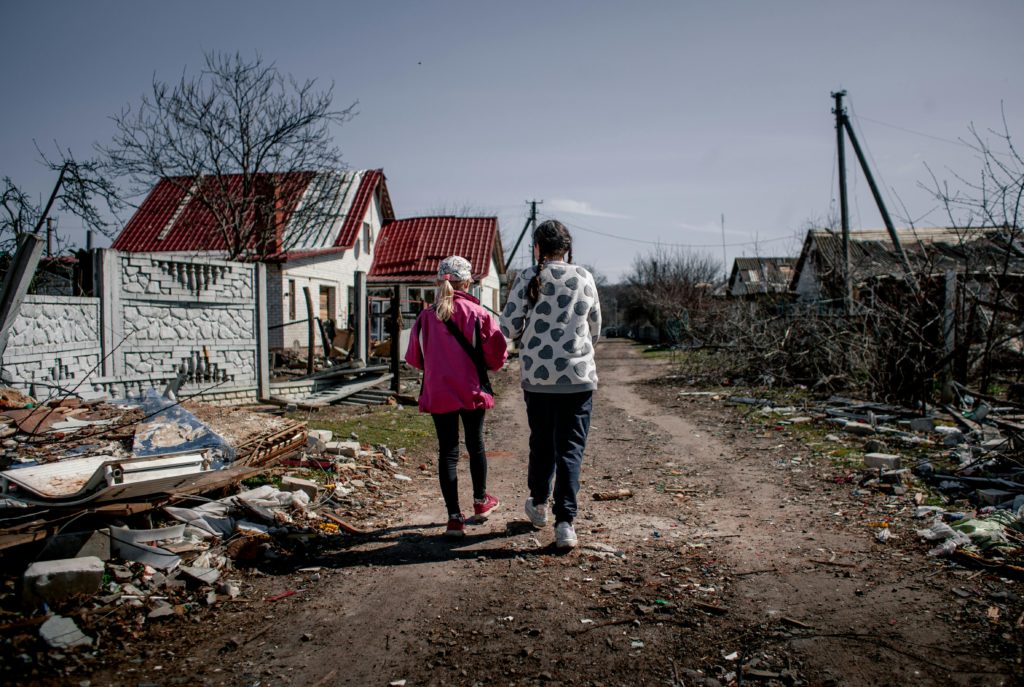
Novoselovka, Ukraine | Ales Uscinaw ©

Preparing for comprehensive peace negotiations

Diplomatic coordination between state leaders is only one of several preparatory activities ahead of peace negotiations. While state leaders are currently focused on reaching a ceasefire, the fact that US and Ukraine representatives agreed to set up teams of negotiators to begin preparations for a comprehensive peace negotiation process during their meeting in Jeddah this week, indicates that discussions are also looking beyond a ceasefire. Both ceasefire and comprehensive peace negotiations require thorough preparation, which can be mutually reinforcing.

Our report “Negotiating an End to the War in Ukraine” draws on comparative evidence to provide an in-depth discussion of six tangible entry points for preparing a comprehensive peace negotiation process. Each preparatory activity adheres to the core principle that any future negotiation process must involve Ukraine to enable a just and sustainable peace.

Preparatory activity 1: Deepening coordination among states who are willing to support negotiations

A higher number of supportive states amplify the financial, technical, and human resources available to enable comprehensive peace negotiations. Potential state supporters of negotiations could therefore proactively highlight the value of their inclusion in the negotiation process to the conflict parties. Previous exploratory initiatives from Türkiye, Brazil, South Africa, Saudi Arabia, India, China, and Indonesia indicate that these actors might be interested in supporting a negotiation process.

Coordinating and streamlining planning activities of interested states can enhance the preparation for peace negotiations. Division of labour and allocation of roles in the negotiation process are two key themes for states to discuss. France and the UK could draw on their nascent ceasefire initiative to reach out to state leaders from the Global South to strengthen and diversify diplomatic coordination mechanisms among state supporters for peace negotiations.

France and the UK could draw on their nascent ceasefire initiative to reach out to state leaders from the Global South to strengthen and diversify diplomatic coordination mechanisms among state supporters for peace negotiations.

Following initial discussions, state supporters of negotiations could discuss the establishment of an institutionalised coordination platform for the entire peace process. Contact groups, groups of friends supporting the mediator(s), and groups of monitors that served as guarantors for an agreement are examples for diplomatic coordination mechanisms in previous peace processes.

Preparatory activity 2: Preparing the substance for the negotiation agenda

A major part of the preparation for negotiations involves discussing the substance of the prospective discussions. State actors and experts from civil society and business could conduct a comprehensive conflict analysis to identify the most salient issues that negotiations will likely have to address.

Negotiation parties could draw on the conflict analysis to establish thematic working groups to prepare the substantive discussions under each agenda item. Individual states, multilateral actors such as the UN, or large civil society organisations with thematic expertise could facilitate those working groups. Frequent exchange between the individual thematic working groups could enable informed decisions regarding the sequencing of agenda items during negotiations.

Preparatory activity 3: Setting up thematic expert groups that accompany the substantive, logistical, legal, and administrative preparations

Legal advisors, businesspeople, administrative and logistical, as well as country and regional specialists, among others, have relevant expertise that can enrich the discussions of the thematic working groups mentioned above. This pertains to potential compromises for addressing specific drivers, the evaluation of peace process design options as well as logistical tasks related to peace negotiations.

Informal expert groups comprising think tanks and other non-state actors can also support thematic working groups, the mediator(s), and civil society groups with the various facets of their preparatory work. Drafting confidential thematic non-papers and offering capacity building exercises are two tangible entry points in this regard.

Preparatory activity 4: Tapping into peace process support expertise

Academic and civil society actors and institutions with a track record in peace process support can help conflict parties and mediators to anticipate and deal with various scenarios in which peace negotiations might unfold. Peace process support experts, once connected with conflict parties and mediator(s), can provide ideas, options, and guidance on how to:

➜ Sequence agenda items

➜ Enhance negotiating parties’ trust in the viability of the negotiation process;

➜ Mitigate external pressure for rushed negotiations;

➜ Mitigate potential sources of resistance to negotiations;

➜ Deal with situations where negotiations get stuck or risk being derailed.

Peace process support experts can also enhance civil society actors who seek to shape the preparations for as well as the actual negotiation phase.
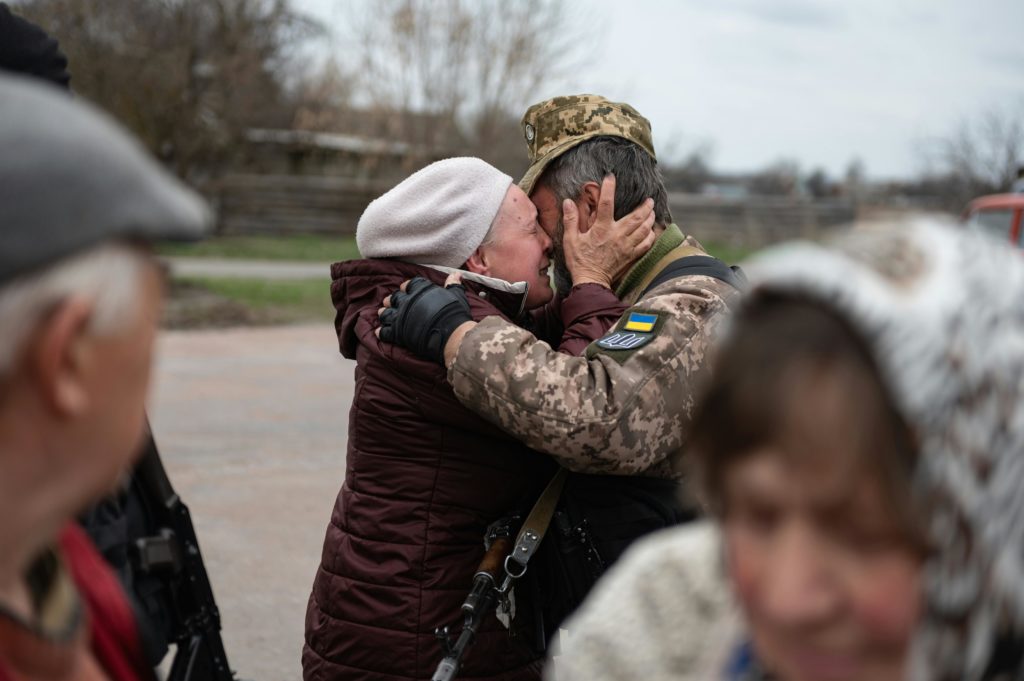
Makariv, Ukraine | Dmitry Zvolskiy ©

Preparatory activity 5: Forming civil society alliances to shape and enhance preparations for negotiations and thereby strengthen national ownership

Civil society actors have vast subject matter expertise, networks, and mediation skills, which can enhance preparations for negotiations. They can also serve as intermediaries between state actors preparing for negotiations to the broader population and vice versa.

Creating dedicated spaces for Ukrainian civil society, women’s organisations, religious groups, the business community, and diaspora members to flag their priorities and positions around anticipated negotiation topics could allow them to complement the preparatory work of Ukrainian state representatives. Strong connections between those civil society spaces and the formal preparatory and negotiation process would also be conducive to enhance feelings of national ownership in the process. External actors could provide on-demand financial and technical facilitation accompaniment support to any informal consultations among Ukrainian non-state actors.

Civil society actors have vast subject matter expertise, networks, and mediation skills, which can enhance preparations for negotiations. They can also serve as intermediaries between state actors preparing for negotiations to the broader population and vice versa.

Recent dynamics suggest that Ukrainian civil society inclusion in the negotiation process is likely to be unrealistic. The prospect of involvement or consultation of Russian civil society actors is essentially nil. Working on strategies to gradually enhance the inclusivity of the negotiation process can help non-state actors to prepare for the scenario under which potential mediators/facilitators or certain conflict parties push for exclusive peace talks.

Preparatory activity 6: Developing communication strategies to build public trust in the negotiation process

Media and communication experts, policy makers, and civil society representatives could jointly work on consistent messaging on why and how preparing for negotiations strengthens Ukraine’s position. Public events such as panel discussions or workshops as well as media coverage of peace process support experts could enhance public knowledge about the role negotiations play in ending wars.

Conflict parties and states involved in the negotiation process would ideally also prepare a communication strategy for the pre-negotiation and negotiation phase. Any such communication strategy could define the amount of information and the frequency of updates on the negotiation process that will be relayed to the public. Specific strategies to deal with misinformation campaigns and prevent information leaks during the negotiations would be equally key.

Philip Poppelreuter | Researcher, Inclusive Peace

For the key insights, have a look at our briefing note.

Ready for a deep dive? Read the full report.

The 2014 and 2015 Minsk Agreements are a cautionary tale of the need to ensure Ukrainian interests are not sidelined and to include Ukraine in any peace negotiations.

Next week will mark the third anniversary of the full-scale Russian invasion of Ukraine. Three years on, the chances of either side achieving an outright military victory that would realise their respective stated aims continue to appear slim.

Since initial negotiations several weeks after the full-scale Russian invasion, public diplomatic exchanges between Ukraine and Russia have been limited, focusing on grain exports and prisoner exchanges. Publicly acknowledged diplomatic activity towards negotiations over the past two years has comprised the Ukrainian government’s 10-point peace formula, and other exploratory initiatives involving actors like Türkiye, Brazil, China, seven African states, the Vatican, and Saudi Arabia. The flurry of diplomatic activity over the past week has brought negotiations to end the war squarely into view. Despite some (how to put this diplomatically…) mixed messaging from the new U.S. administration about their intentions for the composition of peace negotiations, Donald Trump and Keith Kellog have stated that peace talks would involve Ukraine, and Marco Rubio confirmed last Sunday during a visit to Jerusalem that Ukraine and European states would be involved in any “real” negotiations.

Amid all the bloviation, false claims, and empty self-aggrandising rhetoric, this provided a measure of reassurance – at least temporarily – to everyone who is deeply invested in a just and sustainable end to the war. But any repetition of the message that Ukraine and Europe would have to be involved in any substantive talks and that a durable settlement would have to respect Ukrainian sovereignty were conspicuous by its absence during the U.S.-Russia talks in Riyadh on Tuesday.

Beyond the fairly intuitive proposition that any agreement to end the war is unlikely to be just or sustainable if it excludes the party that was invaded, the very recent history of the Russia-Ukraine armed conflict in the form of the 2014 and 2015 Minsk Agreements also provides a cautionary example of the need to ensure Ukrainian interests are not sidelined and to include Ukraine in any negotiation format both in the spirit, and to the letter, of “nothing about Ukraine without Ukraine.”

Both Agreements presented a settlement that was acceptable to Russia (at the time) and Ukraine’s patrons in France and Germany, but side-lined Ukrainian interests. This led to a lack of both elite and popular support in Ukraine for either agreement. An absence of confidence-building measures also perpetuated the low level of trust between Ukraine and Russia. All of this – along with other shortcomings of the Agreements, including the lack of clarity in the sequencing of implementation, the unclear obligations and roles of states in implementation, and the ensuing room for markedly different interpretations of the agreements by different parties – meant that the Minsk Agreements neither constituted a viable compromise nor managed to end the armed conflict in eastern Ukraine.

Bilateral talks between Ukraine and Russia are the default format option for ceasefire and peace negotiations. But given the multidimensional nature of the war and the need to integrate a regional security dimension, involving additional parties in the talks will be a key consideration.

The war in Ukraine is a multidimensional conflict encompassing two levels: a “hot” inter-state war between Russia and Ukraine and a “cold” war between NATO and Russia. The fact that the Trump Administration is seemingly in the process of reversing anywhere between four years and four generations of U.S. foreign policy orthodoxy towards the USSR/Russia doesn’t automatically mean that the NATO-Russia “cold” war has entirely thawed let alone already being on a path to resolution.

With the end of the Cold War in the early 1990s, the centre of contested geopolitical gravity in Europe shifted east. During the Cold War, the two Germanies (and particularly the division of Berlin, physically manifested in the form of the Berlin Wall) came to symbolise the two competing blocks. However, with the enlargement of NATO and EU expansion following the Cold War, Ukraine became the front line of the competing spheres of regional influence. Diplomatic initiatives like the 1994 Budapest Memorandum, under which Ukraine gave up its nuclear weapons arsenal in exchange for territorial integrity and independence assurances by Russia, the US, and the UK, or the Minsk I and II Agreements failed to promote enduring stability in the region. As such, one of the main underlying causes of the current war can be seen in the unresolved renegotiations of the post-Cold War political and security order between Ukraine and Russia and between Russia and the combination of NATO and the EU. Negotiations to end the war in Ukraine will de facto involve a discussion of regional security, and can thus be taken as an opportunity to proactively address new terms for the regional security architecture and also its global dimensions.  A more comprehensive negotiation format could help to address these related but distinct conflict dimensions.

Our report “Negotiating an End to the War in Ukrainedraws on comparative evidence to develop ideas and options for a negotiation process design that can maximise the chances of producing a sustainable and just settlement. It also discusses entry points for other stakeholders’ direct or indirect involvement in the talks, including European/NATO states – and potentially non-aligned states from the Global South – and representatives from civil society, business, and faith organisations.

A small group of states could be given official roles in Ukraine-Russia talks short of full participation; or a multi-party format could be used to foster a more cooperative dynamic by giving a degree of representation to a larger number of actors. Both these options could also include a small group of third-party states, and actors from civil society, business or faith organisations as participants or guarantors or in other roles. External intermediaries, including state and non-state actors, could play different roles including as mediators, facilitators, and guarantors.

The way the talks are structured can also help Ukraine, Russia, and any other actors involved to manage the complexity of issues and parties. Different thematic components of the negotiation process can take place in parallel or sequentially, and different negotiation tracks can feature different compositions of parties. A multi-party format typically involves specialised working groups or commissions that support the work of the respective thematic tracks. This allows for flexibility in the sequencing of negotiations in relation to questions that might be unanswerable when negotiations begin, such as whether a ceasefire can be reached while other issues remain unresolved.

Whenever negotiations ultimately materialise and whatever the process design that is adopted, one thing is patently clear: for any agreement to end the war to have a chance of being just and sustainable Ukraine must be involved in negotiating it. The sooner that is universally and irrevocably recognized, the sooner the important business of planning and preparing for negotiations can begin in earnest.

Alex Bramble | Head of Research, Inclusive Peace

For the key insights have a look at our briefing note.

Ready for a deep dive? Read the full report.

On 01 January 2025, Inclusive Peace enters a new stage in its organisational growth as a world-class facilitator of inclusive peacemaking and peacebuilding in some of the world’s most complex and protracted political processes.

For the past five years, Inclusive Peace has been led by Dr. Thania Paffenholz, who founded the organisation 10 years ago through its transition from the Inclusive Peace and Transitions Initiative hosted at the Geneva Graduate Institute.

At the end of December, Thania will step down from her role as Director and take on a new function as a Senior Advisor. Thania made this decision to dedicate more time to developing innovative avenues for creating broader impacts for peace and inclusive societies within and beyond the peacebuilding field to engage with global audiences, networks, and movements, including the next generation of societal and political change-makers. While exploring these new opportunities, Thania will also remain engaged in supporting peace and political change processes alongside Inclusive Peace’s partners.

The organisation will continue to benefit from Thania’s wealth of experience in this new function. To further strengthen Inclusive Peace’s position and build on the legacy of its founder, the organisation will be led by the current management team – with Zachary Taylor, Managing Director, and Alex Shoebridge, Head of Peace Process Support playing more prominent roles, complemented by a wider set of research, peace process support, and operations colleagues based across East Africa, Europe, and Asia/Pacific.

This includes a diversified portfolio of work across three continents supported by an advisory board comprised of a number of prominent figures from the world of mediation, diplomacy, security, and peacebuilding and a broadened partnership base spanning foreign ministries, development agencies, and foundations, and a renewed sense of direction.

Inclusive Peace wishes to thank Thania for the extraordinary contribution she has made towards putting inclusivity at the heart of conflict management and peacebuilding around the world, and we look forward to the next chapter Inclusive Peace continues to pursue its vision and mandate “to set change in motion” by supporting actors to engage and shape peace and political transition processes.